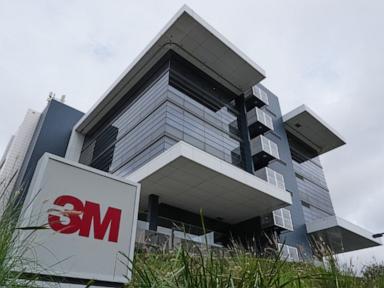
The Commonwealth of Australia's record-breaking statement of claim against the 3M Company in the Federal Court of Australia marks a critical structural shift in how sovereign states litigate transnational corporate liability. By seeking damages exceeding A$2 billion (US$1.4 billion) across 28 domestic defense infrastructure nodes, the litigation transitions the financial burden of per- and polyfluoroalkyl substances (PFAS) mitigation from state-backed balance sheets to the corporate entity responsible for manufacturing the fundamental chemical compounds.
To analyze the trajectory of this dispute, one must look past the standard political messaging and evaluate the mechanics of the legal claims, the underlying chemical vulnerabilities, the structural allocation of mitigation costs, and the defensive strategy deployed by multinational corporations confronting historic environmental exposure. Don't miss our recent post on this related article.
The Tri-Partite Legal Framework of Sovereign Environmental Tort
The Commonwealth’s legal strategy does not rely on simple environmental degradation metrics. Instead, the claim is structured upon a tri-partite matrix of corporate accountability: asymmetric information retention, historical misrepresentation, and regulatory non-disclosure.
- Asymmetric Information Retention: The Commonwealth alleges that 3M maintained proprietary internal testing mechanisms that confirmed significant, long-term adverse environmental and toxicological profiles associated with aqueous film-forming foam (AFFF) while continuing to export the chemical compound to international defense markets.
- Historical Misrepresentation: The statement of claim asserts that 3M provided explicitly structured assurances to the Australian Department of Defence regarding the material degradation profiles of its products. Specifically, the manufacturer characterized the firefighting foam as biodegradable, non-toxic, and safe for standard operational disposal via baseline defense infrastructure.
- Regulatory Non-Disclosure: This element focuses on a failure to report known compounding risks. By treating the chemical formula as proprietary trade secrets, the supplier effectively blocked the sovereign purchaser from conducting independent lifecycle risk assessments, distorting the Department of Defence’s operational safety procedures for decades.
The Carbon-Fluorine Bond and Infrastructure Vulnerability
The operational challenge at the 28 affected Australian military installations stems directly from the molecular physics of the chemical compound itself. PFAS compounds are defined by a chain of carbon atoms completely bonded to fluorine atoms. The carbon-fluorine bond is one of the strongest single bonds in organic chemistry, possessing an exceptionally high bond dissociation energy. To read more about the context of this, The Motley Fool offers an informative summary.
Because natural metabolic or environmental mechanisms lack the thermodynamic energy required to cleave this bond, these synthetic chemicals do not undergo natural attenuation. When deployed in high-volume training scenarios at defense bases, such as Richmond Air Base outside Sydney, the chemicals migrate down through the topsoil layer. This creates a predictable, multi-stage contamination vector.
- Soil Adsorption: The surfactant properties of AFFF allow the chemicals to coat soil particles, establishing an unmitigated, long-term leaching source.
- Unsaturated Zone Transport: Precipitation events dissolve the bound surfactants, driving them down through the vadose zone.
- Aquifer Injection: Upon reaching the water table, the high solubility and mobility of specific PFAS variants enable rapid plume migration through regional groundwater networks.
- Ecological and Food Chain Ingress: The contaminated groundwater enters local agricultural irrigation systems and surface waterways, leading to bioaccumulation in livestock, agricultural products, and marine life. This dynamic forced authorities to restrict the consumption of locally produced fish and eggs near operational installations.
The Cost Function of Sovereign Environmental Mitigation
The A$2 billion quantum claimed by the Australian government represents a backward- and forward-looking economic calculation designed to internalize the externalities of historical industrial usage. Assistant Defence Minister Peter Khalil confirmed that the state has already expended A$1.3 billion in direct capital allocation. The total economic cost function consists of four distinct operational vectors.
Ongoing Civil Liability and Class Action Settlements
The state has already absorbed significant capital losses through downstream legal settlements with impacted civilian populations. In 2023, the Commonwealth executed a A$133 million class-action settlement across seven contaminated civilian communities adjacent to defense bases. This capital outlay represents a direct financial loss triggered by the initial procurement and deployment of the un-degraded chemical agent.
Mass-Scale Civil Works and Soil Remediation
The physical removal of contamination source zones requires massive engineering expenditures. The Department of Defence has excavated, handled, and processed more than 200,000 metric tons of contaminated earth. Because these compounds do not burn under standard incineration temperatures, treating this volume demands highly specialized high-temperature thermal desorption systems or secure, lined containment infrastructure, driving up per-ton operational costs.
High-Volume Liquid Phase Extraction
To halt groundwater plume migration beyond base perimeters, the state has built and run specialized pump-and-treat systems. These installations have processed more than 13 billion liters of contaminated water. The technical architecture relies on granular activated carbon (GAC) fixed-bed adsorbers or ion-exchange resins. These systems require frequent media replacement due to the competitive adsorption of non-toxic organic matter, creating a permanent recurring operational expenditure.
Multi-Decade Groundwater Monitoring Networks
The forward-looking component of the lawsuit covers the capital required to maintain analytical surveillance over regional hydrogeological networks. Tracking parts-per-trillion concentrations across vast aquifers over a multi-decade horizon requires dedicated monitoring wells, highly sensitive liquid chromatography-mass spectrometry (LC-MS) analytical workflows, and alternative water infrastructure installations for affected civilian real estate.
The Corporate Defense Matrix: Sourcing, Phase-Outs, and Usage Vectors
3M’s public legal posture indicates a defense strategy structured around operational timelines, manufacturing boundaries, and user-end mitigation responsibilities.
+-------------------------------------------------------------------------+
|                      3M LITIGATION DEFENSE MATRIX                       |
+-------------------------------------------------------------------------+
| 1. Geographic Jurisdictional Boundaries                                 |
|    - Zero domestic manufacturing footprint within Australia.            |
|    - Products arrived via international commercial trade channels.      |
+-------------------------------------------------------------------------+
| 2. Voluntary Product Discontinuation Timeline                            |
|    - Terminated all domestic product sales circa 2006.                  |
|    - Erased product revenue exposure two decades prior to current suit. |
+-------------------------------------------------------------------------+
| 3. Downstream Sovereign Usage and Storage Responsibility                |
|    - Defence Department maintained independent storage for ~20 years.    |
|    - Continued deployment of legacy stockpiles after market exit.       |
+-------------------------------------------------------------------------+
The argument regarding downstream usage seeks to shift the liability framework from product design defect to user handling negligence. By highlighting that the Australian Department of Defence continued deploying PFAS-containing AFFF stockpiles long after 3M exited the market, defense counsel will attempt to break the chain of proximate causation. They will argue that the state’s failure to rapidly decommission known inventory after international risk profiles became public knowledge constitutes an intervening cause of environmental degradation.
Strategic Forecast: Global Precedents and Sovereign Action
The Federal Court of Australia litigation does not occur in an international vacuum. It follows a structural model established in the United States, where 3M entered into a US$10.3 billion class-action settlement with public water systems in 2023 to address drinking water contamination. However, the Australian lawsuit represents a far more dangerous development for multinational chemical manufacturers: direct, un-consolidated litigation brought by a sovereign state’s military apparatus to recover direct operational expenditures.
The legal vulnerabilities identified in this case suggest three definitive strategic shifts for sovereign states and corporate supply chains worldwide.
- Sovereign Mimicry Vectors: Other nations hosting historical allied defense operations utilizing US-manufactured AFFF formulations will likely deploy identical legal architectures to claw back national remediation outlays.
- Enhanced Procurement Due Diligence: Sovereign defense procurement will increasingly require absolute molecular transparency and indemnification clauses that insulate the purchasing state from long-term lifecycle remediation liabilities.
- The Valuation Penalty on Legacy Chemical Portfolios: Industrial conglomerates carrying legacy fluoropolymer or specialty surfactant portfolios will face permanent downward pressure on enterprise valuations as international courts demonstrate an increased willingness to pierce historical vendor-protection frameworks.