Most wilderness search and rescue (SAR) operations fail not from a lack of manpower, but from a failure of initial vector acquisition. When a 69-year-old individual disappears into sub-freezing terrain, the primary adversary is the exponential decay of core body temperature paired with a rapidly expanding search radius. In the incident where a domestic dog successfully alerted lodge staff and guided rescuers to its stranded owner after an overnight freeze, standard human-interest reporting frames the event as an anomaly of animal loyalty. In operational reality, the rescue succeeded because an untrained biological sensor solved three critical logistical bottlenecks—anomaly detection, signal transmission, and vector guidance—faster than institutional dispatch protocols could initialize.
To understand why this rescue succeeded where standard baseline searches routinely stall, we must deconstruct the mechanics of wilderness survival, the cognitive architecture of cross-species signaling, and the operational architecture of modern SAR deployment.
The Thermodynamics of Overnight Cold Exposure
A 69-year-old exposed to sub-freezing ambient temperatures without thermal shelter enters an immediate thermodynamic deficit. Human thermoregulation relies on maintaining a core temperature near 37°C (98.6°F). When ambient temperatures drop below freezing, heat loss occurs through four distinct physical pathways: conduction, convection, radiation, and evaporation.
- Conduction accelerates heat transfer if the subject makes direct contact with snow, frozen earth, or damp rock. Water conducts heat roughly 25 times faster than air, meaning any moisture from sweat or precipitation strips thermal energy at a catastrophic rate.
- Convection strips the boundary layer of warm air surrounding the skin, a process magnified by wind velocity. Even moderate air movement destroys the insulating value of standard clothing.
- Radiation accounts for up to 55% of heat loss in still, cold air, radiating infrared energy outward from exposed extremities and the head.
- Evaporation continues through respiration and insensible perspiration, draining latent heat with every breath of dry, cold air.
Age compounds these physical losses. By age 69, physiological vasoconstriction—the narrowing of peripheral blood vessels to shunt warm blood toward vital organs—is measurably slower and less efficient than in younger adults. Thermogenesis via shivering requires high metabolic output and rapid glycogen depletion. Once hepatic and muscular glycogen stores exhaust, shivering ceases, and core temperature drops precipitously.
Clinical hypothermia begins when core temperature falls below 35°C (95°F). At 32°C (89.6°F), paradoxical undressing and severe cognitive impairment occur, stripping the subject of the executive function required to self-rescue, build shelter, or signal for help. Surviving a full night under these conditions indicates the presence of micro-environmental insulation—such as wind-sheltered terrain depressions, dry pine duff, or shared metabolic heat—combined with a narrow window of rescue intervention before the onset of terminal cardiac arrhythmias.
The SAR Bottleneck and the Vector Problem
When an individual goes missing in a wilderness or semi-rural lodge environment, formal SAR teams face an immediate mathematical constraint: the expanding search circle. Assuming a walking speed of two miles per hour, a missing subject's potential area of containment increases quadratically with time ($A = \pi r^2$). Within four hours, the search zone encompasses more than 50 square miles of three-dimensional, obstructed terrain.
Traditional SAR relies on probabilistic search theory, originally developed by Bernard Koopman for anti-submarine warfare. Incident commanders divide terrain into sectors based on "Lost Person Behavior" statistical profiles—evaluating age, terrain features, and historical drift patterns—to calculate the Probability of Area (POA). Rescuers then deploy Hasty Teams along high-probability corridors such as trails, ridges, and drainages.
This methodology suffers from two structural delays:
- Notification Lag: Formal SAR mobilization requires an external trigger. If a 69-year-old hikes alone without a filed itinerary, the clock does not start until a missed check-in occurs, often 12 to 24 hours post-incident.
- Detection Probability (POD): Even when Hasty Teams enter the correct sector, visual and auditory detection in dense timber or snow-covered topography remains low. Unresponsive subjects suffering from moderate-to-severe hypothermia do not shout back when called, reducing detection to direct line-of-sight discovery.
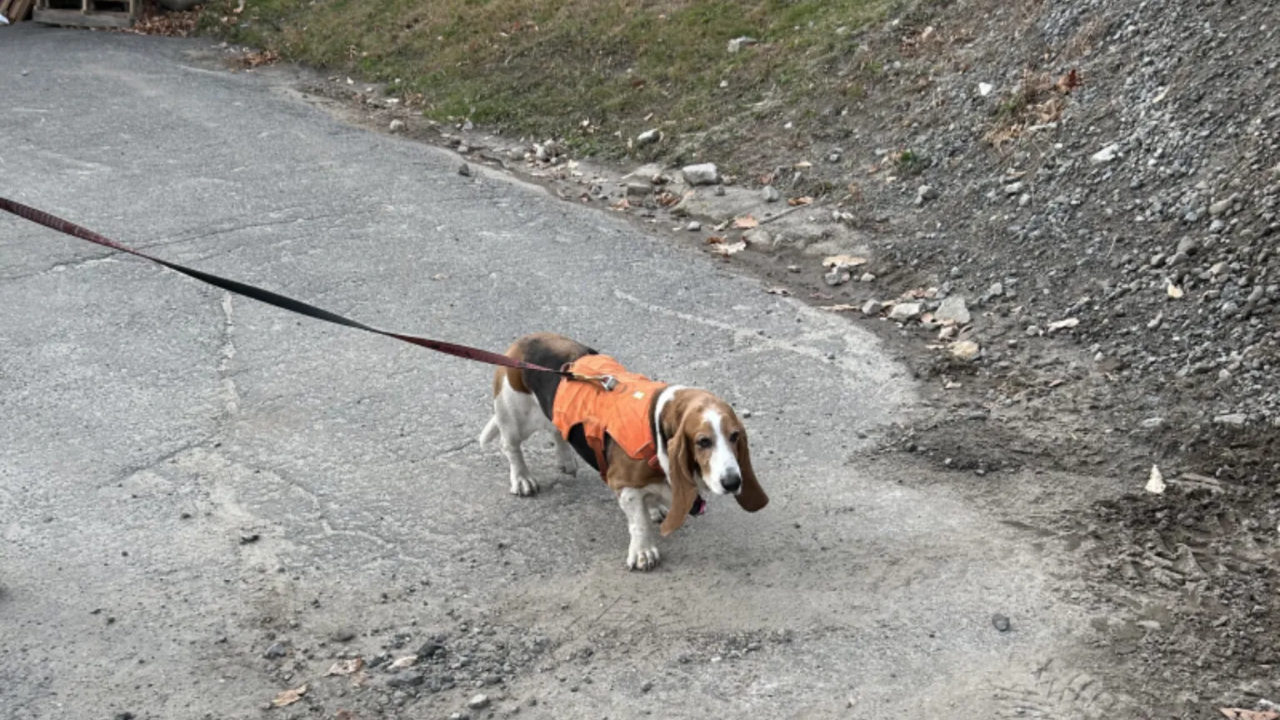
In the lodge incident, the companion dog bypassed both bottlenecks entirely. Rather than waiting for a missed check-in to trigger a probabilistic grid search, the animal compressed the timeline from discovery of absence to exact spatial localization into a single continuous sequence.
Mechanics of Cross-Species Referential Signaling
Standard reporting describes a dog "alerting" staff as an instinctive act of devotion. From an ethological and cognitive perspective, what occurred is a complex behavioral sequence known as referential signaling—specifically, intentional communicative behavior directed at a heterospecific (human) agent to manipulate their attention toward an external target.
Domestic dogs (Canis lupus familiaris) possess unique socio-cognitive adaptations resulting from thousands of years of co-evolution with humans. Unlike wolves, which rely on conspecific pack coordination, domestic dogs exhibit high sensitivity to human attentional states and use alternating gaze—shifting visual focus rapidly between a human's eyes and an object or direction of interest—to establish joint attention.
For an untrained dog to execute a successful rescue alert at a lodge, four distinct cognitive and behavioral steps must align without breakdown:
1. Spatial Separation and Goal-Directed Navigation
The animal must voluntarily abandon the immobilized owner. This requires overcoming primary attachment bonding in favor of a problem-solving drive triggered by the owner's distress or unresponsiveness. The dog then navigates back along an olfactory or spatial memory gradient to a known hub of human activity—the lodge.
2. Inter-Species Recruitment
Upon reaching the lodge, the dog must initiate contact with unfamiliar humans. Vocalization (barking), physical contact, or agitated pacing serves to disrupt baseline human routines. The critical variable here is persistence: the animal must maintain engagement until a human shifts from passive observation to active investigation.
3. Gaze Alternation and Directional Leading
Once human attention is secured, the dog deploys directional movement paired with backward glances. If the human fails to follow, the dog returns, re-engages, and repeats the initial vector movement. In behavioral science, this persistence and elaboration when a signal initially fails is the primary diagnostic criterion for intentional communication, distinguishing goal-directed alerting from mere anxiety.
4. Terminal Pinpointing
During the return transit, the dog acts as an active guide, pacing its speed to match human movement while tracking the inverse olfactory trail back to the stationary subject. Upon arrival, proximity behavior confirms target acquisition for the trailing rescuers.
Operational Limitations and Failure Modes
While this incident demonstrates the efficacy of biological signaling, relying on companion animals as an informal safety net introduces severe operational vulnerabilities. Treating this outcome as a repeatable safety protocol ignores high-probability failure modes.
- Attachment Paralysis: The vast majority of companion dogs will not leave an incapacitated owner. Strong social bonding frequently results in the animal remaining beside the subject until both succumb to hypothermia, rendering the dog invisible to visual SAR sweeps.
- Human Signal Misinterpretation: Untrained bystanders, including lodge staff, routinely misread canine distress signals as stray behavior, aggression, or simple begging. If staff secure the dog in a kennel or shoo it away from the premises, the vector link is permanently severed.
- Environmental Degradation of Scent: Heavy snowfall, high winds, or extreme sub-zero temperatures rapidly degrade volatile organic compounds (VOCs) and freeze scent particles, preventing a dog from relocating either the lodge or the owner if significant time elapses.
- Predation and Terrain Hazards: An off-leash domestic dog navigating wilderness terrain at night faces elevated risks of hypothermia, exhaustion, or encounters with apex predators, potentially removing the only link to the missing person.
Integration Protocols for Wilderness Hospitality and Solo Operators
To convert unpredictable biological luck into deterministic survival outcomes, both wilderness hospitality operators and solo backcountry travelers must restructure their pre-incident protocols.
For Lodge Operators and Rural Hospitality Staff
- Unaccompanied Animal Escalation Protocol: Establish an immediate standard operating procedure (SOP) for any unaccompanied domestic animal appearing on property boundaries wearing a collar or exhibiting persistent engagement behaviors. Staff must never kennel or dismiss the animal without first checking guest registries, trailhead sign-in sheets, and parking lots for unattended vehicles.
- Behavioral Recognition Training: Train front-desk and maintenance personnel to recognize referential signaling—specifically repeated approach-and-retreat movements paired with vocalization—as a high-probability indicator of an immediate medical or environmental emergency within a two-mile radius.
- Immediate GPS Tracking Deployment: If staff decide to follow an alerting animal, they must deploy with a dedicated GPS tracking device (such as a Garmin inReach or smartphone running offline topographic mapping with active track-logging), thermal blankets, and two-way radio communication. Following an erratic animal into dark timber without navigation tools risks creating secondary casualties.
For Solo Backcountry Travelers Over 60
- Deterministic Telemetry Over Biological Hope: Never rely on a companion animal for emergency signaling. Carry a dedicated satellite messenger capable of two-way text communication and automated SOS dispatch, worn directly on the body rather than inside a removable pack.
- Thermal Redundancy: Pack an emergency bivy sack constructed of aluminized polyethylene (Mylar) alongside a closed-cell foam pad. Reflecting radiated body heat and breaking conductive heat loss to frozen ground buys a 24-hour survival window regardless of age or metabolic output.
- Canine Identification Tagging: Outfit companion animals with high-visibility collars bearing waterproof tags that explicitly list the owner's emergency contact information, vehicle license plate, and local lodging details. If the animal separates and reaches civilization, physical metadata eliminates the need for staff to guess the origin of the alert.
Wilderness survival margins narrow exponentially with age and dropping temperatures. While canine referential signaling can occasionally bridge the gap between catastrophic isolation and timely rescue, institutional survival depends on eliminating the variables that force reliance on chance.