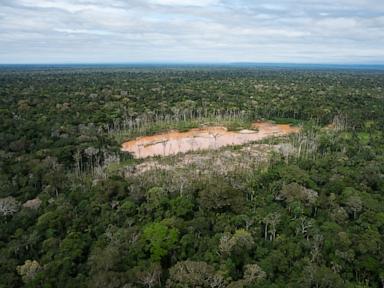
The architectural collapse of indigenous territorial security in the Peruvian Amazon is not a sudden anomaly; it is the predictable outcome of a structurally compromised legal framework facing compounding resource pressures. When the Inter-American Court of Human Rights examines the Peruvian state regarding its obligations toward peoples living in voluntary isolation and initial contact, the litigation targets a fundamental regulatory failure. The state maintains statutory mechanisms for territorial protection, yet execution mechanisms systematically collapse under the weight of economic concessions, illegal extraction economies, and administrative inertia. Understanding this crisis requires dissecting the operational mechanics of isolation, the economic drivers of incursion, and the systemic cost function borne by groups such as the Mashco Piro.
The Operational Mechanics of Isolation and Immunological Vulnerability
Peoples living in voluntary isolation, including the Mashco Piro inhabiting the southeastern rainforests of Madre de Dios, operate under an existential strategy of avoidance. This behavioral adaptation is entirely rational given historical trajectories of violence, enslavement during the rubber boom, and epidemiological devastation. Recently making headlines in related news: Institutional Vulnerability Analysis Systems Failure at Higher Education Facilities.
The physiological cost function of isolation is absolute: zero herd immunity against common pathogens. When extractive industries breach buffer zones, the biological risk equation changes instantaneously.
External Incursion (Logging/Mining)
       │
       ▼
Territorial Compression (Forced Migration of Isolated Groups)
       │
       ▼
Inter-Sectoral Encounter (Resource Competition with Contacted Communities)
       │
       ▼
Pathogen Transmission (Catastrophic Mortality via Respiratory Infections)
The absence of contact means that routine pathogens carried by loggers, miners, or researchers function as lethal vectors. Consequently, territorial protection is not merely an environmental policy or a human rights luxury; it is an epidemiological quarantine protocol necessary for biological survival. More information regarding the matter are explored by BBC News.
The Regulatory Friction Point
Peru enacted foundational legislation via the Law for the Protection of Indigenous or Aboriginal Peoples in a Situation of Isolation or Initial Contact (Act No. 28736), intended to establish territorial reserves where extractive activities are legally barred. However, the administrative architecture contains a structural paradox. The authority to establish, expand, or defend these reserves sits within administrative bodies susceptible to inter-ministerial pressure, particularly from ministries prioritizing gross domestic product expansion through forestry, hydrocarbons, and mining concessions.
The friction manifests in three systemic failure points:
- Concession Overlap: The state historically grants logging concessions or mineral extraction rights inside or adjacent to proposed territorial reserves, creating an immediate conflict of legal titles.
- Evidentiary Thresholds: Bureaucratic hurdles require exhaustive scientific proof of habitation for reserve creation, weaponizing the invisibility of nomadic uncontacted groups against their own legal protection.
- Reversal Inertia: Political shifts and regional economic lobbies successfully pressure executive bodies to block or roll back reserve expansions, exposing previously shielded populations to sudden industrial encroachment.
When state agencies delay or deny the expansion of reserves such as the Madre de Dios Territorial Reserve, they violate the principle of non-regression in human rights law. The state effectively trades long-term demographic viability for short-term extractive rents.
The Economic Drivers of Territorial Incursion
The legal battle before the Inter-American Court highlights how macroeconomic pressures dictate local enforcement realities. The southeastern borderlands of Peru are subjected to two distinct vectors of unauthorized entry: industrial-scale forestry and informal, illicit gold mining.
Illegal mining operations, concentrated in zones like La Pampa, generate immediate cash liquidity that overwhelms weak state enforcement capacity. Simultaneously, formal logging concessions push deeper into primary forests where Mashco Piro families forage seasonally.
As logging roads fragment the canopy, traditional movement corridors are severed. This forces uncontacted groups closer to settled communities, precipitating food insecurity, property disputes, and inevitable violent confrontations.
The state's economic strategy relies heavily on primary resource export, creating a structural conflict of interest. The administrative apparatus charged with protecting vulnerable populations is systematically underfunded compared to agencies tasked with concession management and export promotion. This resource asymmetry ensures that enforcement remains reactive rather than preventive.
The Legal Precedent and State Accountability
Bringing Peru before the Inter-American Court of Human Rights elevates the dispute from a domestic administrative grievance to a test of international state responsibility. Under the American Convention on Human Rights, states hold a positive obligation to protect the life, integrity, and cultural survival of populations within their jurisdiction. For uncontacted tribes, this obligation requires strict territorial exclusivity.
The litigation centers on the doctrine of due diligence. A state cannot claim compliance merely by passing nominal laws while permitting systematic administrative delays that leave territory exposed to third-party incursions. The international tribunal's scrutiny forces an examination of whether state omissions constitute a structural violation of the right to life.
If the court rules against Peru, the judgment will mandate non-recurrence measures, including binding legislative reforms, immediate cancellation of overlapping concessions within protected zones, and the permanent strengthening of protection checkpoints. More broadly, it establishes an explicit regional standard: economic development concessions cannot legally supersede the territorial integrity required for the biological survival of uncontacted peoples.
Enforce a strict moratorium on all extractive concessions overlapping proposed or established territorial reserves for isolated groups, tying administrative clearance directly to mandatory independent human rights impact assessments.