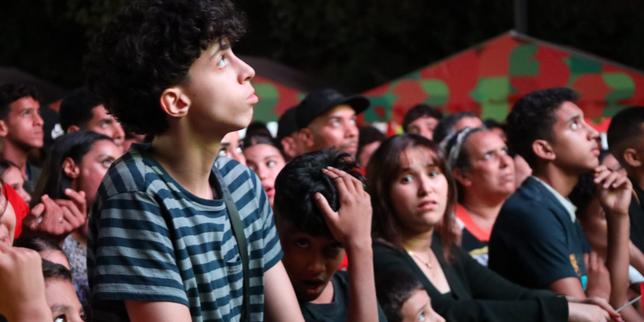
The sudden assembly of thousands of individuals across Boston in December 2022 to support the Moroccan national football team requires rigorous deconstruction. The standard narrative treats this cross-continental convergence—where populations with roots spanning from Egypt to Senegal rallied behind a single North African nation—as an organic, emotional anomaly. That premise is fundamentally flawed. This event operated as a highly structured manifestation of surrogate nationalism, catalyzed by spatial urban dynamics and rapid network activation.
By applying economic utility models and sociological frameworks to the Boston mobilization, we can quantify the exact mechanisms that drive fragmented diasporas to adopt a unified transnational identity.
The Mechanics of Surrogate Identity Activation
Individuals in transient or diaspora populations constantly calculate the psychological utility of community affiliation. When a direct representation of an individual's origin nation is unavailable or eliminated from a high-stakes arena like the World Cup, the individual faces a choice: withdraw from the communal event entirely or adopt a proxy.
The selection of this proxy is not random. It is governed by a strict hierarchy of affinity markers. The adoption of the Moroccan identity by the broader Boston-based African and Arab diasporas followed a predictable mathematical sorting process.
The probability of an individual adopting a surrogate national identity increases exponentially based on three primary intersectional vectors:
- Linguistic and Religious Proximity: The baseline requirement for immediate integration into a foreign fandom network. Shared Arabic dialects or French language proficiency provided the communication protocol. Shared Islamic cultural markers provided the behavioral framework, dictating the nature of celebrations and the locations chosen for physical assembly.
- Shared Geopolitical Narratives: The presence of a common historical antagonist. The Moroccan victories against Spain and Portugal—nations with deep colonial histories in Africa and the Arab world—activated a post-colonial grievance narrative. The proxy team ceases to be just a football squad and becomes an avatar for historical rebalancing.
- The Underdog Efficacy Factor: In sports economics, the concept of Basking in Reflected Glory requires a cost-benefit analysis. A highly favored team offers low psychological yield upon victory. A historic underdog achieving unprecedented success (Morocco becoming the first African and Arab nation to reach the semi-finals) offers exponential psychological yield with near-zero social penalty for failure.
Individuals from Lebanon, Algeria, or Nigeria residing in Boston optimized their social utility by mapping their personal identity onto the Moroccan success vector. The barrier to entry was practically non-existent, requiring only physical presence and basic visual compliance, such as wearing the color red.
The Spatial Geography of the Boston Node
The phenomenon required specific environmental conditions to materialize at scale. Boston functions as a unique demographic pressure cooker, perfectly engineered for this type of rapid mobilization.
The city is characterized by a massive concentration of higher education institutions and specialized medical and technological sectors. This creates a specific demographic profile: high volumes of highly educated, geographically concentrated, and transient international populations.
The physical geography of Boston further forces convergence. Unlike sprawling metropolitan areas where diasporas can isolate in massive, decentralized enclaves, Boston’s dense urban topology and reliance on specific public transit corridors funnel populations into concentrated commercial districts.
We must map the physical infrastructure that facilitated this assembly. The mobilization relied entirely on the availability of "Third Spaces"—locations outside the home and workplace that allow for unstructured social interaction.
- The Primary Aggregation Nodes: Sports bars, specific cafes, and hookah lounges clustered in areas like Cambridge, Malden, and Revere acted as the initial ignition points. These locations already catered to a baseline North African or Middle Eastern clientele.
- The Overflow Mechanism: Because the structural capacity of these primary nodes is inherently limited by Boston's zoning laws and real estate density, the capacity breach forced the population into the public square.
- The Public Translation: The spilling over from private commercial spaces into public streets (the visible rallies) is the critical phase shift. It transforms a localized consumer event into a public demonstration of demographic mass.
The physical constraints of Boston's architecture literally forced the diverse diasporas into physical proximity, accelerating the sociological bonding process.
The Dual-Axis Identity Matrix
To understand the sheer volume of the Boston mobilization, one must analyze the unique geopolitical positioning of Morocco. The nation occupies two distinct sociological planes simultaneously. This dual identity doubled the potential adoption pool compared to almost any other nation on earth.
The expansion of the surrogate network occurred along two distinct axes.
The Pan-Arab Activation Vector
Morocco’s primary identification vector in this event was its Arab identity. The mechanism of unity here was heavily subsidized by existing political signifiers. The most prominent empirical evidence of this was the pervasive integration of the Palestinian flag alongside the Moroccan flag during the Boston rallies.
The Palestinian flag functioned as a recognized, universal macro-symbol for Arab solidarity. By integrating this symbol into the Moroccan sporting success, the core Moroccan organizers effectively open-sourced their victory. They signaled to the Egyptian, Syrian, and Lebanese populations in Boston that this was not a strictly nationalist achievement, but a collective regional triumph. The psychological ownership of the team was decentralized.
The Pan-African Expansion Vector
The secondary, but equally critical, axis was the Pan-African identity. Historically, the sociological bridge between North Africa and Sub-Saharan Africa is complex, often fractured by distinct political and cultural dividing lines.
The activation of the Sub-Saharan diaspora in Boston (individuals from Senegal, Ghana, Cameroon) relied entirely on continental milestone metrics. The specific threshold—breaking the historical barrier of reaching the World Cup semi-finals—activated a latent continental pride. The narrative shifted structurally from "Morocco vs. The World" to "Africa vs. Europe." This framing bypassed regional frictions and allowed Sub-Saharan populations in Boston to logically justify their temporary allegiance to a North African state.
Had a nation like Saudi Arabia (exclusively Arab) or Senegal (exclusively Sub-Saharan) achieved this run, the total addressable market for surrogate fandom in Boston would have been immediately halved. Morocco's specific geographical and cultural coordinates provided the exact algorithmic intersection necessary for maximum demographic capture.
The Velocity of Digital-to-Physical Translation
The speed at which the Boston rallies materialized highlights a shift in how diasporas communicate. The mobilization bypassed traditional community organizing structures, such as cultural associations or religious centers, which operate on slow, hierarchical communication models.
Instead, the convergence was driven by decentralized, high-velocity digital networks.
- Algorithmic Clustering: Social media platforms aggregate users based on cultural affinities. A viral video of a Moroccan celebration in Doha immediately populates the feeds of Algerian and Egyptian students in Boston due to linguistic and geographic algorithmic grouping.
- Private Network Broadcasts: The final logistical coordination occurred in dark social channels—specifically WhatsApp groups. These groups, often initially formed around university affiliations or specific neighborhoods, act as hyper-efficient broadcast nodes. A single message regarding a gathering location at a specific cafe in Cambridge can propagate through intersecting digital clusters in minutes.
- The Visual Proof Imperative: The mobilization became self-sustaining through the immediate broadcast of visual proof. Once the first 100 people gathered in a Boston street, the digital broadcasting of that gathering lowered the perceived social risk for the next 1,000 people.
The digital infrastructure compressed the time required to organize a mass urban assembly from weeks to mere hours.
The Decay Function of Spontaneous Assembly
Analytical rigor requires examining the conclusion of the phenomenon. The transnational unity displayed in Boston was inherently ephemeral. It is subject to a strict decay function.
Surrogate nationalism requires an active, external stimulus to maintain cohesion. The moment the Moroccan team was eliminated from the tournament, the utility of the surrogate identity collapsed.
The network immediately begins to fragment along pre-existing fault lines. The Pan-African vector dissolves first, as the immediate sporting context vanishes, and the vast cultural distances between North and Sub-Saharan Africa reassert themselves. The Pan-Arab vector follows, returning to historical baselines often complicated by localized geopolitical disputes, such as the tension between Morocco and Algeria.
The Boston phenomenon was not the forging of a permanent, unified political bloc. It was a temporary, high-intensity alignment of disparate groups optimizing for a shared psychological reward. Once the reward mechanism was removed, the structural bonds evaporated, leaving only a residual increase in baseline cultural awareness.
Strategic Forecasting for Urban Event Management
The mechanics observed in the Boston Moroccan mobilization provide a strict blueprint for understanding future spontaneous urban assemblies. The translation of global events into hyper-localized physical realities is accelerating.
City planners, law enforcement, and localized commercial entities must abandon the idea that urban mobilization requires formal organization or months of planning. They must model for sudden, high-density physical convergence based on exogenous shocks occurring thousands of miles away.
To anticipate these events, institutions must monitor the digital intersections of transient populations. When a global event maps onto a dual-axis identity (like the Arab-African intersection) and triggers a post-colonial or underdog narrative, rapid physical assembly in constrained urban environments is not a possibility—it is a mathematical certainty. Prepare infrastructure, transit, and public safety protocols for the exact moment the digital sentiment breaches the physical capacity of localized third spaces.