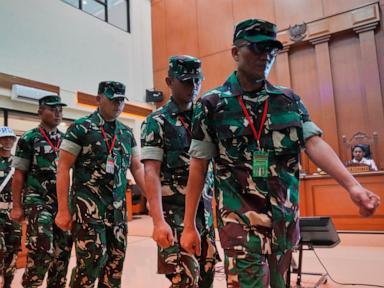
The sight of four military officers standing in a Jakarta courtroom in their camouflage fatigues shouldn't be a routine event. Yet, as the trial for the acid attack on activist Andrie Yunus kicked off this Wednesday, it felt like a grimly familiar chapter in a much larger, more troubling story about where Indonesia is headed.
If you haven't been following the details, here's the reality. Andrie Yunus, a 27-year-old deputy coordinator at the human rights group KontraS, was riding his motorcycle home on the night of March 12. He'd just finished recording a podcast about the increasing "militarization" of the Indonesian government. Two men on a scooter pulled up and doused him with a mixture of car battery acid and rust remover. You might also find this similar coverage insightful: Trump Shifts the Brinkmanship Playbook on Tehran.
He lost sight in his right eye. He has chemical burns across 24% of his body. He’ll carry the scars for the rest of his life.
The Soldiers in the Dock
Four men from the military's Strategic Intelligence Agency (BAIS) now face charges of serious premeditated assault. Their names are Sgt. Edi Sudarko, First Lt. Budhi Hariyanto Widhi Cahyono, Capt. Nandala Dwi Prasetya, and Air Force First Lt. Sami Lakka. As extensively documented in latest reports by TIME, the implications are notable.
Prosecutors are pushing for a 12-year maximum sentence. That sounds heavy, but the narrative being spun in court is what should actually worry you. The prosecution's line is that these men acted out of "personal" anger. Apparently, they felt "affronted" because Yunus protested a 2025 revision to the armed forces law that allows active-duty military to take more civilian government jobs.
Let’s be real. It’s hard to swallow the idea that four intelligence officers—trained to follow orders and operate within a chain of command—suddenly decided, as a group of pals, to source industrial chemicals and carry out a coordinated hit on a specific activist just because their feelings were hurt.
Why the Military Court Matters
One of the biggest red flags here is the venue. The trial is happening in a military court, not a civilian one. This isn't just a technicality. Human rights groups like Amnesty International and KontraS have been shouting from the rooftops about this for weeks.
- Transparency: Military trials are notoriously opaque.
- Leniency: Historically, soldiers tried by their peers often walk away with lighter sentences than they'd get in a public, civilian court.
- Accountability: By keeping it "in-house," the military can control how much of the "why" actually makes it into the public record.
If the court accepts the "personal motive" story, it conveniently cuts off any investigation into whether these men were ordered to do this. It turns a systemic attack on dissent into a simple case of four guys who lost their tempers.
A Pattern of Intimidation
The attack on Yunus didn't happen in a vacuum. It’s part of a chilling trend under the administration of President Prabowo Subianto. Since he took office, we’ve seen a significant push to put military personnel into civilian roles—the very thing Yunus was campaigning against.
The National Human Rights Commission (Komnas HAM) thinks there were at least 14 people involved in the attack. If they’re right, where are the other 10? The fact that the investigation narrowed so quickly to just four suspects feels like a "containment" strategy.
It’s a classic move: sacrifice a few low-to-mid-level officers to protect the higher-ups and the institution's reputation. We saw it with the 2004 murder of Munir Said Thalib. We’re seeing the same shadows here.
The Cost of Speaking Up
What does this mean for the average person in Indonesia? It means the cost of criticism is going up.
When an activist is blinded for talking on a podcast, the message to everyone else is clear: keep your head down. It’s a tactic meant to trigger a "chilling effect." If you're a student, a journalist, or just someone who cares about the direction of the country, you have to ask yourself if you're willing to risk a vial of acid to say what you think.
What Needs to Happen Now
Watching the trial is only half the battle. If we want to see actual justice—not just a choreographed performance—there are specific things to look for in the coming weeks.
- Demand Civilian Trials: The other 10 people allegedly involved must be investigated and tried in civilian courts. There’s no excuse for non-military accomplices to hide behind a military tribunal.
- Scrutinize the Evidence: The "battery acid and rust remover" mixture wasn't an accident. It was a calculated choice to cause maximum permanent damage. The trial needs to focus on the planning phase—who knew what, and when?
- Pressure for Transparency: Keep the heat on the BAIS leadership. The chief of the agency resigned shortly after the arrests, but no one ever said why. That’s a massive, unaddressed "coincidence."
Don't let the Camouflage-in-Court routine distract you. This isn't just about four men and a bottle of acid. It's about whether the Indonesian military is still a "state within a state" that's above the law. If they get away with the "personal motive" defense, it's a green light for more of the same.
Pay attention to the next hearing on May 6. That's when the witnesses start talking, and that's when we'll see if anyone is brave enough to go off-script.