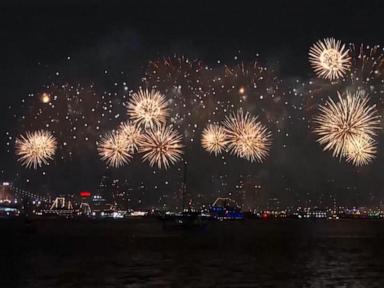
Every July fifth, local news stations run the exact same b-roll footage. Cameras tilt upward, capturing a predictable sequence of red, white, and blue explosions over a city skyline. The audio tracks feature a synchronized chorus of manufactured "oohs" and "aahs" from a crowd packed shoulder-to-shoulder on lawn chairs. The media serves this up as a wholesome, indispensable civic triumph.
It is a lie.
The standard public fireworks display is a lazy, outdated ritual that burns millions of tax dollars in a matter of twenty minutes, leaving behind nothing but smoke, terrified wildlife, and a massive cleanup bill. Municipalities across the country are stuck in a feedback loop, repeating the same 19th-century performance because they lack the creativity to offer anything better. We have normalized a massive, recurring waste of capital under the guise of patriotism. It is time to ground the pyrotechnics.
The Illusion of Civic ROI
City managers love to justify the six-figure price tags of these shows by pointing to foot traffic. They claim that drawing fifty thousand people to a downtown waterfront provides a massive boost to local businesses.
I have analyzed municipal budgets and spoken with downtown merchants who dread the Fourth of July. The reality on the ground contradicts the economic consensus. The vast majority of spectators pack their own coolers, bring their own snacks, and park for free in residential neighborhoods. They arrive two hours before sunset, clog the streets, leave mountains of litter, and flee the moment the finale ends.
For a local restaurant or boutique, the evening is a net negative. The massive crowds block access for their regular, high-spending clientele. Foot traffic does not equal dollar traffic when that foot traffic is hyper-focused on a free sky show. Imagine a scenario where a city spends $150,000 on a fireworks contract, redirects twenty police officers on overtime pay, and tasks a sanitation crew with a twelve-hour cleanup shift, all so a mobile hot dog vendor can make an extra grand. The math does not work.
The Technological Arrogance of Gunpowder
We live in an era of unprecedented visual technology, yet our primary form of national celebration relies on formulas invented in ancient China. The environmental toll is no longer a fringe complaint; it is a measurable public health hazard.
The morning of July fifth consistently sees some of the worst air quality spikes of the year. Fine particulate matter ($PM_{2.5}$) levels routinely rocket past hazardous thresholds in major metropolitan areas immediately following a show. This is not just harmless smoke. It is a toxic cocktail of heavy metals—strontium for red, barium for green, copper for blue—that settles directly into local waterways and soil.
Furthermore, the disruption to local ecosystems is profound. Conservation data shows that unexpected, high-decibel explosions cause mass panic among urban wildlife nesting populations, leading to high mortality rates among migratory birds. For domestic pets and veterans suffering from PTSD, the night is a gauntlet of stress.
To insist that this specific form of entertainment is mandatory for national pride is a failure of imagination. We are using primitive explosives to scratch an itch that modern technology can solve with far more precision, beauty, and safety.
The Drone Fallacy: Trading One Gimmick for Another
When cities realize fireworks are a problem, they usually pivot to drone light shows. This is where the standard contrarian take goes wrong. Drones are frequently pitched as the clean, high-tech savior of the holiday.
They are not.
Most drone light shows are incredibly boring. They lack the visceral, chest-thumping audio component of fireworks. Watching three hundred illuminated quadcopters slowly arrange themselves into a pixelated American flag looks less like a celebration and more like a corporate marketing activation. It is clinical. It lacks soul.
More importantly, the logistics of a major drone show are a nightmare. High winds, radio frequency interference, and battery degradation mean these shows are frequently delayed or canceled at the last minute. Cities trade a chemical hazard for a fragile tech stack that fails the moment a gust of wind hits fifteen miles per hour. Switching from fireworks to drones is just trading an old gimmick for a new one without addressing the core issue: the format of the mass-gathering sky show itself is broken.
Redefining the Public Gathering
People ask how a community can celebrate its identity without a massive display in the sky. The premise of the question assumes that thousands of people staring silently in the same direction for twenty minutes constitutes a meaningful community experience. It does not. It is passive consumption.
The cities that actually drive engagement and economic vitality on the Fourth of July are abandoning the single, centralized mega-event. Instead, they are decentralizing the capital.
- Fund Micro-Grants for Block Parties: Distribute the $100,000 fireworks budget down to neighborhoods. Allow local communities to host street closures, live music, and hyper-local markets. This keeps dollars in the community and builds actual social fabric.
- Invest in Permanent Infrastructure: Spend the money on upgrading public parks, building permanent outdoor performance stages, or funding interactive public art installations that provide value 365 days a year, rather than exploding in twenty minutes.
- Shift to Interactive Night Markets: Create twilight festivals focused on local culinary talent, live performance art, and projection mapping on architectural landmarks. This drives real revenue to local vendors who actually pay taxes in the district.
The transition away from pyrotechnics will face backlash. Nostalgia is a powerful drug, and traditionalists will claim that canceling fireworks is an attack on heritage. But leadership requires looking at the data, weighing the costs, and realizing that standing in a crowded park breathing in barium dust while staring at a blinking sky is a terrible way to spend a holiday.
Stop funding the explosion of public funds. Demand a celebration that builds something lasting.