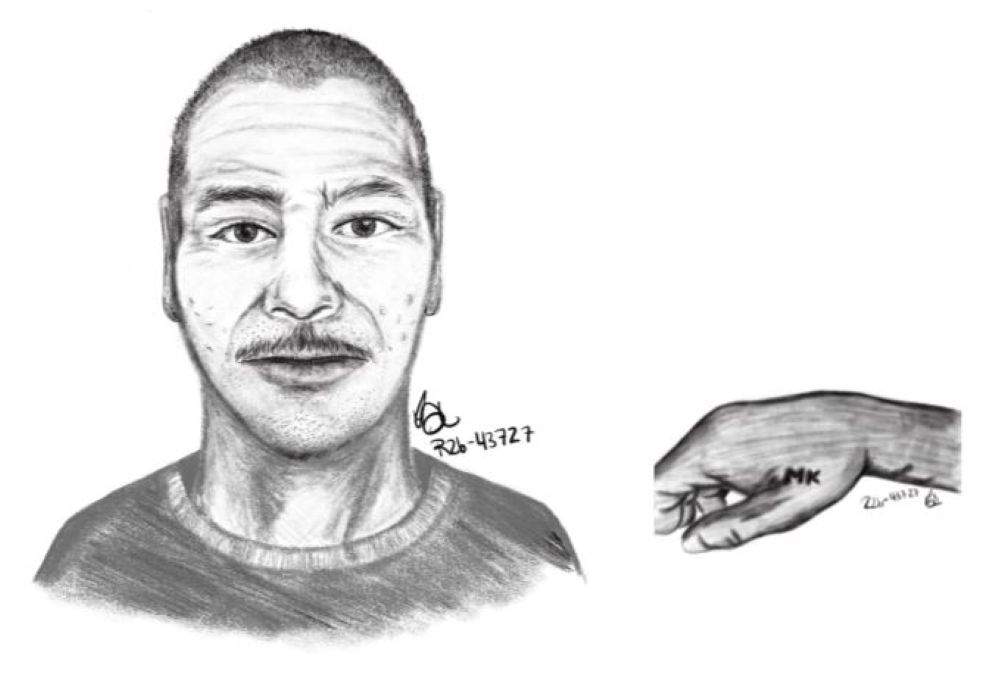
An anonymous man died at the Health Sciences Centre in Winnipeg on July 29 after being found unresponsive near Main Street and James Avenue. Weeks later, law enforcement released a composite sketch and a list of physical markers—a faded tattoo of the letters "MK," a scar under his right ribcage, a thin mustache—in a desperate bid to give him back his name. This is not a homicide investigation. There is no criminal file, no suspect to hunt, and no trial pending.
Instead, this is an exercise in the grim reality of urban anonymity. When a body passes through the morgue without a wallet, ID card, or registered fingerprints on file, the machinery of modern identification slows to a crawl. Investigators lean on forensic artists, public appeals, and the hope that someone scrolling through a news feed recognizes a contour of the face or a poorly inked hand.
The Anatomy of an Unsolved Identity
Every year, municipal police services and medical examiners quietly grapple with the challenge of the nameless deceased. When an individual collapses on a public thoroughfare—as this man did at approximately 7:00 p.m. on July 28—and succumbs to medical distress without documentation, a multi-agency race begins.
The Winnipeg Police Service Forensic Services Unit, the Chief Medical Examiner's Office, and the Manitoba Integrated Missing Persons Coordination Centre all cycle through internal databases. They check active missing persons reports, cross-reference fingerprint repositories, and run dental records. Yet, gaps remain wide.
If a person lives on the fringes of society, moves frequently between provinces, or has been estranged from family for decades, standard bureaucratic threads snap. No employer is waiting to report them missing. No landlord notices their absence immediately. They exist in a blind spot until a tragedy forces them into the public eye.
Physical Markers and the Limits of Recognition
Police descriptions carry stark, clinical details that rarely capture the full humanity of a person. In this case, the public has been handed a specific set of clues:
- A man estimated to be between his 40s and 60s.
- Standing 5 feet 7 inches tall with a thin build.
- Dark hair that had been recently shaved, paired with a thin mustache and brown eyes.
- A half-inch scar above the left eyebrow and a longer scar beneath the right ribcage.
- An older, faded tattoo on his right hand bearing the letters "MK".
- Attire consisting of light-colored Levi's jeans, a grey T-shirt, black steel-toed boots, and an orange-and-white striped belt.
These items tell a partial story. The steel-toed boots hint at manual labor, construction, or warehouse work. The faded tattoo suggests personal history, perhaps youthful rebellion or a tribute long forgotten. Yet, without a digital match in a national fingerprint or DNA database, these markers are reduced to static on a screen.
The Burden on Public Appeals
When databases fail, police rely entirely on the collective memory of the public. Investigators publish composite sketches not as a guaranteed fix, but as a last resort when all institutional avenues hit a dead end.
Public appeals succeed or fail based on visibility. In a media ecosystem saturated with noise, an image of an unknown man sharing space with commercial advertisements and breaking world news easily fades into the background. Families who live hundreds of miles away may never see the sketch, remaining entirely unaware that a relative drew their final breath on a Winnipeg sidewalk.
The Manitoba Integrated Missing Persons Coordination Centre continues to field calls at 204-986-6250, waiting for the single phone call that bridges the gap between an institutional case number and a grieving family. Every day that passes without a name deepens the silence, turning a temporary mystery into a permanent institutional quietude.