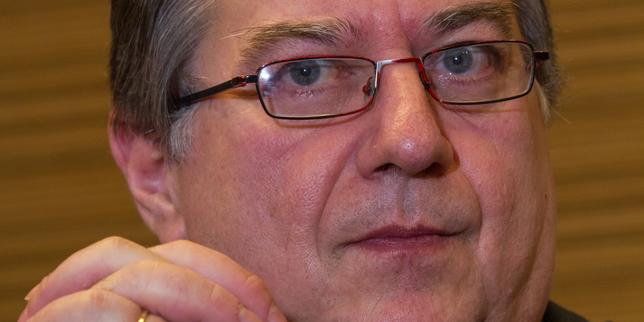
History rarely happens in the bright, theatrical glare of the plenary chamber. Most of the time, it is forged behind closed doors, in the stale air of a Brussels conference room at three in the morning, where exhausted men in rumpled suits trade concessions over cold coffee and crumpled papers. For decades, Serge Guillon was that room.
When the news of his death rippled across European capitals, it did not arrive with the blare of sirens or the shock of a sudden political assassination. Instead, it moved like a quiet tremor through the corridors of power. Diplomats paused mid-sentence. Commissioners looked down at their desks. A collective realization settled over the continent: the person who knew where every diplomatic body was buried, who had stitched together fractured compromises when entire treaties threatened to unravel, was gone.
To the general public, his name rarely graced the evening news bulletins. He was not an elected firebrand who courted television cameras or inflamed crowds with grand rhetoric. He operated in the quiet machinery of statecraft, functioning as the quintessential European technocrat—though that word feels far too clinical for a man who viewed the European project not as a bureaucratic exercise, but as a fragile, hard-won peace.
Consider what it takes to hold twenty-some distinct nations, with fiercely competing languages, economies, and historical grievances, to a single table. It takes immense patience. It takes an encyclopedic memory for past betrayals and forgotten promises. And above all, it takes a rare kind of anonymity. Guillon mastered that anonymity. He wore it like a shield.
Born into a generation that remembered the continent as a smoking ruin, his worldview was shaped by a singular, urgent question: How do you prevent neighbors who have spent centuries slaughtering each other from doing so again?
The answer, he came to believe, was not found in grand declarations of brotherhood, but in the unglamorous work of integration. Steel. Coal. Trade tariffs. Agricultural quotas. Regulations on the curvature of cucumbers and the safety of electrical sockets. To the cynic, these were the banal tools of suffocating bureaucracy. To Guillon, they were the invisible threads binding a broken continent together, making war not merely unthinkable, but materially impossible.
Those who worked alongside him in the European Commission and the Council of Ministers tell stories of a man who could dismantle a deadlocked negotiation with a single, dry observation delivered in a murmur. While others pounded fists and leaked ultimatums to the press, Guillon listened. He would sit back in his chair, fingers steepled, waiting for the rhetorical posturing to exhaust itself. Only when the room fell silent would he lean forward and offer the formulation everyone else had missed—a linguistic bridge narrow enough to cross, yet sturdy enough to bear the weight of opposing national interests.
He was present at the creation of the single market, navigated the labyrinthine expansions that drew former Eastern Bloc nations into the democratic fold, and managed the bruising, midnight crises that threatened the euro. Through every storm, he remained the constant variable. Ministers came and went, fueled by domestic political ambitions and fleeting electoral mandates. Guillon stayed, outlasting them all, providing the institutional memory that kept the ship of state from running aground on the rocks of short-term populism.
Yet, there is a profound melancholy attached to a life spent in the service of institutions.
Power of that kind is self-effacing. When a treaty succeeds, the politicians take the microphones, basking in the flashbulbs and cutting ribbons. When a policy fails, the faceless civil servants take the blame. Guillon accepted this bargain willingly. He understood that ego is the enemy of diplomacy. If you need the applause, you cannot be trusted to broker a truce in the dark.
Walking through the European Quarter in Brussels today, the absence feels palpable. The glass-and-steel monoliths remain, gleaming under the grey Belgian sky. Elevators chime. Briefcases click against marble floors. But the gravity has shifted.
The European Union is currently navigating some of the most perilous waters in its history. Rising nationalism, economic fragmentation, and shifting global superpowers are testing the seams of the union in ways Guillon spent his entire life guarding against. Without his steady hand, without his institutional intuition, the machinery feels a fraction louder, a degree more brittle.
We tend to measure history by its dramatic climaxes—the signing ceremonies, the falling walls, the declarations of war and peace. We forget that these moments are merely the visible eruptions of deep, subterranean tectonic shifts managed by people we will never know.
Serge Guillon did not write the history books, but he wrote the sentences that made them possible. As the quiet architect of modern Europe is laid to rest, the continent he helped build is left to wonder who will step into the shadows and hold the center when the next storm breaks.