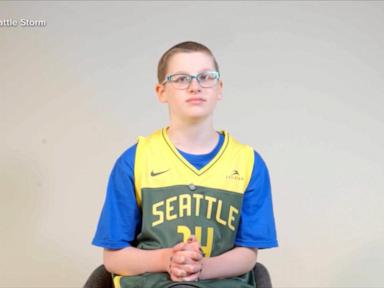
Professional sports franchises operate primarily as entertainment conglomerates, yet their long-term enterprise value relies heavily on community equity and emotional consumer lock-in. When organizations integrate pediatric philanthropic initiatives, such as the recent partnership between the Seattle Storm and the Make-A-Wish Foundation to integrate an eleven-year-old fan named Charlotte into active team operations as an honorary player, observers frequently reduce the event to a sentimental milestone.
This surface-level interpretation misses the underlying strategic architecture. Corporate social responsibility in professional athletics functions as an institutional mechanism for risk mitigation, brand differentiation, and stakeholder alignment. Deconstructing how sports franchises execute wish-granting logistics reveals a calculated framework of organizational resource allocation, employee engagement optimization, and community-driven brand equity.
The Tripartite Framework of Institutional Wish Integration
Integrating an external participant into a high-performance professional sports environment requires crossing rigid operational boundaries. Athletic organizations operate under strict performance constraints, tight scheduling matrices, and proprietary tactical protocols. Executing a wish day without disrupting team preparation requires a functional framework divided into three distinct operational pillars.
The Access Protocol
The primary constraint in professional sports is time scarcity. Players, coaching staffs, and front-office personnel operate on highly compressed preparation schedules. Granting a child honorary player status demands a structured protocol that introduces the participant into the ecosystem without altering core athletic outputs.
Franchises achieve this by mapping the participant journey against off-court operational windows. Locker room access, personalized merchandise integration, and media availability sessions are scheduled during controlled intervals. This preserves the integrity of the team's athletic preparation while maximizing the emotional yield for the participant.
Brand Equity Allocation
From a marketing perspective, philanthropic activations generate organic, high-trust impressions that traditional paid advertising channels cannot replicate. Consumer skepticism toward corporate messaging runs high, but authentic community engagement bypasses traditional defensive filters.
When a franchise embeds a pediatric participant into its daily workflow, it externalizes its internal culture. This signals to consumers, corporate partners, and regional municipal leaders that the organization functions as a civic institution rather than a purely transactional entertainment asset.
Internal Stakeholder Alignment
Philanthropic integration serves an internal function for player and staff morale. Professional athletes endure intense performance pressures and physical strain. Direct interaction with individuals facing severe health adversities recalibrates perspective within the locker room.
Operationalizing these visits creates shared emotional touchpoints for the roster and coaching staff. This reinforces organizational cohesion and unites internal stakeholders around a shared civic identity that transcends the immediate win-loss record.
The Economic Mechanics of Community Integration
While philanthropic initiatives are driven by moral and civic objectives, they generate measurable downstream economic impacts. Standard economic evaluations of sports franchises focus almost exclusively on ticket sales, media rights, and merchandise revenue. This omits the value of relational capital.
Community-centric activations lower customer acquisition costs by driving earned media coverage across regional and national outlets. When a franchise executes a high-visibility integration event, local news networks, digital sports platforms, and social media channels distribute the narrative organically. This shifts marketing expenditures from paid acquisition channels to high-return organic visibility.
Furthermore, these initiatives strengthen business-to-business alignment. Corporate sponsors increasingly demand authentic Environmental, Social, and Governance alignment from partner properties. By providing structured frameworks for community outreach, franchises offer corporate partners co-branding opportunities that enhance their own corporate social responsibility profiles.
Operational Friction Points in Experiential Philanthropy
Executing community integration initiatives introduces specific organizational risks. Mismanaged access protocols can create friction between the needs of the athletic department and the objectives of the community relations team. If a player's pre-game routine is disrupted by external promotional obligations, athletic performance can be compromised.
To mitigate this operational risk, successful front offices implement strict boundary conditions. The community relations director acts as an internal buffer, coordinating directly with coaching staff to identify optimal integration windows. This ensures that the initiative operates with zero negative impact on athletic preparation.
Another friction point involves expectation management. Pediatric participants and their families experience high-intensity emotional peaks during these events. Franchises must maintain long-term relational continuity rather than executing a transactional, one-off photo opportunity. Sustained communication, ongoing fan club integration, and periodic check-ins ensure that the relationship extends beyond the initial activation date.
Strategic Execution for Franchise Growth
Modern sports management requires balancing short-term commercial monetization with long-term brand equity preservation. Philanthropic integrations like honorary player contracts provide a structural mechanism to achieve this balance. They anchor the franchise within the local civic fabric, differentiate the brand in a crowded media market, and reinforce internal organizational culture.
Franchises seeking to maximize the return on their community investments must institutionalize these processes. Rather than treating wish-granting as an ad-hoc public relations task, organizations should integrate community relations KPIs directly into their operational planning. Aligning athletic operations, marketing execution, and civic engagement ensures that community impact reinforces enterprise value.