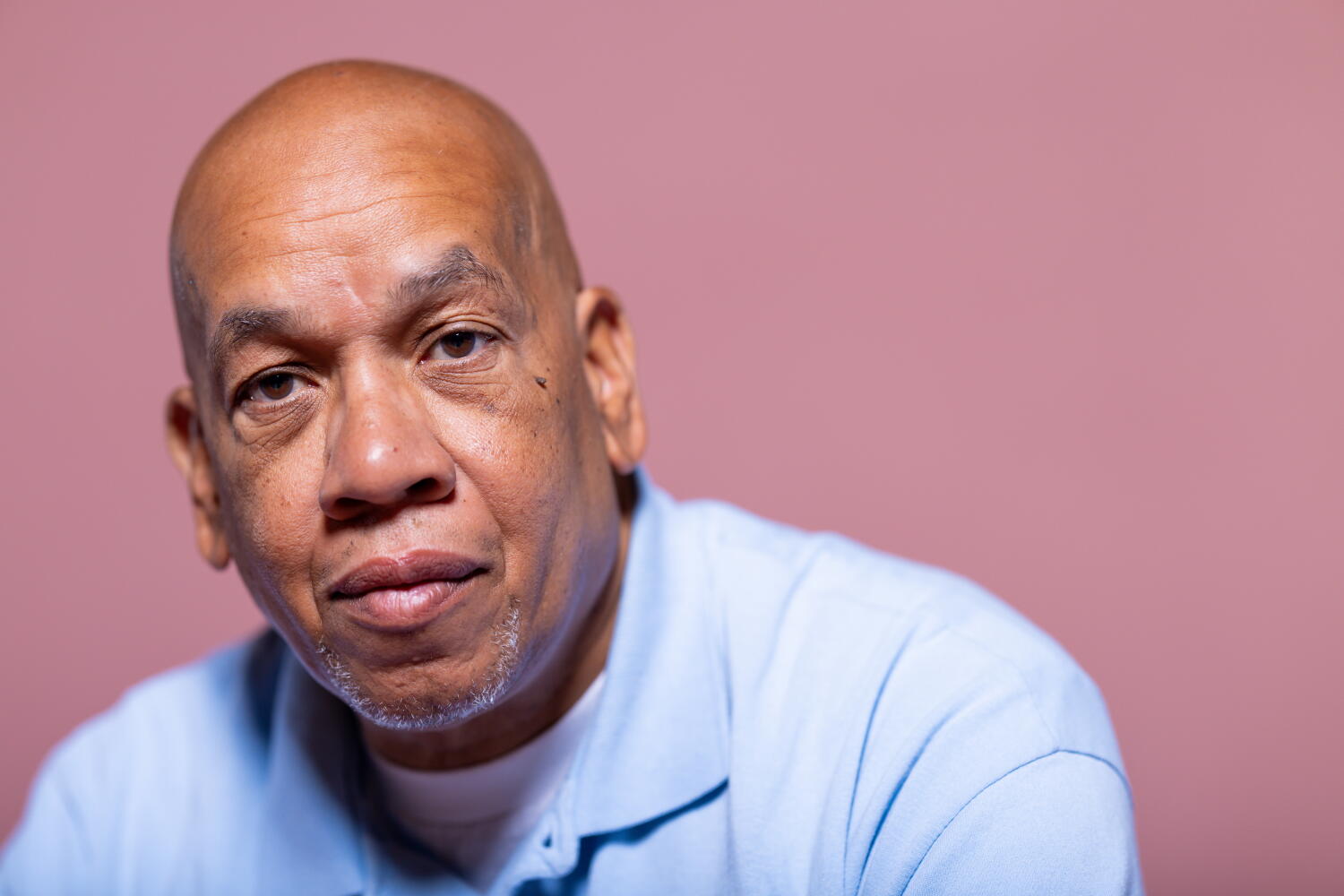
Transferring a high-value historic property into a charitable trust is not an act of passive sentimentality; it is a calculated structural defense against cultural entropy, estate tax liquidation, and archival fragmentation. When Antony Penrose, the son of surrealist photographer and war correspondent Lee Miller and artist Roland Penrose, elected to gift Farley Farm House in East Sussex to a dedicated charity, he executed an institutional governance strategy designed to lock physical real estate, fine art collections, and photographic negatives into a single, indivisible operating entity. Standard media coverage frames this decision as a simple tribute to a famous mother. That framing misses the underlying economic, legal, and curatorial mechanics required to keep a private artistic archive intact across generational transitions.
The Structural Threat of Generational Estate Transitions
Private artistic estates face a predictable mortality curve. When a major cultural figure dies, their physical assets—real estate, primary artworks, negatives, correspondence, and personal libraries—pass to direct heirs. Without formal institutional intervention, three systemic pressures inevitably degrade the collection within two generations:
- Taxation and Liquidity Crunches: Inheritance and estate tax frameworks in jurisdictions like the United Kingdom assess real property and high-value fine art at fair market value. When an estate is asset-rich in illiquid cultural goods and cash-poor, heirs are forced to sell marquee works on the open market to satisfy tax liabilities. Selling the highest-value pieces strips the archive of its anchor assets, reducing the historical coherence of what remains.
- Fractional Ownership and Heir Divergence: As assets pass from children to grandchildren, ownership divides among multiple beneficiaries with divergent financial needs and geographic locations. A single heir requiring liquidity can force the partition or sale of the estate, breaking the spatial link between the artist's working environment and their output.
- Physical and Archival Degradation: Photographic negatives, vintage silver gelatin prints, and mid-century architectural interiors require climate-controlled storage, conservation-grade housing, and specialized cataloguing. Private residences lack the recurring operational capital and grant eligibility needed to fund museum-standard preservation indefinitely.
By transferring Farley Farm House—the 18th-century farmhouse in Chiddingly, East Sussex, acquired by Lee Miller and Roland Penrose in 1949—into a charitable trust, Penrose bypassed the private inheritance trap. The gift removes the property from personal balance sheets and converts a vulnerable private residence into a perpetual public-benefit asset.
The Three Pillars of the Farley Farm Governance Model
To understand why this transfer succeeds where standard private foundations fail, one must examine the operational triad that makes Farley Farm House unique in modern art history. The property is not merely a house where a famous person slept; it is an integrated ecosystem comprising three distinct asset classes.
1. Spatial Context and Domestic Surrealism
Farley Farm House functioned as a rural laboratory for the European avant-garde from 1949 until Miller's death in 1977 and Penrose's death in 1984. Visitors including Pablo Picasso, Man Ray, Max Ernst, Joan Miró, Dorothea Tanning, and Eileen Agar did not simply visit; they altered the physical fabric of the building. Picasso painted directly onto the walls; Roland Penrose installed custom ironwork and curated modernist sculptures across the gardens; Miller transformed the kitchen into a site of surrealist culinary experimentation.
In museum curation, removing an artwork from its site of creation strips it of provenance context. Keeping the house intact preserves the exact spatial relationships between the architecture, the surrounding Sussex landscape, and the art objects. A charitable trust legally binds the building and its contents together, preventing future trustees from decoupling the real estate from the interior installations.
2. The Rediscovered Archival Engine
The institutional value of Farley Farm House rests heavily on an accidental discovery made after Miller's death. During her later years, Miller rarely spoke of her career as a Vogue fashion model, a surrealist innovator in 1930s Paris, or an accredited US Army war correspondent who documented the London Blitz, the liberation of Paris, and the concentration camps at Buchenwald and Dachau. Only after her death in 1977 did Antony Penrose and his wife, Suzanna, discover roughly 60,000 negatives, prints, contact sheets, and manuscripts packed into cardboard boxes in the Farley Farm attic.
Managing an archive of 60,000 primary items requires commercial licensing infrastructure, digitization pipelines, and scholarly access protocols. The Lee Miller Archives operates as the revenue-generating and intellectual property arm alongside the house. By placing the physical house into a charitable structure, the organization separates the high-overhead maintenance of an 18th-century building from the commercial licensing operations of the photographic archive, allowing each entity to optimize its tax status and funding streams.
3. The Educational and Public Access Mandate
Under UK charity law, specifically the Charities Act, an organization must demonstrate clear "public benefit" to maintain charitable status and qualify for associated tax reliefs, such as exemption from inheritance tax and reductions in business rates. A closed private house cannot claim charitable status.
Gifting the house to a charity formalizes its transition from a private family home into an educational and cultural institution. Guided tours, scholarly residencies, and public exhibitions satisfy the statutory public benefit requirement. This legal status unlocks access to public heritage grants, institutional partnerships, and philanthropic donations from foundations that are legally prohibited from funding privately owned entities.
The Economics of Historic House Museums
Operating a historic house museum presents severe financial constraints that challenge even the best-capitalized trusts. Donors and observers often assume that gifting a property solves its financial future, when in reality, the transfer of ownership marks the beginning of an ongoing operational liability.
- The Carrying Cost Paradox: Historic buildings built prior to modern insulation and damp-proofing standards deteriorate rapidly when subjected to increased foot traffic. Visitors introduce fluctuating humidity levels, particulate dust, and physical wear on floorboards and textiles. Higher public attendance increases ticket revenue, yet it simultaneously accelerates conservation expenses.
- Capacity Ceilings: Unlike a purpose-built white-cube gallery that can accommodate thousands of visitors daily, an 18th-century farmhouse has strict fire-code and floor-load limits. Tours must be capped at small groups to protect both the guests and the unbarriered artworks inside. Because ticket volume cannot scale infinitely, revenue per visitor must be supplemented through high-margin secondary streams: book publishing, print sales, international touring exhibitions, and image licensing.
- The Endowment Requirement: A real estate gift without an accompanying capital endowment or revenue engine creates a cash-flow deficit. In the case of Farley Farm House, the charitable transfer works specifically because it sits alongside an established, globally recognized photographic archive and gallery operation. Miller’s historical stature—bolstered by major museum retrospectives and biographical film adaptations—drives sustained international demand for licensing and exhibitions, creating a cross-subsidization loop that supports the physical site.
Cause and Effect How Institutionalization Alters Cultural Legacy
When an heir transfers an artist's home to a charity, the decision triggers a predictable chain of institutional consequences that reshape how history records the subject.
First, governance shifts from familial intuition to fiduciary duty. Family members manage an estate based on personal memory and emotional loyalty. A board of trustees manages an estate under strict statutory obligations to preserve assets, manage risk, and fulfill a written charitable charter. While this transition reduces personal control, it eliminates single-point-of-failure risk. If an individual heir becomes incapacitated or passes away, the corporate body of the charity continues uninterrupted.
Second, the narrative stabilizes against market fluctuations. Art market valuations move in cycles. During downturns, private collectors sell off works at depressed prices, scattering collections across global freeports. An institutionalized house museum acts as an anchor of permanent scholarship. Curators can lend key works to major museums—such as Tate, the Victoria and Albert Museum, or the Metropolitan Museum of Art—under institutional loan agreements that elevate the artist's academic standing while ensuring the objects always return to their home base.
Third, conservation standards become auditable. Public charities must report financials and governance metrics to regulatory bodies like the Charity Commission for England and Wales. This transparency builds trust with major institutional lenders and philanthropic donors, who require assurance that their funds will not subsidize private family wealth.
Limitations and Structural Risks of the Charitable Transfer Model
While gifting a historic property to a charity represents the gold standard for single-artist preservation, practitioners managing cultural estates must account for four inherent limitations:
- Irrevocability: Once real property is transferred into an English charitable trust, the donor relinquishes legal ownership permanently. Neither the donor nor their descendants can reclaim the asset if financial circumstances change or if the board of trustees takes the institution in a curatorial direction the family dislikes.
- Governance Drift: Over decades, original family trustees retire and are replaced by external professionals—lawyers, accountants, and museum administrators. Without rigorously drafted governing documents (Articles of Association), future boards may prioritize administrative caution or commercial monetization over the experimental spirit that defined the original site.
- Regulatory and Compliance Overhead: Running a registered charity imposes heavy administrative burdens, including annual audits, safeguarding policies, health and safety compliance for public visitors, and strict adherence to charity accounting standards (SORP). Small cultural charities can easily spend a disproportionate share of staff time on compliance rather than curation.
- Geographic Friction: Farley Farm House sits in rural East Sussex, roughly 50 miles south of London. Rural house museums face higher visitor acquisition costs than urban institutions because attendees must commit to dedicated travel rather than casual drop-in visits. Maintaining consistent visitor numbers requires continuous marketing investment and programming partnerships with regional cultural networks.
Tactical Blueprint for Executing a Cultural Property Transfer
For estate executors, family offices, and cultural stewards evaluating a similar preservation path, executing a successful transfer requires sequencing legal, financial, and operational steps before signing a deed of gift:
- Step 1 Audit and Separate Asset Classes: Conduct a comprehensive inventory separating real estate, physical artworks, intellectual property (copyrights and trademarks), and raw archival materials. Determine which assets belong inside the non-profit charity (the house and permanent collection) and which should remain in a separate trading subsidiary or licensing entity to maximize operational flexibility.
- Step 2 Draft Ironclad Governing Instruments: Write the charity’s constitution to explicitly define the spatial integrity of the site. Include anti-deaccessioning clauses that prohibit trustees from selling core artworks or subdividing the land except under extreme, court-approved insolvency scenarios.
- Step 3 Model Ten-Year Operational Cash Flows: Calculate the true cost of running the property as a public venue, factoring in cyclical roof repairs, climate control upgrades, specialized fine-art insurance, and full-time curatorial staffing. Secure an initial operating reserve or establish formal revenue-sharing agreements with the intellectual property arm prior to transfer.
- Step 4 Establish a Hybrid Board: Populate the initial board of trustees with a deliberate mix of family historians who hold institutional memory and external specialists in charity law, heritage conservation, and museum fundraising.
- Step 5 Digitize and Decentralize the Archive: Before opening the physical structure to increased public foot traffic, complete high-resolution digitization of all vulnerable paper and photographic materials. Store master digital files off-site and house physical negatives in dedicated, fire-suppressed vaults rather than historic attic spaces.
Heirs and cultural foundations managing significant artistic estates must treat real estate transfers not as end-of-life formalities, but as corporate restructurings. Any estate holding both historic architecture and high-value intellectual property should immediately decouple physical conservation liabilities from commercial licensing revenues, lock the physical site into a restricted-purpose charitable trust, and fund a dedicated maintenance reserve before generational tax events force the piecemeal liquidation of the collection.