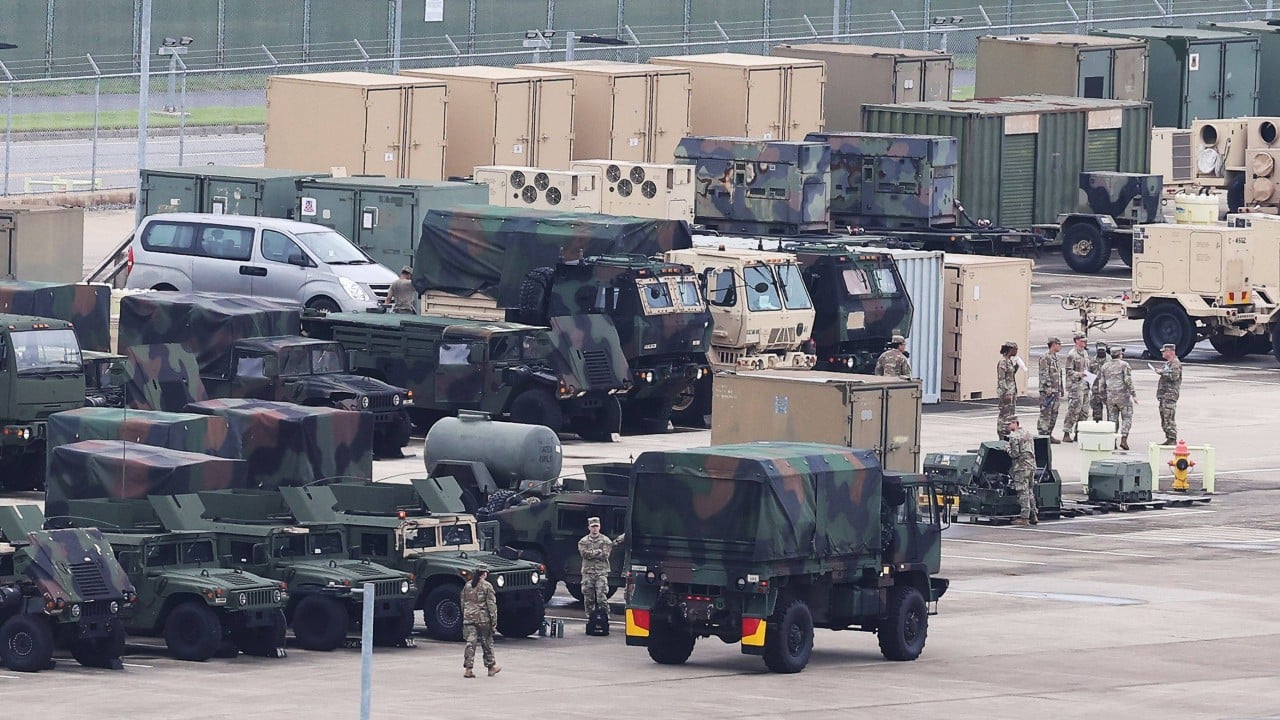
The unilateral decision by the White House to order a substantial reduction in the Ulchi Freedom Shield military exercises exposes a fundamental fault line in modern alliance management. By explicitly linking operational readiness parameters to personal diplomacy with Pyongyang and secondary grievances regarding coalition participation in Middle Eastern theaters, Washington has transformed a structural security architecture into a transactional instrument.
Evaluating this shift requires moving past political rhetoric to analyze the mechanics of military deterrence, alliance cost functions, and the systemic vulnerabilities introduced when joint readiness is subjected to arbitrary political compression. If you enjoyed this article, you might want to look at: this related article.
The Tripartite Cost Function of Joint Exercises
Military exercises between the United States and South Korea are frequently critiqued through a reductive financial lens, yet the true expense and value function operates across three distinct dimensions.
Financial Outlay + Strategic Signaling + Operational Preparedness = Alliance Equilibrium
The immediate financial outlay involves troop deployments, fuel consumption, munitions expenditure, and logistics coordination. While the United States bears a significant portion of these structural costs, viewing this expenditure purely as a fiscal drain misdiagnoses its function as an insurance premium. For another perspective on this story, refer to the latest update from USA Today.
The signaling component communicates resolve to adversaries and reliability to regional partners. When exercises are curtailed to appease an adversarial regime, the signaling mechanism inverts, signaling hesitation and vulnerability rather than strength.
The operational preparedness component represents the most critical variable. Modern warfare on the Korean peninsula involves complex, multi-domain integration encompassing cyber countermeasures, drone swarm defense, and rapid command-and-control synchronization. North Korean forces have rapidly iterated their tactical doctrines through direct combat integration and hardware sharing with Russian forces in European theaters. Reducing drill scale directly degrades the ability of allied forces to adapt to these evolving battlefield paradigms.
The Geopolitical Linkage Fallacy
The integration of secondary policy demands into alliance defense structures introduces severe systemic risk. Connecting the reduction of peninsula-specific military drills to Seoul's refusal to join operations targeting Iran creates a dangerous strategic cross-subsidization.
Treating regional defense readiness as a negotiable currency for unrelated global objectives undermines the foundational logic of a mutual defense treaty. South Korea operates within a specific constitutional and geopolitical framework focused on Northeast Asian stability. Expecting immediate out-of-area alignment without prior institutional consensus fractures trust and forces allied capitals to hedge their long-term security architecture.
Simultaneously, basing force posture adjustments on the premise that an adversarial nuclear state has been "unthreatening and respectful" contradicts empirical telemetry. The continuous testing of intermediate-range ballistic missiles, ongoing advancements in miniaturized nuclear warheads, and institutionalized integration with revisionist powers indicate an expansion, rather than a contraction, of offensive capabilities.
Strategic Erosion and Alliance Adaptation
When the operational tempo of joint defense initiatives slows, structural decay occurs across multiple operational layers.
The first layer affected is interoperability degradation. Command structures comprising roughly 18,000 South Korean personnel alongside multinational United Nations Command elements require continuous, high-fidelity stress-testing to maintain operational cohesion. Truncating field exercises forces reliance on simulated models that cannot replicate the friction of real-world joint maneuvers.
The second layer involves the acceleration of independent defense capabilities. As confidence in the absolute reliability of extended deterrence wanes, Seoul faces mounting domestic pressure to accelerate indigenous advanced defense programs. This dynamic risks igniting regional arms races and complicating multilateral security management in the Indo-Pacific.
Execute the redeployment of strategic assets with a strict focus on institutional hardening. Defense planners in Seoul and Washington must decouple operational readiness from executive-level diplomatic overtures, codifying baseline training mandates through legislative or institutional frameworks that insulate tactical interoperability from executive volatility. The immediate strategic priority is safeguarding multi-domain readiness against real-world threat vectors rather than adjusting force posture in pursuit of diplomatic concessions that lack verifiable disarmament verification frameworks.

:max_bytes(150000):strip_icc()/lake-mead-173940030-5c25228846e0fb00014e8584.jpg)
