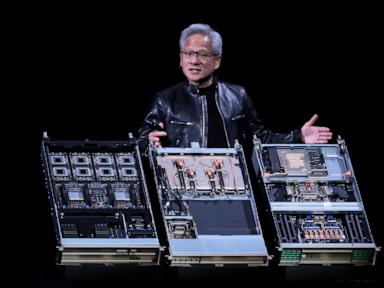
The architectural definition of the personal computer is shifting from an application-launching terminal to a local execution engine for autonomous AI agents. While traditional client computing relied on sequential CPU execution supplemented by discrete graphics acceleration, the physical constraints of running frontier models locally demand an entirely unified silicon topology. Nvidia’s introduction of the RTX Spark superchip represents the commercialization of this shift, porting data center interconnect architectures into consumer hardware form factors to bypass the foundational bottlenecks of modern x86 and Arm client systems.
Understanding the operational validity of this strategy requires looking past marketing rhetoric about "AI PCs" and evaluating the core hardware limitations that have previously stalled on-device agentic execution. Also making headlines in related news: Why Blaming Subsidies for China EV Dominance is a Billion Dollar Cop Out.
The Core Bottleneck: Memory Bandwidth and Capacity Asymmetry
The fundamental limitation preventing modern laptops from executing dense large language models (LLMs) locally is not raw compute throughput (FLOPS); it is memory bandwidth and capacity. Traditional x86 client architectures maintain strict physical separation between CPU system memory (DDR5) and discrete GPU memory (VRAM). This separation introduces two structural system failures when running localized agents:
- The PCIe Bus Bottleneck: Moving model weights from system RAM to GPU VRAM across a PCIe x16 lane creates a severe latency penalty. For continuous agentic workflows—where a model must run in the background, parse context, and execute actions asynchronously—the power and latency cost of transferring parameters across discrete buses diminishes battery life and degrades token-to-first-token metrics.
- The Capacity Ceiling: High-quantization or dense open-weights models require significant memory footprints. Standard consumer laptops top out at 16GB or 32GB of system RAM, with discrete GPUs rarely exceeding 8GB to 16GB of VRAM. A 120-billion-parameter model, even compressed via FP4 or INT4 quantization, structurally cannot fit within these memory constraints.
Traditional Architecture:
[CPU] <---> [DDR5 System RAM]
   ^
   | (High-Latency PCIe Bus Bottleneck)
   v
[GPU] <---> [VRAM Capacity Ceiling]

Unified Superchip Architecture:
[Grace CPU Cores] <---(NVLink-C2C: 300 GB/s)---> [Blackwell GPU Cores]
         ^                                               ^
         |                                               |
         +---------> [128GB LPDDR5X Unified Memory] <----+
The RTX Spark bypasses this entirely by utilizing a unified memory architecture reminiscent of Apple’s M-series silicon, but optimized for high-throughput CUDA workloads. By utilizing the proprietary NVLink-C2C (chip-to-chip) interconnect, Nvidia fuses a 20-core Arm-based Grace CPU with a 6,144 CUDA-core Blackwell GPU. Additional details into this topic are detailed by MIT Technology Review.
The structural advantage lies in the allocation of up to 128GB of LPDDR5X unified memory across a shared bus boasting 300 GB/s of bandwidth. Because both the compute cores (CPU) and matrix math accelerators (GPU Tensor Cores) address the exact same physical memory pool, the system eliminates the need to duplicate or transfer model weights. This allows the local execution of models up to 120 billion parameters with a 1-million-token context window directly on a sub-30W consumer platform.
The Efficiency Function: Resolving the Compute-to-Power Paradox
To deliver true unmetered intelligence at the edge, silicon must solve a strict mathematical trade-off: maximizing tensor compute performance per watt while fitting inside a thermal design power (TDP) envelope suitable for a 14mm-thin chassis.
The operational efficiency of the platform depends on three distinct hardware vectors:
- Low-Precision Quantization Engines: The inclusion of fifth-generation Tensor Cores featuring native FP4 (4-bit floating point) precision reduces the computational and memory footprint of LLM inference by up to 75% compared to standard FP16 execution. This halving of required bit-width doubles effective memory bandwidth and matches the compute requirements of frontier models to consumer-grade thermal solutions.
- Asymmetric Interconnect Power Scale: Standard discrete laptop GPUs consume excessive power simply modulating data across high-frequency external memory buses. By deploying a localized chiplet design connected via NVLink-C2C, the energy cost per bit transferred drops by orders of magnitude compared to traditional PCIe implementations.
- Custom Arm Architecture Optimization: Developed in tandem with MediaTek and manufactured on TSMC's 3-nanometer (N3) node, the 20-core Grace CPU provides a high-efficiency baseline for standard OS tasks. By offloading sequential operating system threads to low-power Arm cores, the system preserves the primary thermal budget for the Blackwell GPU during intense agentic cycles.
This tight alignment of architectural optimizations yields a peak performance metric of 1 petaflop of AI compute. In practical terms, this power profile allows a device to transition from a passive tool into an active, always-on agentic engine capable of running long-running background tasks—such as parsing 12K video files or autonomously monitoring local workflows—without exhausting the laptop's battery within an hour.
System Integration: The Microsoft and OpenShell Software Stack
Hardware innovation is structurally useless without a corresponding software abstraction layer to expose the compute blocks to consumer applications. Microsoft's previous attempts to popularize Windows on Arm suffered from an execution-layer mismatch and a lack of deep developer alignment. The partnership underpinning this architecture attempts to fix those historical mistakes through deep native OS integration.
The cornerstone of this software strategy is OpenShell, a runtime environment integrated directly with Windows security primitives. OpenShell serves as the traffic controller for localized agents like OpenClaw or Hermes.
The software framework operates on a strict zero-trust operational model:
[User Context / Applications]
            |
            v
   [OpenShell Runtime]  <--->  [Windows Security Primitives]
            | (Enforces Privacy / Token Scrubbing)
            +-----------------------+
            |                       |
            v                       v
[Local Edge Execution]    [Cloud API Gateway]
(120B Model via TensorRT) (Scrubbed Queries Only)
First, it establishes strict isolation barriers between local user data and outbound network requests. When an agent executes an automated workflow, OpenShell actively scrubs sensitive personal identifiable information (PII) before any hybrid cloud fallback occurs.
Second, the system leverages Nvidia’s established TensorRT and CUDA ecosystems to ensure that open-source models compile natively on Windows on Arm without going through performance-degrading x86 translation layers.
Third, major software vendors are actively rearchitecting core creative engines to target this specific silicon matrix. Adobe's ground-up rebuild of Photoshop and Premiere to natively exploit the Spark superchip targets a 2x performance multiplication over previous generation x86 architectures. This eliminates the emulation penalty that historically crippled non-x86 Windows laptops.
Competitive Realities and Strategic Risks
Despite the structural strengths of this unified silicon layout, Nvidia’s entry into the consumer client socket faces severe headwinds and system limitations that prevent it from being an instant monopoly.
The Incumbent x86 Ecosystem and Software Legacy
Intel and AMD command deeply entrenched distribution networks with global OEMs and enterprise IT departments. Decades of enterprise software are compiled exclusively for x86 instruction sets. While Microsoft’s translation layers have matured, enterprise buyers are historically risk-averse; any minor incompatibility in legacy ERP software, proprietary databases, or enterprise anti-cheat mechanisms can halt corporate adoption.
The Pricing Elasticity Barrier
The manufacturing costs of a 3nm superchip combining massive die areas of Blackwell GPU logic, 20 Arm cores, and up to 128GB of co-packaged LPDDR5X memory are fundamentally high. Early indicators—such as the premium positioning of the Microsoft Surface Laptop Ultra—suggest these machines will debut at price points well above standard consumer thresholds. If these systems remain confined to a luxury premium niche ($2,500+), the developer ecosystem may lack the volume required to build a robust, mass-market agentic application layer.
The Sovereign Data and Security Layer
Running persistent, unmetered agents locally requires absolute operating system stability. Microsoft's previous attempts at deep OS data ingestion, such as the initial iteration of Windows Recall, faced immense public pushback regarding consumer privacy. If the OpenShell runtime fails to convincingly decouple local telemetry from cloud synchronization, enterprise compliance officers will actively block deployment, restricting the hardware's addressable market strictly to independent creators and developers.
The Strategic Playbook for Ecosystem Adoption
For enterprise buyers, hardware OEMs, and software developers, navigating this shift requires abandoning standard x86 procurement frameworks. The value of client hardware is no longer measured by single-core CPU clock speeds, but by the local memory bandwidth available to autonomous context engines.
Organizations must auditing their application architecture immediately to determine which workloads require local edge execution versus cloud inference. High-throughput, privacy-centric tasks—such as processing local intellectual property, financial modeling, or continuous code synthesis—should be slated for unified memory architectures that eliminate recurring API cloud costs.
Concurrently, hardware procurement strategies must pivot to evaluate the cost-per-gigabyte of unified system memory over sheer CPU core counts. The systems that win the next cycle of deployment will not be those that compute fastest in short bursts, but those that run dense models continuously within a sustainable thermal envelope. The personal computer is no longer an interface for manual input; it is a localized node in a distributed, agentic compute matrix. Hardware strategies must adapt to this architecture or accept structural obsolescence.