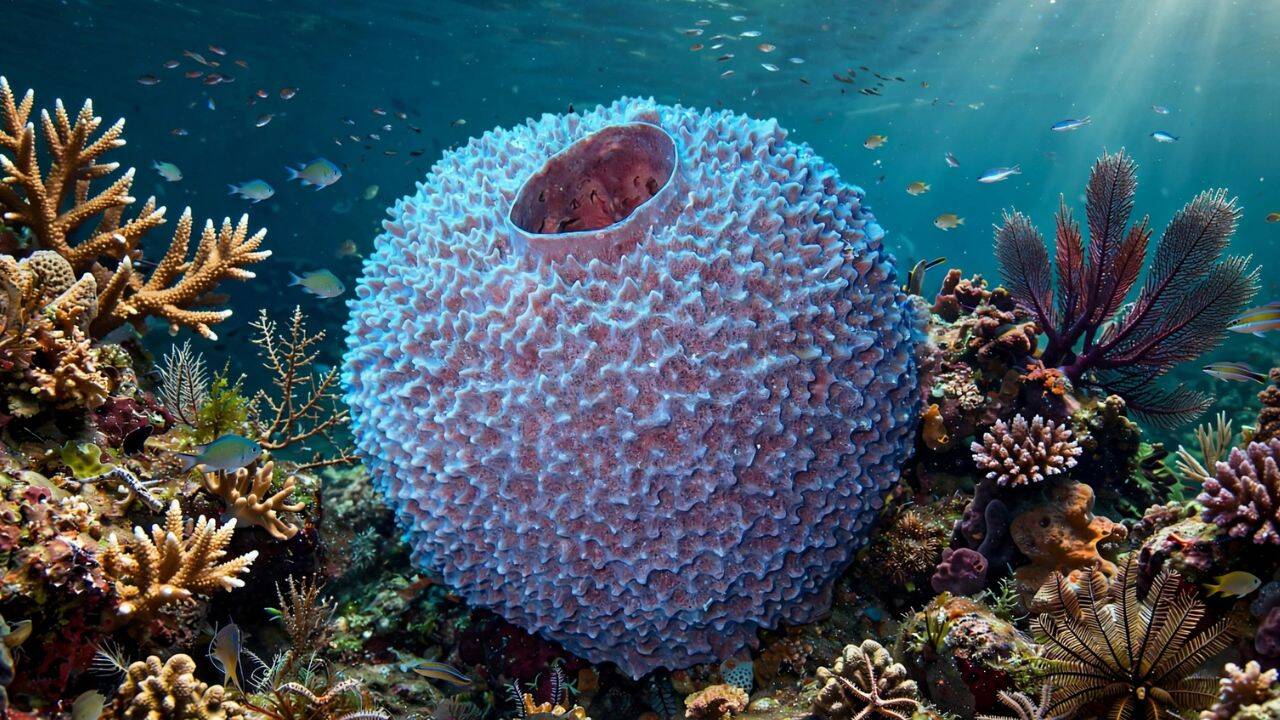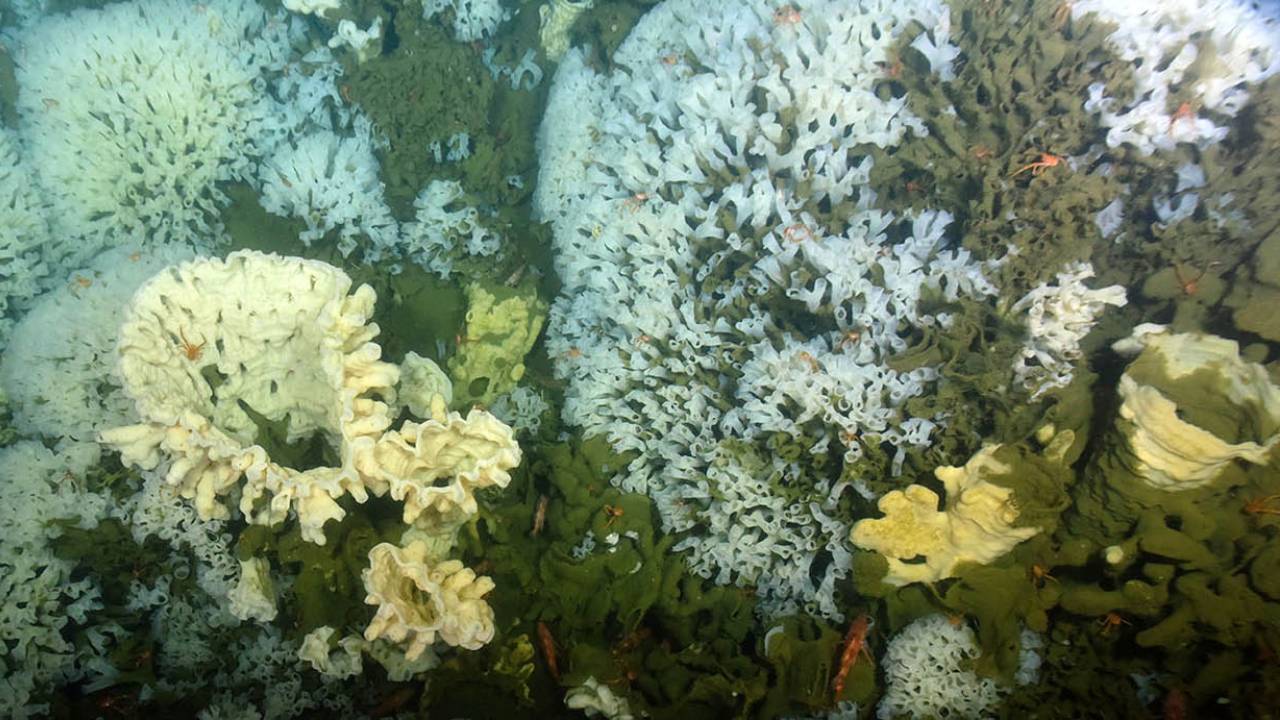
Marine conservation narratives often focus on modern degradation, overlooking deep evolutionary anomalies that persist outside standard ecological models. The discovery of living glass sponge reefs off the coast of British Columbia dismantled a long-standing paleontological assumption: that complex reef ecosystems constructed primarily of hexactinellid sponges had vanished globally during the Late Cretaceous, roughly forty million years ago. Finding these bioherms alive in the deep waters of Hecate Strait, Queen Charlotte Sound, and Howe Sound shifted the baseline of marine chronology. This analysis deconstructs the structural mechanics, environmental dependencies, and systemic vulnerabilities of these prehistoric formations.
The Structural Mechanics of Silica Bioherms
Unlike tropical coral reefs constructed from calcium carbonate by cnidarians, glass sponge reefs are built from hydrated silicon dioxide. Hexactinellid sponges extract dissolved silicic acid from the surrounding water column, depositing it into intricate spicules that fuse into rigid, lattice-like frameworks.
The physical construction of these reefs occurs across three distinct hierarchical tiers:
- Micro-Architecture: Individual spicules form microscopic glass lattices that maximize surface area while minimizing material density, serving as structural support and filtration pathways.
- Macro-Architecture: As individual sponges die, their basal skeletons remain structurally intact on the seabed, providing a rigid foundation for subsequent generations to settle upon. This continuous vertical accumulation creates bioherms up to thirty meters in height over thousands of years.
- Systemic Distribution: The reefs cover hundreds of square kilometers in specific regional fjords and straits, forming continuous ridges that alter local benthic hydrodynamics.
This architecture creates a dense, three-dimensional matrix of cavities and channels. The structural rigidity of the silica frame differs fundamentally from soft-bodied benthic habitats, offering high-relief structural refuge in otherwise uniform muddy or sandy plains.
The Environmental Cost Function and Biogeochemical Processing
The persistence of these ecosystems relies on a strict set of oceanographic parameters. The North Pacific margin provides a unique convergence of variables: low temperatures, high concentrations of dissolved silicic acid originating from deep-water upwelling, and steady currents capable of delivering suspended organic particulates.
The operational efficiency of a glass sponge reef can be measured through its metabolic filtration capacity. Individual sponges act as biological pumps, filtering volumes of water up to eight hundred times their body volume every hour. This continuous pumping drives major biogeochemical shifts:
- Particulate Organic Carbon (POC) Sequestration: Sponges strip bacteria, picoplankton, and detritus from the water column, metabolizing a fraction and packaging the remainder into heavier waste products that sink rapidly to the deep basin, locking away carbon.
- Nutrient Cycling: The reefs process hundreds of kilograms of organic carbon and nitrogen daily per square kilometer, functioning as primary biological scrubbing