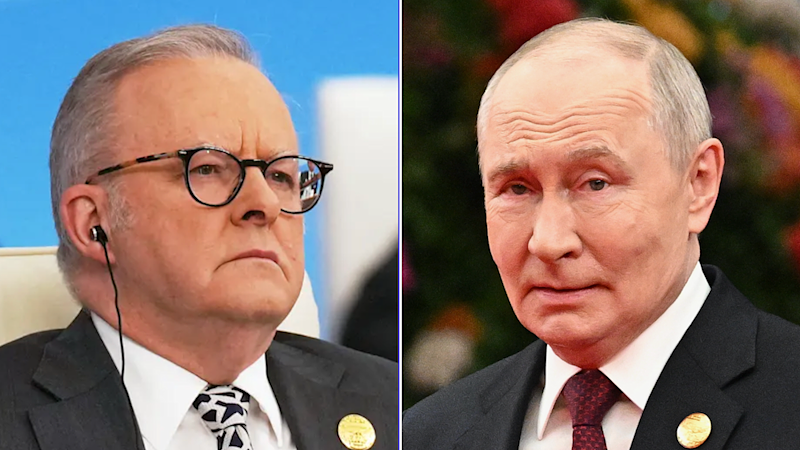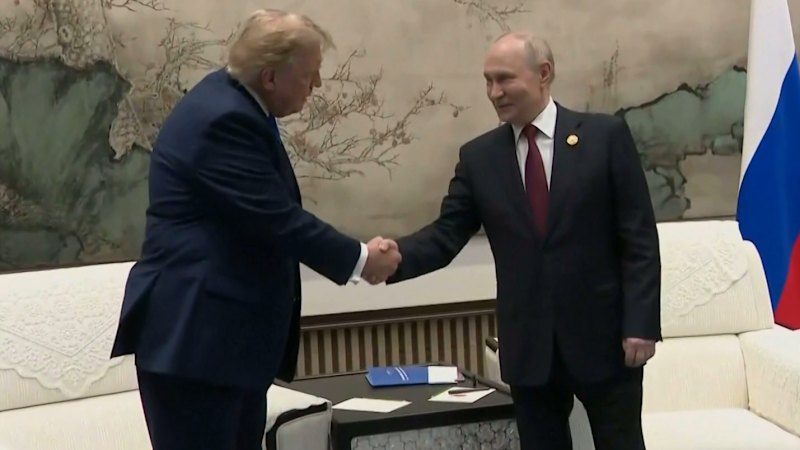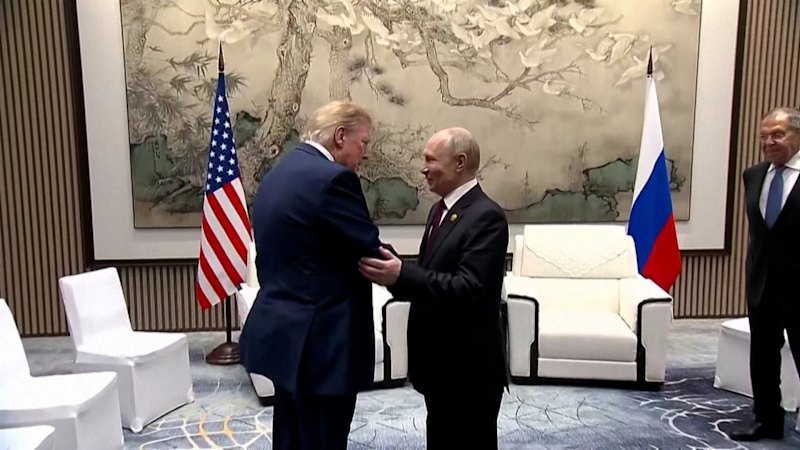
Bilateral summits between the United States, Russia, and China operate as high-stakes clearinghouses for global risk, not ceremonial photo opportunities. When Donald Trump engages in direct, one-on-one negotiations with Vladimir Putin and Xi Jinping, the immediate structural consequence is the deliberate bypassing of multilateral institutional buffers in favor of transactional statecraft. Understanding these engagements requires stripping away diplomatic rhetoric and analyzing the underlying game theory, economic leverage points, and security trade-offs that govern three-body geopolitical competition.
The Structural Shift From Multilateralism to Transactional Bilateralism
Standard diplomatic reporting treats head-of-state meetings as isolated news events. In operational reality, a bilateral meeting between Washington and Moscow or Washington and Beijing represents a structural reallocation of bargaining power. Traditional post-1945 American foreign policy relied on multilateral alliances—such as NATO, the G7, and regional trade pacts—to aggregate leverage before engaging rival powers. Trump’s bilateral model inverts this sequence. By isolating the negotiation to two principals, the executive branch retains maximum tactical flexibility while willingly sacrificing the collective weight of allied consensus.
This creates a specific operational dynamic known in negotiation theory as asymmetric issue linkage. In a multilateral setting, security commitments are strictly compartmentalized from trade tariffs or currency valuations. In a bilateral summit led by an executive focused on direct deal-making, every variable enters a single unified balance sheet. A concession on semiconductor export controls can theoretically be traded against agricultural purchasing commitments, or NATO burden-sharing metrics can be weighed against nuclear arms control frameworks.
The risk profile of this mechanism is binary. On the upside, centralized decision-making eliminates bureaucratic friction, allowing leaders with high domestic authority to break deadlocks that career diplomats cannot touch. On the downside, removing institutional guardrails increases variance. Without pre-negotiated fallback positions vetted by interagency specialists, verbal commitments made in closed-door sessions frequently suffer from implementation drift—the gap between what principals believe they agreed upon and what their respective state apparatuses actually execute.
Deconstructing the Washington-Moscow Negotiation Matrix
When Trump and Putin enter a bilateral setting, the negotiation is governed by an acute asymmetry in national power metrics. Russia possesses a regional economy heavily dependent on commodity exports, yet it retains strategic parity in nuclear delivery systems and high escalation dominance in its immediate geographic periphery. The United States holds overwhelming economic, technological, and financial dominance, constrained primarily by domestic political polarization and alliance maintenance costs.
The Core Variables on the Table
- Territorial Settlements and Security Architecture: Any discussion regarding Eastern Europe centers on the formal or informal recognition of spheres of influence. Moscow’s primary objective is a verifiable halt to NATO’s eastward infrastructure expansion and the legitimization of territorial gains. Washington’s objective is to freeze active conflicts to reduce American fiscal outflows and redirect military assets toward the Indo-Pacific.
- Strategic Stability and Arms Control: With legacy treaties like New START facing expiration or suspension, bilateral talks must address warhead ceilings, hypersonic delivery vehicles, and space-based assets. Without a verification regime, both nations face a classic security dilemma that forces expensive, destabilizing modernization cycles.
- Sanctions Relief and Energy Markets: Financial restrictions—specifically exclusion from Western clearing systems and price caps on seaborne crude—act as the primary non-kinetic pressure points. Putin requires targeted relief to stabilize domestic industrial capacity, while Trump views global oil supply stability as a direct lever to control domestic American inflation.
The critical mechanism to watch in a Trump-Putin bilateral is sequencing. Moscow historically demands irreversible geopolitical concessions—such as the lifting of statutory sanctions or formal neutrality guarantees for neighboring states—in exchange for reversible behavioral promises, such as temporary ceasefires. A disciplined American negotiating posture requires the exact opposite: tying incremental, revocable economic relief strictly to verifiable, physical pullbacks on the ground.
The Third-Party Spoiler Effect
A bilateral agreement between Washington and Moscow cannot self-execute if it ignores the agency of regional actors. European allies possess independent sanctions regimes, intelligence capabilities, and industrial bases. If a bilateral summit produces an arrangement perceived in Warsaw, Berlin, or Kyiv as a capitulation, European governments can actively undermine the settlement by maintaining their own financial blockades or unilateral defense transfers. The limitation of pure bilateralism here is clear: the United States can withhold its own support, but it cannot compel sovereign European states to dismantle their security perimeters.
Deconstructing the Washington-Beijing Negotiation Matrix
Engaging Xi Jinping presents a fundamentally different structural problem. Unlike Russia, China is a peer economic competitor integrated deeply into global supply chains, manufacturing ecosystems, and capital markets. A Trump-Xi bilateral meeting is not an exercise in crisis containment; it is a negotiation over the rules of global economic and technological supremacy.
The Three Pillars of Sino-American Friction
- Trade Deficits and Tariff Regimes: Trump utilizes broad-based tariffs not merely as a negotiating tactic, but as a structural tool to force supply chain reshoring and generate federal revenue. Xi’s administration views export-led manufacturing as the essential release valve for China’s domestic real estate slump and weak internal consumption. The collision between American protectionism and Chinese industrial overcapacity defines the baseline tension of the summit.
- Technological Decoupling and Chokepoints: The battleground has shifted from finished consumer goods to foundational inputs—advanced logic chips, lithography equipment, artificial intelligence compute clusters, and refined rare earth minerals. The United States controls the intellectual property and design architecture; China controls the upstream mineral processing and downstream assembly capacity.
- Indo-Pacific Deterrence and Taiwan: Military friction in the South China Sea and the Taiwan Strait serves as the hard-power backdrop to every economic discussion. Xi seeks an explicit American declaration opposing Taiwanese independence, moving Washington away from its traditional policy of strategic ambiguity. Trump seeks to extract maximum economic concessions from Beijing while avoiding a kinetic entanglement that would sever global trade routes.
In this dyad, the dominant strategic concept is weaponized interdependence. Both economies can inflict severe, immediate pain on the other, yet neither can achieve clean decoupling without triggering a global recession. When Trump and Xi meet, they are essentially calibrating the threshold of mutual economic harm.
A typical transactional breakthrough in this environment involves China agreeing to massive, state-directed purchases of American commodities—soybeans, liquefied natural gas, Boeing aircraft—in exchange for the deferral of escalating tariff tranches or targeted exemptions for specific Chinese technology firms. While such deals generate immediate political wins, they fail to resolve the underlying structural divergence: China’s state-subsidized industrial model remains fundamentally incompatible with free-market reciprocity.
The Three-Body Problem of Geopolitical Triangulation
Analyzing the Trump-Putin and Trump-Xi meetings in isolation misses the decisive strategic reality: these two bilateral tracks are dynamically linked. In international relations, this is the classic strategic triangle, first operationalized during the Nixon-Kissinger era to exploit the Sino-Soviet split. Today, the polarity is reversed. Moscow and Beijing operate under a "no limits" partnership driven by shared opposition to American hegemony, though their underlying interests remain distinct.
The Mechanics of Reverse Triangulation
- Breaking the Sino-Russian Alignment: A primary hypothesis driving Trump’s engagement with Putin is the attempt to pull Russia out of China’s orbit. By offering Moscow an off-ramp from Western isolation, Washington theoretically reduces Putin’s dependence on Beijing as a buyer of last resort for discounted Russian energy and a supplier of dual-use microelectronics.
- The Limits of the Wedge Strategy: This hypothesis faces severe structural constraints. Geography, regime security, and economic complementarity bind Russia and China tightly together. Putin knows that American foreign policy can shift every four years with election cycles, whereas Xi Jinping faces no electoral turnover and shares a 4,200-kilometer border with Russia. Moscow will happily pocket American concessions without severing its strategic insurance policy with Beijing.
- Beijing’s Leverage Over Moscow: Xi Jinping holds significant indirect leverage over any Trump-Putin summit. Because China sustains the Russian wartime economy, Beijing can quietly encourage or restrain Moscow’s willingness to compromise depending on how its own trade negotiations with Washington are progressing. If Trump escalates tariffs on China, Xi has every incentive to ensure Russia remains an intractable security drain on American resources.
Operationalizing Strategic Leverage Under Uncertainty
For corporate leaders, institutional investors, and policy analysts watching these bilateral summits, reacting to press conference headlines is a guaranteed way to misallocate capital. Diplomatic communiqués are designed to obscure concessions and project domestic strength. Assessing the real output of these meetings requires tracking concrete, lagging indicators rather than verbal pledges.
Four Hard Metrics to Track Post-Summit
- Treasury and Commerce Department Licensing: Verbal promises of tariff pauses or sanctions relief mean nothing until the Office of Foreign Assets Control (OFAC) or the Bureau of Industry and Security (BIS) issues formal regulatory amendments or general licenses. Watch the Federal Register, not the podium.
- Customs Data and Commodity Flows: If a bilateral deal includes purchasing commitments, verify execution through monthly maritime tracking and customs clearance data. During previous trade agreements, state-directed purchasing targets frequently fell short due to shifting market prices and logistical bottlenecks.
- Force Posture and Naval Deployments: Security assurances are validated strictly by physical asset movement. Track carrier strike group deployments in the Western Pacific, bomber patrols in the Arctic, and forward-deployed munitions stockpiles in Eastern Europe.
- Currency Intervention and Cross-Border Settlement Volumes: Monitor the ratio of bilateral trade settled in yuan versus dollars, alongside central bank gold accumulation. Persistent expansion of non-dollar clearing mechanisms signals that Moscow and Beijing are continuing to build sanctions-resistant infrastructure regardless of summit rhetoric.
The Strategic Play for Navigating Bilateral Volatility
The return of hyper-personalized, leader-to-leader bilateralism introduces permanent structural volatility into global markets and alliance systems. Institutional predictability is replaced by executive discretion, meaning decades-old trade architectures and security guarantees can be repriced over a single weekend.
Organizations operating across borders must abandon single-baseline forecasting and adopt modular operational hedging. Supply chains cannot rely on tariff exemptions negotiated at the executive level, as those exemptions remain vulnerable to sudden shifts in bilateral mood or domestic political pressure. Capital expenditure must be allocated toward regionalized redundancy—maintaining parallel manufacturing and sourcing footprints within distinct geopolitical blocs rather than optimizing purely for lowest-cost global efficiency. In an era where the rules of international commerce are rewritten in closed-door bilateral rooms, operational resilience depends entirely on insulating core functions from the next unscripted handshake.