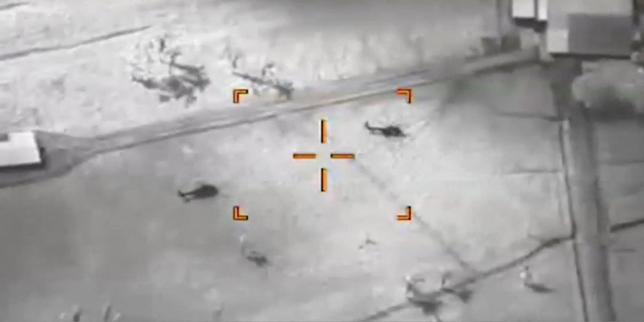
United States security policy in Latin America has shifted from diplomatic containment and economic conditionality to direct operational footprint expansion. Rather than relying on legacy cold-war style unilateral invasions, Washington now deploys a distributed network of joint task forces, rotational troop deployments, maritime interdiction hubs, and intelligence-sharing agreements to counter transnational criminal organizations and extra-hemispheric state actors. This operational shift directly answers why Pentagon asset allocation in the Western Hemisphere has accelerated despite competing theaters in Eastern Europe and the Indo-Pacific.
Understanding this trajectory requires dissecting the mechanics of modern hemispheric security. Analysts who view current deployments merely as a revival of the Monroe Doctrine miss the structural transformation in how force is projected. The contemporary model relies on persistent, low-visibility infrastructure, legal frameworks such as Status of Forces Agreements, and security sector assistance that embeds US operational doctrine directly into host-nation militaries. Also making headlines recently: Why Counting Fake China Accounts Misses How Elections Actually Break.
The Three Pillars of Operational Re-Engagement
The current expansion rests on three distinct institutional mechanisms that minimize domestic political friction in Washington while maximizing regional reach.
Securitization of Non-Traditional Threats
Washington has systematically reclassified transnational organized crime, irregular migration flows, and illegal, unreported, and unregulated (IUU) fishing as core national security threats rather than law enforcement challenges. By framing cartel networks in Mexico, Ecuador, and Colombia as hybrid insurgencies, the Department of Defense unlocks statutory authorities—specifically under Title 10 of the US Code—that permit military intelligence, surveillance, and reconnaissance (ISR) assets to operate alongside domestic police forces. This legal reclassification bypasses traditional diplomatic bottlenecks and normalizes military presence in civilian governance spheres. Further information on this are detailed by NBC News.The Distributed Lily-Pad Basing Model
Large, permanent sovereign bases generate severe nationalist backlash across Latin America, a lesson cemented after the 2009 closure of the Manta airbase in Ecuador. To circumvent sovereignty sensitivities, US Southern Command (SOUTHCOM) utilizes Cooperative Security Locations (CSLs). These facilities are owned and operated by host nations, with US personnel maintaining access rights for refueling, logistics, and intelligence processing. CSLs in Comalapa (El Salvador), Reina Beatrix (Aruba), and Hato (Curaçao), alongside expanded rotational access in Peru and Panama, create a resilient web of forward operating nodes without the political liability of permanent territorial leases.Great Power Denial Strategy
The primary strategic driver behind the resurgence of US military diplomacy is not narcotics interdiction, but the containment of Chinese and Russian influence. Beijing’s state-backed investments in dual-use port infrastructure—such as the Chancay mega-port in Peru—and telecommunications networks pose direct logistical challenges to US naval mobility. Simultaneously, Russian intelligence apparatus and military technical cooperation in Venezuela, Nicaragua, and Cuba create persistent signals intelligence vulnerabilities. US military expansion functions as a denial mechanism, locking host nations into Western interoperability standards, defense procurement cycles, and joint exercise schedules to crowd out rival security partnerships.
Geopolitical Friction and Alliance Asymmetries
The execution of this strategy encounters varying degrees of friction depending on the domestic political economy of each sub-region. Security cooperation is rarely a uniform imposition; it is a negotiated transaction where local elites trade operational access for regime security, military hardware, and diplomatic legitimacy.
The Andean Security Corridor
In Colombia, Ecuador, and Peru, acute internal security crises have lowered the political threshold for foreign military involvement. Ecuador’s declaration of an internal armed conflict against narcoterrorist groups in early 2024 catalyzed an immediate ratification of bilateral defense accords that had stalled for over a decade. These agreements grant US military personnel sweeping immunities and authorize joint maritime patrols within Ecuador’s exclusive economic zone.
In Peru, congressional authorization for armed US military personnel to enter the country for joint training exercises and intelligence sharing reflects a convergence between Washington’s desire to monitor Chinese commercial expansion and Lima’s need for counter-narcotics capacity in the VRAEM valley. However, this reliance creates a structural dependency. Host nations increasingly outsource complex intelligence gathering and aerial interdiction to US assets, eroding incentives to reform corrupt domestic judicial and police institutions.
The Central American Containment Zone
Central America operates primarily as a buffer zone designed to externalize the southern border of the United States. Here, military and security assistance is tightly coupled with migration enforcement. Joint task forces—such as Joint Task Force-Bravo based at Soto Cano Air Base in Honduras—coordinate disaster relief, counter-trafficking, and border surveillance.
The mechanism is straightforward: US funding equips and trains specialized host-nation border units, effectively pushing the physical perimeter of US immigration control south to the Darién Gap between Colombia and Panama. Bilateral agreements with Panama now include US logistical and financial backing for repatriation flights and intelligence fusion centers. The operational limitation of this approach is displacement. Hardening one transit corridor forces smuggling networks to adapt, shifting illicit flows to maritime routes or corrupting alternative state institutions, thereby requiring continuous escalation of surveillance assets.
The Southern Cone Resistance
Conversely, Brazil, Argentina, and Chile present a complex diplomatic terrain where full operational alignment remains elusive. Brazil, under the administration of Luiz Inácio Lula da Silva, maintains a doctrine of strategic autonomy, balancing defense ties with Washington against deep commercial integration with Beijing and participation in the BRICS bloc. While Brazilian forces participate in multinational exercises like UNITAS, Brasília consistently blocks initiatives that threaten regional consensus or invite extra-regional military polarization.
Argentina under Javier Milei represents an ideological pivot toward Washington, exemplified by the acquisition of US-backed F-16 fighter jets over Chinese alternatives and heightened rhetoric regarding US naval presence in Ushuaia to monitor Antarctic access. Yet, Argentina’s severe fiscal constraints limit its capacity to co-fund sustained joint operations, leaving the relationship heavily reliant on US foreign military financing and symbolic political alignment rather than robust operational capacity.
The Institutional Cost Function of Militarized Diplomacy
Deploying military tools to solve structural economic and governance failures introduces systemic distortions across the region. When security assistance becomes the primary currency of bilateral relations, several second-order effects emerge.
- Erosion of Civilian Oversight: Direct military-to-military channels often bypass foreign ministries and legislative oversight in partner nations. Strengthening the operational capacity of armed forces without parallel investments in civilian judicial institutions tilts the internal balance of power toward the military. In nations with fragile democratic norms, empowering the armed forces to conduct domestic policing accelerates the militarization of public security, increasing the risk of human rights violations and eroding institutional accountability.
- The Substitution Effect in Governance: Host governments frequently utilize US security partnerships as a political substitute for structural socioeconomic reforms. Securing high-profile military aid packages allows administrations to project strength against crime and instability while avoiding politically costly tax reforms, anti-corruption measures, and state-building initiatives in marginalized rural territories where illicit economies thrive.
- Strategic Blowback and Resource Diversion: Over-indexing on military interdiction misallocates scarce diplomatic capital. While SOUTHCOM expands its footprint, US economic diplomacy often lags behind China’s infrastructure financing. When Washington offers helicopters and radar installations while Beijing builds railways, power grids, and commercial ports, regional leaders face an asymmetric value proposition. Security assistance addresses immediate tactical threats, whereas infrastructure capital addresses long-term developmental survival.
Tactical Operational Realities and Intelligence Integration
Beyond geopolitical posturing, the day-to-day reality of US military expansion is governed by technical interoperability and intelligence fusion. The modern battlefield in Latin America is predominantly informational and maritime.
US agencies, led by Joint Interagency Task Force South (JIATF South) in Key West, integrate radar networks, satellite imagery, and signals intelligence from over twenty partner nations. This architecture tracks illicit maritime and aerial movements from the Pacific coast of South America through the Caribbean basin. The operational bottleneck is not detection, but interdiction and prosecution. Identifying a semi-submersible vessel carrying cocaine is a technical problem solved by US ISR assets; intercepting it requires host-nation naval vessels with sufficient fuel, maintenance, and uncorrupted crews, followed by a judicial system capable of prosecuting the syndicate.
Furthermore, cyber defense and space domain awareness have quietly become core components of US military engagement. As Latin American nations digitize critical infrastructure, US Cyber Command conducts "hunt forward" operations—deploying defensive cyber teams to partner networks in countries like Costa Rica and Peru to identify vulnerabilities and counter state-sponsored intrusion attempts. These deployments leave no physical footprint, generate minimal public protest, yet deeply integrate partner nations into the US defense architecture.
Strategic Limits and Vulnerability Vectors
No security architecture is immune to structural failure. The current US operational posture in Latin America faces three acute vulnerabilities that constrain its long-term viability.
First, domestic political volatility in host nations renders long-term basing and access agreements fragile. A single electoral cycle can invalidate years of military diplomacy. The oscillation between pro-Washington and left-populist governments across South America means that Cooperative Security Locations and intelligence-sharing protocols exist on borrowed time, subject to abrupt termination when political winds shift.
Second, force readiness and resource competition in Washington impose hard ceilings on hemispheric deployments. SOUTHCOM historically receives a fraction of the combatant command budget allocated to European Command (EUCOM) or Indo-Pacific Command (INDOPACOM). High-end ISR platforms, naval destroyers, and specialized logistics aircraft are finite assets. Any kinetic escalation in the Taiwan Strait or Eastern Europe immediately strips Latin America of critical surveillance and maritime assets, exposing the hollow nature of commitments that rely on rotational deployments rather than permanent force structure.
Third, the criminal adaptation cycle consistently outpaces state bureaucracy. Transnational criminal organizations operate with flat hierarchies, immense liquidity, and zero regulatory constraints. When US-backed forces disrupt smuggling routes in the Caribbean, cartels instantly pivot to container-ship contamination in major commercial ports like Guayaquil or Santos, exploiting the sheer volume of legitimate global trade where military interdiction is economically unfeasible.
Strategic Forecast and Policy Imperatives
The trajectory of US military engagement in Latin America points toward continued institutional entrenchment rather than overt kinetic intervention. Washington will avoid large-scale troop deployments, focusing instead on expanding intelligence fusion centers, cyber defense partnerships, and maritime domain awareness networks. The primary theater of competition will remain port infrastructure, telecommunications spectrum, and critical mineral supply chains—specifically the lithium triangle of Argentina, Bolivia, and Chile.
To convert tactical military presence into durable strategic stability, US policy must undergo a fundamental recalibration:
- Subordinate Military Aid to Judicial Reform: Conditioning Foreign Military Financing and joint operational support on verifiable metrics of judicial independence, prison reform, and anti-corruption enforcement is essential. Providing advanced weaponry to security forces operating within compromised legal systems merely accelerates institutional decay.
- Counter Infrastructure Asymmetry with Development Finance: The Pentagon cannot solve an economic competitiveness deficit. Washington must synchronize SOUTHCOM’s security objectives with aggressive deployment of the US International Development Finance Corporation (DFC) to offer transparent, commercially viable alternatives to Chinese infrastructure capital in ports, energy grids, and digital networks.
- Institutionalize Multilateral Regional Frameworks: Shifting from brittle bilateral security accords to regional, rules-based maritime and cyber security frameworks insulates operational cooperation from domestic electoral swings, ensuring continuity across changing administrations in both Washington and Latin American capitals.



