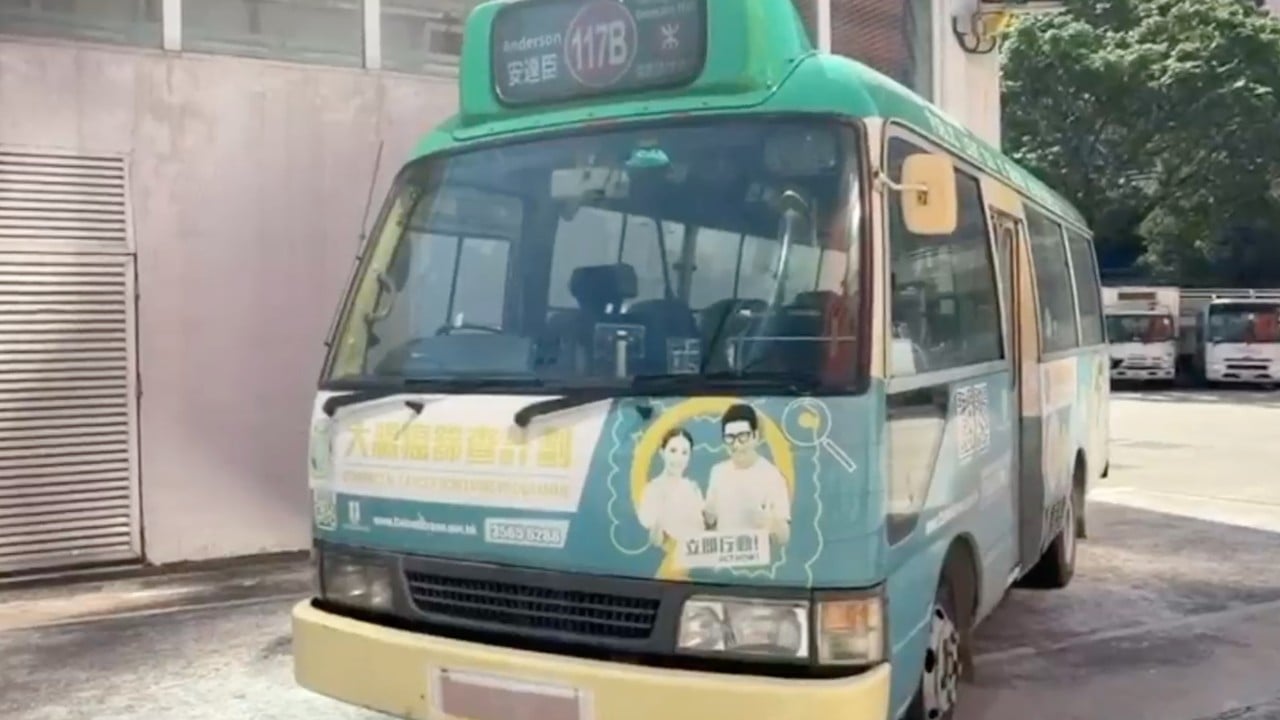
Every few months, the headlines repeat themselves with mechanical predictability. A public light bus driver in Hong Kong gets pulled over. A rapid oral fluid test comes back positive. Police make an arrest for suspected drug driving while carrying passengers, and the local press dutifully writes the exact same cautionary tale about reckless individuals putting commuters at risk.
It is lazy journalism. Worse, it is dangerous public policy theater. Recently making headlines in this space: Why a Helicopter Landing on a New Jersey Pier Is Actually Proof the System Works.
When a transit operator gets caught behind the wheel with traces of illicit substances in their system, the instinctive public reaction is moral outrage aimed squarely at the person holding the steering wheel. That reaction lets the actual architects of Hong Kong's commercial road hazards walk away completely unscathed. By framing a systemic labor and regulatory failure as a simple story of individual criminal deviance, standard news coverage obscures why commercial drivers turn to stimulants in the first place, how current enforcement creates perverse safety outcomes, and what actually threatens passengers on red and green minibuses every single day.
The Myth of the Rogue Driver
To understand why these arrests keep happening, stop looking at police blotters and start looking at franchise economics. Additional information into this topic are covered by USA Today.
Hong Kong’s public light bus sector operates on a two-tier system that practically engineers driver exhaustion. You have green minibuses, which run on fixed routes, schedules, and fares regulated by the Transport Department, and red minibuses, which operate with far looser route and fare controls. In both segments, however, the underlying financial mechanics squeeze the person in the driver's seat.
Many drivers do not earn a comfortable salaried wage with predictable overtime protections. Instead, a significant portion of the workforce operates on shift-rental models or revenue-split arrangements. A driver pays a daily vehicle rental fee to the license holder or operator before keeping a single dollar of profit. Fuel costs, tunnel tolls, and deadhead mileage eat directly into their take-home pay.
Imagine a scenario where your rent for the day is fixed at several hundred Hong Kong dollars before your first passenger even taps an Octopus card. If traffic snarls on the Cross-Harbour Tunnel, or if midday passenger volume drops off, you do not get to clock out at eight hours and go home to sleep. You stay on the road for twelve, fourteen, or sixteen hours just to clear your overhead and bring home a living wage.
When you build an economic engine that requires human beings to outwork their own biology, those human beings will eventually look for chemical workarounds. In commercial transport globally—from long-haul trucking in North America to night-shift transit across East Asia—stimulant use is rarely about recreation. It is crude, desperate self-medication for chronic sleep deprivation. Arresting a driver at a roadblock without dismantling the shift-rental structures that reward extreme hours is like arresting a factory worker for bypassing a broken safety guard while management keeps cranking up the assembly line speed.
Zero-Tolerance Testing Versus Actual Impairment
The second major blind spot in conventional reporting is the conflation of a positive drug screen with active, catastrophic impairment.
Under Hong Kong’s Road Traffic Ordinance, zero-tolerance drug driving laws target specific illicit substances—including heroin, ketamine, methamphetamine, cannabis, cocaine, and MDMA—regardless of whether the driver's physical coordination is visibly compromised at the moment of the stop. From a purely legal standpoint, any detectable concentration in blood or oral fluid is enough to trigger prosecution and license disqualification.
From a road safety standpoint, treating chemical presence and functional impairment as identical creates a massive operational blind spot.
Consider how drug pharmacokinetics actually work:
- Metabolite persistence: Substances like cannabis or certain stimulants leave detectable traces in bodily fluids long after psychoactive effects have completely worn off. A driver who used a substance two days prior during a rare day off can test positive while completely sober behind the wheel.
- The withdrawal crash: Paradoxically, the most dangerous phase for a stimulant user is often not the peak of intoxication, but the neurological crash that follows as the drug clears the system—a period characterized by micro-sleeps, severe cognitive fog, and delayed reaction times that standard roadside screening struggles to quantify.
- The legal blind spot: A driver operating on three hours of sleep after a double shift, fueled by four cans of high-caffeine energy drinks and over-the-counter antihistamines, will pass a police drug screen with flying colors. Yet research from organizations like the AAA Foundation for Traffic Safety and transport safety boards worldwide consistently shows that driving with severe sleep debt produces cognitive impairment equivalent to driving well over the legal blood alcohol limit.
I have spent years analyzing commercial fleet safety audits and post-incident telematics data across high-density urban transit networks. The pattern never changes: companies and regulators love drug testing because it produces clean, binary metrics—pass or fail, guilty or innocent—that look great in annual compliance reports. Meanwhile, chronic fatigue, the single deadliest daily threat to passenger safety, goes largely unmeasured because fixing it costs money.
What People Get Wrong About Minibus Safety
Whenever a high-profile arrest hits the news cycle, commuters inevitably ask the same panicked questions about whether Hong Kong minibuses are safe to ride and why the government does not simply test drivers more often. Both questions miss the mark.
Is the red or green minibus network fundamentally unsafe?
Statistically, no. Despite their reputation for aggressive lane changes and tight cornering, Hong Kong's public light buses move hundreds of thousands of passengers daily through some of the densest, most chaotic urban streetscapes on earth with a remarkably low fatality rate per passenger kilometer compared to regional peers. The visceral fear passengers feel often stems from the physical sensation of riding in a compact, high-center-of-gravity vehicle where you sit inches away from the action, rather than actual collision frequency.
Would mandatory pre-shift drug testing solve the problem?
No, and pushing for it as a silver bullet would backfire. Requiring daily pre-shift biological screening across thousands of drivers introduces massive administrative bottlenecks, false-positive disputes, and acute labor shortages in an industry that is already struggling to recruit younger replacements for an aging workforce. When you make the barrier to entry punitive without improving base compensation, experienced drivers leave for delivery apps or logistics roles, leaving operators with an even smaller, more desperate talent pool.
The Real Lever Operators Refuse to Pull
If the Transport Department and fleet owners genuinely wanted to eliminate drug-impaired and fatigue-impaired driving tomorrow, they would stop relying on sporadic police roadblocks and start enforcing aggressive telematics and shift-cap accountability.
Look at how modern aviation and tier-one heavy haulage handle human performance risk. They do not wait for a pilot or operator to get caught at a checkpoint. They deploy Fatigue Risk Management Systems (FRMS) paired with strict electronic logging.
In Hong Kong, most green minibuses already carry GPS tracking and Octopus transaction timestamps. The data required to spot dangerous operating patterns already exists on company servers. If a single driver's Octopus card login shows sixteen consecutive hours of active route operation with less than seven hours of turnaround time before the next morning's shift, an automated system can flag and lock out the vehicle ignition before the bus ever leaves the terminus.
Furthermore, real-time in-cabin driver monitoring systems—using infrared eye-tracking cameras that detect eyelid closure rates, yawning frequency, and head-nodding micro-sleeps—have matured dramatically over the past decade. Unlike a chemical swab that only checks for six illegal molecules, an optical fatigue monitor catches impairment regardless of whether it was caused by methamphetamine, prescription sleeping pills, or a newborn baby keeping the driver awake all night.
The Uncomfortable Truth About Who Pays
There is a catch to this approach, and ignoring it would be dishonest.
Enforcing strict electronic shift caps, transitioning drivers away from predatory daily vehicle rentals toward guaranteed base salaries, and installing active fatigue-monitoring hardware will immediately drive up operating costs. In a regulated public transit environment, higher operating costs inevitably translate into either higher passenger fares or increased government subsidies.
Commuters love demanding zero-risk transit right up until the moment a route fare increases by two dollars to pay for a second relief driver. Operators love preaching safety right up until the moment stricter shift limits reduce daily vehicle utilization rates and squeeze profit margins. And regulators love announcing tougher police crackdowns because press releases about arrests cost the public treasury almost nothing compared to restructuring franchise labor contracts.
So the cycle continues. Another exhausted driver cuts corners to make rent on a twelve-hour shift. Another checkpoint catches a positive swab. Another headline frames a systemic market failure as an isolated moral lapse.
Stop applauding police press releases as proof that the roads are getting safer. Until Hong Kong holds license holders financially liable for the shift schedules their drivers are forced to work, every arrest is just proof that the system is working exactly as designed.