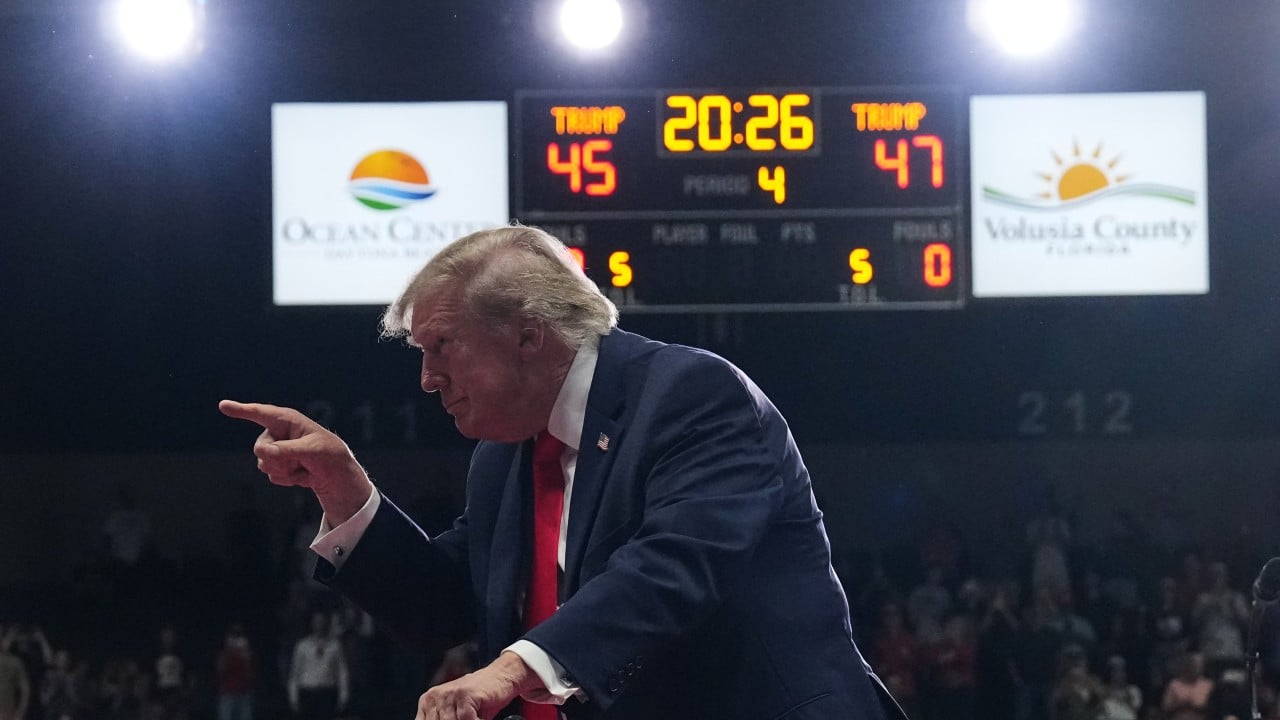
Every time someone gets slapped in handcuffs for posting a violent threat against a political figure, the mainstream press runs the exact same victory lap. A woman in Florida makes a reckless comment about shooting Donald Trump at a rally, federal agents kick down her door, and the media frames it as a triumph of proactive policing.
They are completely wrong. Meanwhile, you can find similar events here: Why North Korea's New Cluster Warhead Has Defense Analysts Completely Fooled.
Having spent fifteen years consulting on executive protection, threat assessment, and behavioral intelligence, I have watched agencies burn millions of dollars chasing loudmouths on Facebook while genuine assassins slip right past the perimeter. The public loves a perp walk because it looks like security. In reality, publicizing arrests for low-level verbal threats is security theater at its absolute worst. It does not deter real attackers. It actively degrades our intelligence-gathering capabilities, clogs the investigative pipeline with noise, and trains actual predators to go dark.
The Fundamental Flaw in How We Measure Threat
The lazy consensus in modern journalism treats every threat as equal. To a reporter chasing clicks, a viral post saying "I'm going to shoot the president" is the ultimate smoking gun. To a veteran threat assessor, that post is almost always static. To understand the bigger picture, check out the excellent analysis by NPR.
We need to establish a hard distinction that the media routinely ignores: making a threat versus posing a threat.
This is not semantics. This is the foundational bedrock of modern protective intelligence, codified by Dr. Robert Fein and Bryan Vossekuil in their landmark Secret Service Exceptional Case Study Project. They analyzed every targeted attack and near-attack on public figures in the United States over nearly fifty years. Their findings shattered conventional law enforcement wisdom.
Not a single successful assassin in modern American history communicated a direct threat to their target or to law enforcement prior to the attack.
Read that again. Zero.
People who actually intend to kill a high-profile figure do not telegraph their plans on public social media feeds. They do not want to be stopped. They want to succeed. Consequently, they obsess over operational security. They research schedules, acquire weapons quietly, conduct physical surveillance, and keep their mouths shut.
Meanwhile, the people who scream death threats into the digital void—like the Florida arrest making headlines—are almost exclusively venting rage, seeking attention, or suffering from acute psychological distress. By treating a vocalized threat as the primary trigger for aggressive, publicized intervention, law enforcement is looking through the wrong end of the telescope.
How Publicity Destroys Protective Intelligence
When a local sheriff's office or federal task force holds a press conference to brag about arresting someone for a rally threat, they think they are sending a message of deterrence. They believe potential copycats will see the mugshot and think twice.
That logic only works on rational actors who care about consequences. Targeted violence is rarely committed by rational actors.
Worse, high-profile arrests create a devastating operational side effect known in the intelligence community as signal suppression.
When you aggressively prosecute and publicize loudmouths, you teach the broader population—including the genuinely dangerous fringe—what triggers a knock on the door. You hand them a literal blueprint of the keywords, platforms, and behaviors that attract federal scrutiny. The result? The dangerous individuals do not abandon their violent fixation. They simply stop leaking their intentions online.
- The Amateur: Posts a graphic threat on a public profile using their real name. Gets arrested within twelve hours. Poses virtually zero operational risk.
- The Predator: Reads the news about the amateur's arrest. Deletes their social media accounts. Moves to encrypted channels or goes entirely offline. Continues planning in total silence.
I have sat in briefings where analysts celebrated a 40% drop in flagged social media threats over a quarter, completely oblivious to the fact that physical perimeter breaches and stalking incidents were simultaneously spiking. When you silence the chatter, you do not eliminate the danger. You just blind your own sensors.
The Resource Trap That Leaves Real Vulnerabilities Open
Protective intelligence operates on finite bandwidth. Every hour an investigator spends drafting warrants, interviewing neighbors, and processing paperwork for a non-credible, loudmouthed threat is an hour stolen from investigating an uncommunicated, high-risk subject.
Consider the sheer volume of digital noise surrounding a figure like Donald Trump. During an active campaign cycle, threat assessment units are buried under tens of thousands of flagged communications every single week. If an agency operates on a zero-tolerance, arrest-first doctrine for every explicit threat, the system instantly redlines.
Here is what happens behind the curtain when agencies prioritize arrests over actual risk mitigation:
- Triage collapses: Analysts stop doing deep behavioral evaluations and start doing basic keyword matching to cover their own liability. No supervisor wants to be the one who ignored a direct threat if that one-in-a-million outlier actually shows up with a rifle.
- The "Howlers" drown out the "Hunters": Coined by forensic psychologist Dr. J. Reid Meloy, this distinction separates those who howl to intimidate or vent from those who hunt in silence. Chasing howlers consumes 90% of the budget, leaving scraps for hunting the hunters.
- False security sets in: Once the arrest is made and the press release goes out, local command staff breathe a sigh of relief. They assume the threat environment around the upcoming rally has been neutralized. Meanwhile, the guy who never posted a single word online is walking the perimeter with a rangefinder.
Why the Media and Law Enforcement Love the Illusion
If the data overwhelmingly proves that arrest-heavy responses to verbal threats are counterproductive, why do we keep doing it? Because the incentives of every institution involved are aligned against actual safety.
Law enforcement agencies need measurable metrics to justify massive budgets. You cannot easily quantify a prevented attack that never materialized because an analyst quietly intervened and got a troubled individual into mental health care. You can quantify an arrest. A mugshot is tangible. A federal indictment under 18 U.S.C. § 871 (threats against the President) or state-level intimidation statutes looks great on an annual report.
The media needs villains and heroes. A story about a woman arrested for threatening a former president writes itself. It triggers immediate tribal outrage from both sides of the political aisle. One side points to it as proof of violent political extremism; the other side uses it to mock the incompetence of the perpetrator. Nuance dies in the comments section.
Nobody wants to read an article titled: Threat Assessment Team Quietly Monitors 400 Unstable Individuals Without Making a Single Arrest. It lacks drama. It offers no catharsis. Yet, that exact, unglamorous, silent monitoring is the only thing that actually keeps principals alive.
What Real Threat Management Looks Like
If you want to understand how elite protection details actually operate, stop watching press conferences and look at behavioral threat assessment models used by the most sophisticated private security teams and top-tier federal units.
When a threat like the Florida rally post surfaces, an arrest should be the absolute last resort, not the opening move.
First, you conduct a silent background scrub. Who is this person? Do they have a history of violence? Have they recently purchased firearms, body armor, or tactical gear? Have they traveled outside their normal geographic pattern? Are they experiencing a recent cascading series of personal losses—a job termination, a divorce, an eviction—that often precedes a violent break?
Second, if the behavioral indicators point toward a howler rather than a hunter, you deploy non-punitive intervention. Sometimes this means a quiet, unpublicized knock-and-talk by plainclothes investigators to assess their mental state. Other times, it involves engaging local mental health crisis teams or family members to establish a support perimeter around the individual.
By refusing to turn the person into a headline, you achieve three critical objectives:
- You avoid escalating their grievance against the system.
- You prevent them from becoming a martyr or a cautionary tale for smarter predators.
- You keep them visible on your radar so you can track if their behavior ever shifts from venting to planning.
The Uncomfortable Downside of Restraint
I will be brutally honest about the flaw in this approach: it requires immense political courage, and it carries massive career risk for the people making the calls.
If a threat assessment team evaluates a vocal threat, determines the subject lacks the means and intent to carry it out, opts against an arrest, and that individual somehow defies every statistical probability and launches an attack, the investigators will be crucified. Congress will hold hearings. The media will shred their careers. The public will scream that the warning signs were ignored.
That fear of career suicide is the real reason handcuffs come out so fast. When agencies arrest someone for a hollow threat, they are not protecting the VIP. They are protecting their own pensions. They are buying an insurance policy against hindsight bias.
We also have to acknowledge the legal reality. Explicitly threatening to shoot someone is a crime, regardless of whether the speaker owns a gun or has a plan. Allowing people to broadcast death threats without legal consequence risks normalizing political violence and eroding basic civic boundaries. There is a legitimate argument that the law must draw a bright line, even if crossing it does not always correlate with physical danger.
Stop Confusing Noise With Danger
The next time you see a breaking news alert about someone arrested for threatening a politician ahead of a rally, look past the headline. Do not celebrate it as a victory for national security. Recognize it for what it actually is: a routine cleanup of digital litter.
True protective intelligence happens in the dark. It relies on behavioral analysis, leakage detection, and quiet, surgical interventions that never make the evening news. The moment a threat assessment operation ends up in a press release, it has already failed its primary intelligence mission.
Real assassins do not announce their arrival on the internet. Stop applauding the capture of the clowns while the predators are still in the crowd.