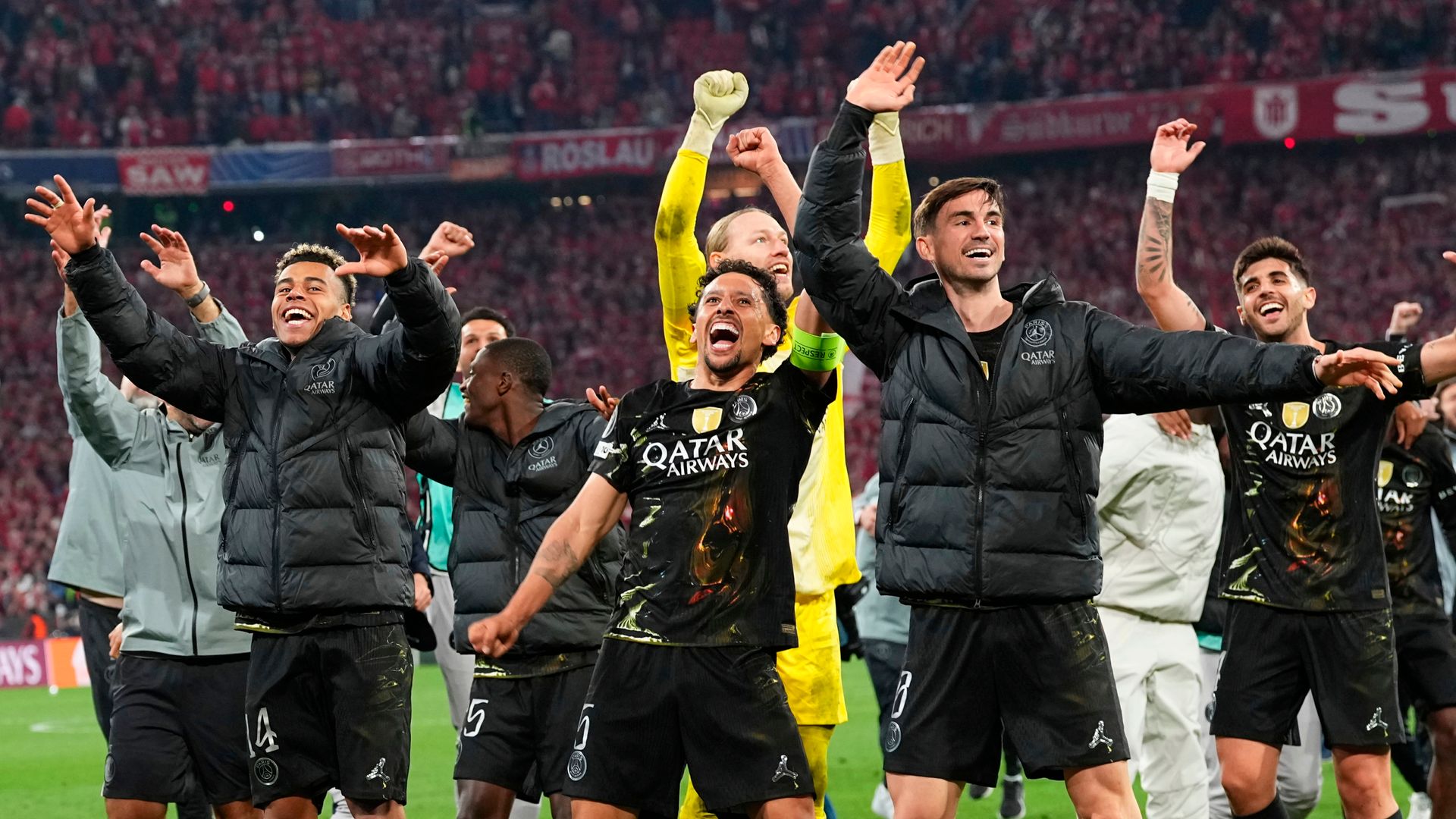
Arsenal is heading to the Champions League final to face the defending champions Paris Saint-Germain. It’s the game everyone wanted. It’s also the game that defines the current era of European football. You’ve got Mikel Arteta’s obsession with structural perfection clashing against the sheer, unadulterated individual brilliance that PSG has refined under their latest project. This isn't just about a trophy. It's about whether a collective system can finally dismantle the reigning kings of the continent.
Most people think PSG is the heavy favorite because they’ve been here before. They’re the holders. They’ve got the "DNA" people love to talk about in bars. But if you look at how Arsenal dismantled their way through the knockout stages, you’ll see why this final is actually a terrifying prospect for the French side. The Gunners aren't just happy to be there. They’re a machine built to stop teams exactly like PSG.
Why Arsenal is a terrible draw for the titleholders
PSG likes to control the rhythm. They want you to drop deep so they can suffocate you in the final third. Arsenal doesn't do that. Arteta has turned this squad into the most disciplined pressing unit in the world. When you watch Arsenal, you aren't watching eleven players; you’re watching a single organism that breathes and moves together.
The biggest problem for PSG is the middle of the pitch. Usually, the Parisians dominate possession because teams are scared of their pace on the counter. Arsenal isn't scared. They use a high line that compresses the space, making it nearly impossible for PSG’s creators to turn and face the goal. If you can’t turn, you can’t feed the strikers. It's that simple.
I’ve seen dozens of teams try to "sit and soak" against this PSG lineup. It never works. You eventually crack. Arsenal’s approach is different because they take the fight to the half-way line. By keeping the ball in PSG's half, they minimize the time the defending champions actually spend near the Arsenal box. It’s risky. It’s bold. It’s exactly why they’re in the final.
The tactical battle that will decide the trophy
We need to talk about the flanks. PSG relies on explosive wide play to stretch defenses. In most games, their wingers have oceans of space because full-backs are tucked in to help the center-backs. Arsenal’s defensive structure is different. They use a zonal system that transitions into man-marking the second the ball enters the wide areas.
Benjamin White and Riccardo Calafiori have been instrumental here. They don't just track runners; they dictate where the runners can go. By forcing PSG’s wide players inside into a crowded midfield, Arsenal effectively neutralizes the primary threat. It’s a chess match. Luis Enrique is a genius, sure, but he’s facing a coach in Arteta who has spent three years perfecting a "no-exit" defensive strategy.
- The high press: Arsenal will likely trigger their press the moment the PSG goalkeeper touches the ball.
- Midfield density: Expect Declan Rice to play a hybrid role, dropping between the center-backs to create a back three when PSG tries to go long.
- Set piece dominance: Arsenal is statistically the most dangerous team in Europe from corners. In a tight final, one header from Gabriel could be the whole story.
The Parisians often struggle when they don't get their way early. If Arsenal can survive the first twenty minutes without conceding, the frustration starts to creep in for the holders. We've seen it before. PSG starts taking long-range shots. Players stop tracking back. That’s when the Gunners strike.
The experience gap is a myth
Critics keep pointing out that this Arsenal squad is young. They say they lack the "big game" experience required to beat a team that’s already hoisted the trophy. That’s nonsense. This group has been through a grueling Premier League title race and handled the pressure of high-stakes European nights all season.
Experience matters, but hunger matters more. PSG players have reached the mountain top. There’s a subconscious drop in intensity when you’ve already won it. Arsenal is starving. You see it in how they celebrate every tackle and every won header. That energy is infectious. It’s hard to play against a team that treats every 50/50 ball like it’s the last one they’ll ever contest.
What PSG must do to stay on the throne
If I’m Luis Enrique, I’m worried about the transitions. Arsenal is lethal when they win the ball back in the middle third. Martin Ødegaard has this uncanny ability to find a killer pass within two seconds of a turnover. If PSG’s holding midfielders get caught ahead of the ball, it’s game over.
PSG needs to play a "boring" game. They need to slow things down, take the sting out of the crowd, and keep Arsenal running in circles. If they let the game become an end-to-end sprint, they’re playing right into Arsenal’s hands. The Gunners are younger, faster, and fitter. A track meet favors the Londoners every single time.
The Parisians also have to find a way to isolate William Saliba. Good luck with that. Saliba has been the best defender in the world this year, bar none. He’s calm, he’s fast, and he rarely makes a mistake. PSG will try to pull him out of position by using a "false nine" to drag him into midfield. If Saliba stays disciplined and refuses to bite, PSG will find themselves passing the ball sideways for ninety minutes.
Key matchups to watch on the pitch
The individual battles in this final are fascinating. You have the best defense in England going up against the most expensive attack in France. It’s the classic "immovable object vs. unstoppable force" scenario.
- Bukayo Saka vs. Nuno Mendes: This is the big one. If Saka can get Mendes on a yellow card early, PSG’s left side becomes a liability.
- Declan Rice vs. Vitinha: The battle for the engine room. Whoever wins this duel controls the tempo of the entire match.
- Kai Havertz vs. Marquinhos: Havertz’s movement is a nightmare for traditional center-backs. He doesn't stay in one place. He’ll drop deep, move wide, and then suddenly appear in the box. Marquinhos has to decide whether to follow him or hold his line.
Preparing for a historic night in European football
This isn't just another game. It’s the culmination of a project that started when Arsenal was at its lowest point. For PSG, it’s about cementation. For Arsenal, it’s about validation.
You should expect a cagey start. Neither team wants to be the one to make the first mistake. But once that first goal goes in—and it will—the tactical plans will go out the window. Arsenal has the better structure, but PSG has the individual "X-factor" players who can score out of nothing.
If you’re betting on this, look at the late goals. Arsenal has a habit of scoring in the final ten minutes because their fitness levels are through the roof. PSG tends to tire if they’ve been chasing the ball. Watch the substitutions around the 70th minute. That’s when the trophy will actually be won or lost.
Get your snacks ready. Put your phone on silent. This Champions League final is going to be a tactical masterclass that people talk about for a decade. Arsenal is ready to disrupt the status quo. PSG is fighting to keep it. Only one of them can leave the pitch as the best in Europe.
Make sure you’re tuned in at least thirty minutes before kickoff to see the team sheets. If Arteta starts Thomas Partey alongside Rice, he’s going for total control. If he goes with a more attacking midfield, he’s looking to kill the game early. Pay attention to the bench too. The depth in both these squads is insane, and a "super-sub" performance is written in the stars for a game this big.