Labels stick. You can peel the price tag off a thrift-store jacket, scrub the adhesive with warm water and dish soap, and still feel that faint, tacky square beneath your fingertips months later. Politics works much the same way. Once an alliance is forged in the bright, unforgiving glare of campaign rallies and viral posts, washing the ink off proves remarkably difficult.
Consider a hypothetical voter—let’s call him Marcus—sitting at his kitchen table in suburban Pennsylvania, scrolling through his phone before his morning shift. Marcus bought an electric vehicle three years ago because he wanted to cut his fuel costs and reduce his carbon footprint. Back then, driving that car felt like a quiet statement about technology and the future. Today, when he pulls into the grocery store parking lot, he sometimes catches sideways glances from neighbors who assume his vehicle is a rolling billboard for a specific political movement. Marcus didn't change his registration, and he didn't attend a single rally. Yet the brand around the company’s founder shifted beneath him, pulling Marcus into a cultural tug-of-war he never asked to join.
That friction sits at the heart of the ongoing debate surrounding Elon Musk’s political identity. Critics and commentators, including opinion writers at outlets like The Guardian and MSNBC, have argued that Musk’s periodic attempts to frame himself as an independent centrist—or explicitly "not MAGA"—clash sharply with his public actions, financial contributions, and rhetoric. Supporters and Musk himself, conversely, maintain that his positions reflect classical liberalism, free-speech absolutism, and pragmatic problem-solving rather than strict partisan loyalty. Looking closely at how this narrative evolved reveals far more than a dispute over one billionaire’s vocabulary; it exposes how modern political alignments are built, marketed, and contested in real time.
The Architecture of a Shifting Identity
To understand why the phrase "not MAGA" sparks such intense scrutiny, you have to trace the timeline of Musk’s public evolution. For much of the 2010s, Musk’s public persona aligned closely with Silicon Valley techno-optimism. His companies, Tesla and SpaceX, were frequently celebrated by environmentally conscious consumers and Democratic policymakers alike as engines of green innovation and American engineering. In 2016, Musk publicly expressed skepticism toward Donald Trump, suggesting prior to the election that Trump was not the right person for the presidency.
The shift did not happen overnight, nor did it occur in a vacuum. During the COVID-19 pandemic, disputes with California regulators over factory lockdowns at Tesla’s Fremont plant became a turning point. Musk publicly clashed with local officials, eventually moving Tesla’s corporate headquarters to Austin, Texas. Around the same period, his commentary on social media began focusing heavily on regulatory overreach, demographic trends, border policy, and what he termed the "woke mind virus."
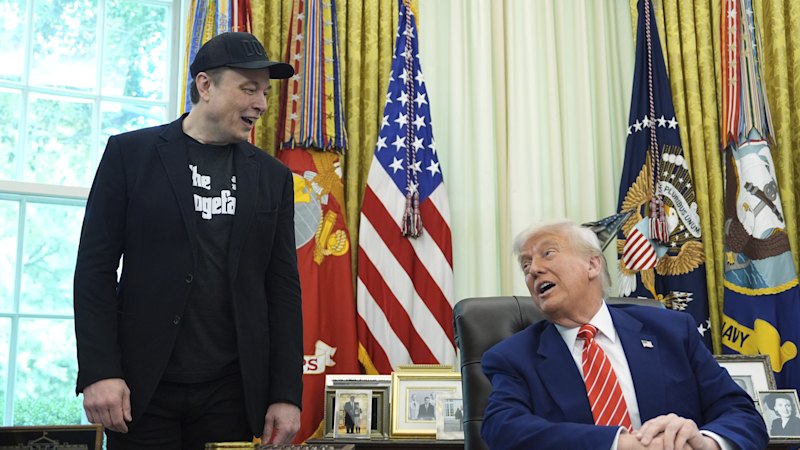
By 2022, Musk declared on the platform then known as Twitter that he could no longer support the Democratic Party, stating he would vote Republican instead. That trajectory accelerated dramatically during the 2024 election cycle. Following the assassination attempt on Donald Trump in Butler, Pennsylvania, in July 2024, Musk issued an explicit endorsement of Trump’s candidacy. He subsequently founded and funded America PAC, pouring tens of millions of dollars into voter mobilization efforts in swing states, appeared onstage alongside Trump at rallies wearing a black "Make America Great Again" cap, and later accepted a role advising the administration on government efficiency through the Department of Government Efficiency (DOGE).
Against that documented backdrop, skeptics point out the obvious tension when Musk or his defenders distance him from the MAGA label. Political analysts at publications such as The Atlantic and Vox have noted that when a public figure funds a movement’s ground game, amplifies its core talking points to over two hundred million followers, and wears its signature merchandise on stage, semantic distinctions begin to look porous. To critics, claiming independence after such deep operational integration looks less like nuance and more like strategic rebranding—an effort to retain broad consumer appeal while exercising partisan influence.
Why Strategic Ambiguity Appeals to Power
Yet dismissing every claim of independence as simple dishonesty misses how modern political coalitions actually operate. Think of political branding like an umbrella in a sudden downpour. Two people can stand under the same canopy for entirely different reasons: one likes the person holding the handle, while the other simply refuses to get soaked by the same storm.
In the view of Musk’s supporters and conservative commentators, such as writers at National Review and The Wall Street Journal editorial board, Musk’s alignment with Trump represents a marriage of shared grievances rather than ideological submission. From this perspective, Musk remains fundamentally an industrialist and technologist whose primary enemies are bureaucratic stagnation, federal debt, and content moderation policies he views as censorship. His backers argue that traditional party labels are outdated relics; in their telling, the Democratic Party moved away from free-market innovation and free-speech principles, leaving Musk without a political home until he formed a tactical alliance with the populist right.
Furthermore, Musk has occasionally diverged from traditional populist positions. On issues like high-skilled immigration—specifically the H-1B visa program crucial to tech companies—and the long-term necessity of transitioning away from fossil fuels, Musk has voiced views that put him at odds with segments of the MAGA base. During public debates over H-1B visas in late 2024, Musk fiercely defended legal immigration for engineering talent against criticism from nationalist figures within the movement, demonstrating that his coalition is not monolithic.
These friction points illustrate why the "not MAGA" framing persists. In business, a polarizing political label is a liability. Tesla still relies heavily on urban, environmentally minded buyers in the United States, Europe, and Asia—demographics that often view the MAGA movement unfavorably. Maintaining a degree of rhetorical distance allows an executive to argue to shareholders and customers that his focus remains engineering and humanity’s future, even while his political spending tells a more partisan story.
The Cost of Blurred Lines for Everyday People
When high-profile figures treat political identity like a modular accessory—snapping it on for a rally and detaching it for an earnings call—the consequences ripple outward to ordinary people who do not have billions of dollars to insulate their daily lives.
Return to Marcus, our hypothetical driver in Pennsylvania. For Marcus, and for thousands of real consumers documented in automotive market surveys by firms like Cox Automotive and Edmunds, brand perception is not an abstract PR exercise. Data from market researchers has shown measurable shifts in brand consideration among politically polarized buyers, with progressive consumers expressing increased hesitation toward Tesla while conservative interest ticked upward. Suddenly, a purchase made for practical or environmental reasons carries unintended social baggage.
The same dynamic affects workers, investors, and everyday citizens trying to make sense of public discourse. When words lose their shared definitions, accountability becomes slippery. If supporting a movement with nine-figure donations and campaign appearances does not make someone a member of that movement, then what does? Voters rely on clear signals to understand who holds power, what values drive policy decisions, and whom to hold responsible when those policies succeed or fail.
History offers plenty of reminders of how business titans navigate political power. In the early twentieth century, industrialists like Henry Ford cultivated populist, anti-establishment personas while wielding immense influence over Washington and public opinion, often insisting they stood above party politics even as they shaped them. A century later, the tools have changed from newspapers and assembly lines to algorithms and social networks, but the underlying impulse remains familiar: power prefers flexibility, while the public craves clarity.
Reading Actions Over Slogans
Navigating this environment requires a certain skepticism toward slogans—regardless of which side of the aisle prints them on a hat or a press release. It is entirely normal to feel whiplash watching a public figure champion climate solutions one year, endorse fossil-fuel-friendly deregulation the next, and insist throughout that their core principles have never wavered. Public narratives are curated to persuade, not necessarily to clarify.
The simplest way to cut through the noise is to separate stated identity from observable behavior. In any realm—whether evaluating a neighbor’s reliability, a company’s commitment to sustainability, or a leader’s political alignment—actions leave a far more accurate paper trail than self-applied labels. Campaign finance disclosures, public endorsements, policy advocacy, and algorithmic amplification are concrete data points. They do not require mind-reading to interpret.
At the same time, recognizing that coalitions are complex prevents us from flattening every disagreement into caricature. A person can genuinely care about technological progress and still align with a populist movement for strategic reasons; simultaneously, critics are well within reason to point out when a "centrist" or "independent" label no longer matches the weight of a person’s public commitments. Both observations can exist in the same room without canceling each other out.
In the end, the debate over whether Elon Musk is or isn't MAGA isn't really up to him to settle in a social media post. Brands, like reputations, are not owned by the people who invent them; they are decided by the people who experience them. And out in the grocery store parking lot, looking down at the keys in his hand, Marcus already knows that once a label has been pressed into the metal, no amount of polishing makes it completely disappear.