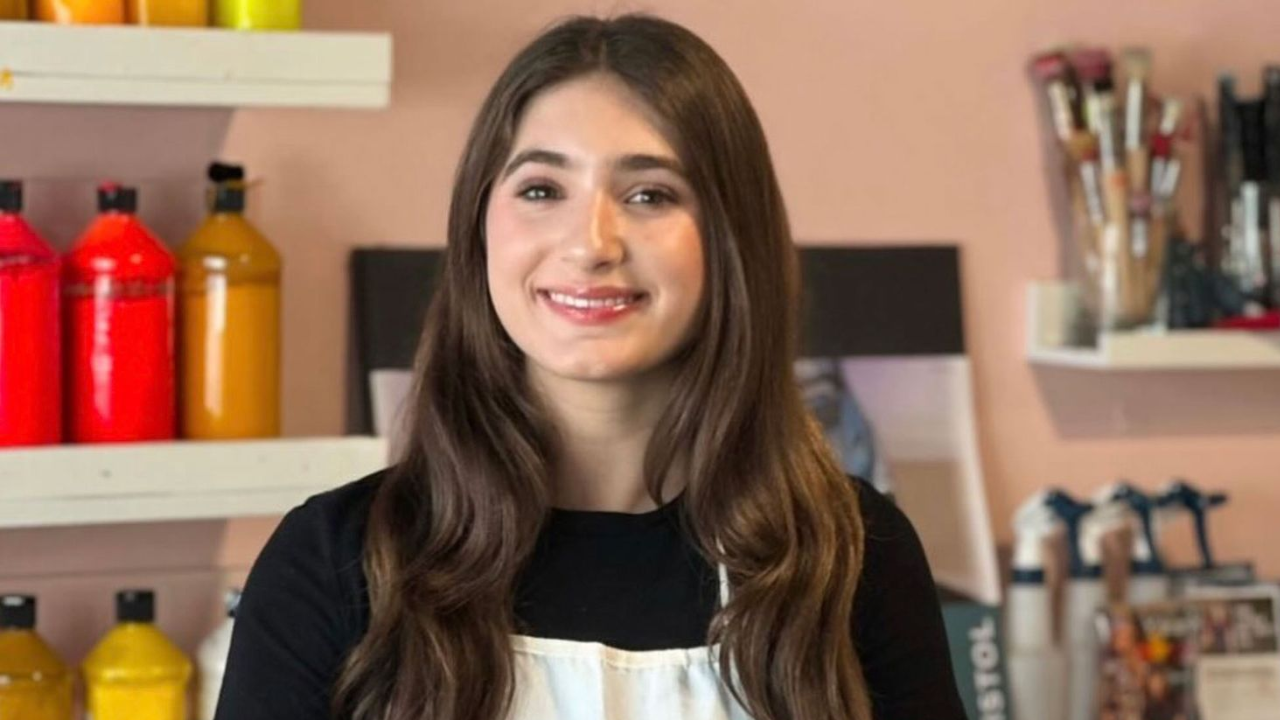
Raising nearly $100,000 over roughly a decade through hand-painted denim is not a story about luck or viral serendipity; it is a case study in turning high-friction physical rehabilitation into a self-reinforcing philanthropic engine. When Sasha Bogosian began splattering and sponging paint onto denim while recovering from leg surgery at age eight—living with cerebral palsy—the immediate objective was motor engagement and pain distraction rather than fundraising. Over time, that personal recovery activity evolved into The Sasha Project LA, directing proceeds toward hospital creative and art therapy programs such as those at Children's Hospital Los Angeles. Standard human-interest coverage treats this trajectory as an inspiring coincidence. A rigorous operational analysis reveals a specific set of structural mechanics: an input-cost advantage from apparel supply chains, a high-margin custom service model, institutional legitimacy anchored to clinical care, and inherent labor bottlenecks that separate a founder-led micro-enterprise from a scalable hospital endowment.
Deconstructing the Competitor Narrative
Human-interest articles on youth-led charity initiatives typically follow a predictable arc: childhood adversity, an accidental creative spark, heartwarming community support, and a headline fundraising milestone. While emotionally resonant, this narrative structure obscures the operational reality of how small nonprofits actually accumulate six-figure cumulative totals over a multi-year window. You might also find this connected article interesting: The Terror of the Ringing Tone.
The first analytical gap in standard coverage is treating fundraising velocity as a single event rather than a cumulative sum over time. Reaching nearly $100,000 across roughly ten years averages out to roughly $10,000 per year before accounting for variable campaign spikes, seasonal auctions, or product drops. Without separating cumulative lifetime totals from annual run rates, readers conflate a durable ten-year habit with an overnight commercial breakout.
The second analytical gap is conflating rehabilitation utility with commercial differentiation. Painting denim helped strengthen upper-body movement and redirect attention during surgical recovery. That therapeutic mechanism explains why the habit stuck. It does not explain why strangers or collaborators were willing to pay for custom painted garments. Willingness to pay emerged from a distinct mechanism: visible craftsmanship paired with a transparent charitable destination. As highlighted in latest articles by The Spruce, the effects are worth noting.
The third gap lies in separating known facts from educated hypotheses:
- Known facts: Sasha Bogosian began painting denim during recovery from leg surgery in childhood while managing cerebral palsy; her mother had apparel industry experience with Levi Strauss & Co.; The Sasha Project LA directs proceeds toward children's hospital art therapy initiatives (including Children's Hospital Los Angeles programs); and cumulative funds raised have reached nearly $100,000.
- Educated hypotheses: Early access to surplus or personal denim stock likely lowered initial raw-material friction, while visible wear in public and social circles functioned as low-cost organic signaling that converted curiosity into commission requests.
The Three Pillars of Cause-Driven Craft Economics
Any grassroots craft-to-charity model succeeds or stalls based on three structural pillars: Material and Labor Economics, Signaling and Distribution, and Institutional Alignment.
1. Material and Labor Economics
In conventional apparel retail, unit economics depend on bulk manufacturing, standardized sizing, and repeatable production cycles. Hand-painted custom denim operates on the opposite cost function. Raw garments, textile mediums, brushes, shipping supplies, and payment processing fees represent variable costs, while the artist's time is the primary capacity constraint.
When initial denim garments are sourced from existing household or industry wardrobes rather than purchased at retail wholesale minimums, early customer acquisition carries minimal inventory risk. However, because each piece is painted by hand, marginal labor cost per unit remains high. Output cannot be doubled simply by increasing ad spend unless painting hours expand or non-bespoke merchandise (such as accessories or limited collaborative items) supplements custom commissions. This is a classic artisan capacity ceiling: high emotional value per item, paired with strict limits on total unit volume.
2. Signaling and Distribution
Custom painted jeans work as a walking billboard because denim is a high-frequency everyday garment. Unlike a charity gala ticket—which is consumed once and leaves no physical trace in public spaces—painted jeans or jackets remain visible long after the transaction. When observers ask where a piece came from, social curiosity acts as a low-cost referral loop.
Collaborations and auctions add episodic reach spikes on top of steady word-of-mouth. Partnering with recognizable organizations, adaptive footwear brands, or sports/event auctions introduces the cause to audiences that would not otherwise search for pediatric art therapy nonprofits. Yet episodic spikes do not replace repeatable distribution unless they convert one-time onlookers into recurring donors or repeat supporters.
3. Institutional Alignment
A small nonprofit lacks the clinical infrastructure to deliver hospital therapy directly. Aligning with an established hospital art or creative therapy program solves the execution and trust problem. Donors do not have to wonder whether a teenage founder can navigate hospital infection control, credentialing, or clinical supervision; the hospital provides the clinical environment, while the nonprofit provides supplemental funding and visibility.
Clinical Art Therapy and the Healthcare Funding Gap
Why does supplemental fundraising matter for hospital art and creative therapy programs? Hospital budgets prioritize acute medical interventions, surgical teams, pharmaceuticals, and mandatory clinical staffing. Creative therapies—which bring visual artists, musicians, or specialized therapists to inpatient bedsides and outpatient programs—frequently sit in a reimbursement gray zone.
In healthcare economics, interventions whose primary value lies in emotional regulation, procedural anxiety reduction, motor engagement, or coping support often face tighter insurance coverage or smaller core operating allocations than life-saving acute care. As a result, philanthropic support often bridges the gap between a program's clinical value and its core budget line.
How Art Therapy Functions in Pediatric Care
From a clinical and developmental standpoint, art-making during hospitalization addresses stressors that verbal check-ins alone often miss:
- Loss of agency: Hospitalized children experience schedules, pokes, and physical restrictions imposed by adults. Choosing colors, patterns, or textures restores a bounded sense of control.
- Somatic and motor engagement: Manipulating brushes, sponges, or adaptive tools engages fine and gross motor pathways while offering a tangible focus outside physical discomfort.
- Emotional externalization: Fear, boredom, and frustration around medical procedures or chronic conditions can be projected onto materials rather than bottled up.
Cause-and-Effect Chain from Hobby to Impact
Understanding how a personal recovery activity turns into sustained hospital support requires tracing the causal links rather than assuming linear growth:
- Physical necessity creates repetition: Post-surgical recovery and ongoing motor work require regular, engaging hand and upper-body activity. Enjoyment drives consistency without external coercion.
- Visible output triggers social inquiry: Wearing distinct painted denim in everyday life prompts questions from peers and passersby, creating organic demand without paid marketing.
- Altruistic framing lowers buyer friction: Directing proceeds to a children's hospital shifts the buyer's mental model from "buying a novelty item" to "supporting a tangible cause while receiving custom art".
- Institutional partnership validates credibility: Connecting the project to a recognized hospital therapy program reassures donors that funds reach legitimate care channels.
- Longevity compounds small wins: Maintaining the effort across school transitions, additional surgeries, and years of growth turns modest annual sums into a nearly $100,000 cumulative milestone.
Operational Playbook for Cause-Driven Micro-Nonprofits
For founders, students, or families building a small mission-driven project around a tangible craft or skill, turning goodwill into durable funding requires deliberate operational choices.
Step 1: Audit Unit Economics Before Scaling Demand
Calculate true contribution margin on every item. Subtract garment cost (or base item cost), paint and sealants, packaging, shipping, and payment processing fees from the suggested donation amount. If painting one pair of jeans takes several hours and nets a small dollar amount after materials, demand will quickly outpace capacity and cause burnout.
Step 2: Cap Custom Volume and Tier Offerings
Protect time and quality by limiting custom commissions per month or quarter. Pair high-touch custom pieces with lower-labor offerings—such as curated accessories, prints, or limited auction items—so supporters at different price points can participate without trapping the creator at a desk for endless hours.
Step 3: Lock In a Transparent Beneficiary Structure
Partner with an established, tax-compliant nonprofit or hospital foundation rather than holding informal cash pools. Clearly document how funds are transferred, what share goes to program support, and how administrative or platform fees are handled so donors have unambiguous trust.
Step 4: Build Low-Friction Proof of Impact
Track concrete operational metrics that matter to donors: total dollars transferred, specific programs or camps supported, or milestones reached over time. Avoid vague promises; tie every campaign update to real program continuity.
Step 5: Plan for Founder Transitions and Burnout
Youth- and family-led initiatives face natural inflection points around school deadlines, health treatments, and changing interests. Design workflows that allow pause windows, clear boundaries, and gradual handoffs so the mission never depends on unsustainable personal sacrifice.
Limitations and Structural Risks
No micro-nonprofit model is a cure-all for healthcare underfunding. Raising nearly $100,000 over roughly a decade is a meaningful achievement for a small project, yet within a major children's hospital budget it functions as supplemental enrichment rather than a replacement for core clinical payroll or insurance reform.
Key structural vulnerabilities include founder dependency (if one person paints every custom item, illness, exams, or fatigue immediately halt revenue), donor fatigue (repeat buyers eventually own enough custom denim, requiring fresh angles or broader supporter networks), and compliance overhead (maintaining nonprofit registration, accounting, and tax reporting consumes administrative energy that competes with creative work).
Strategic Action Plan
To push a craft-backed pediatric therapy initiative past the first $100,000 plateau without burning out the creator, shift from ad-hoc custom commissions to structured batch releases paired with institutional matching. Release custom denim slots in scheduled seasonal drops with transparent waitlist caps, anchor high-visibility pieces to time-bound auctions or hospital awareness events, and recruit corporate or community matching partners who double individual micro-donations during peak campaign windows. That structure preserves the authenticity of hand-crafted work while decoupling fundraising growth from linear painting hours.