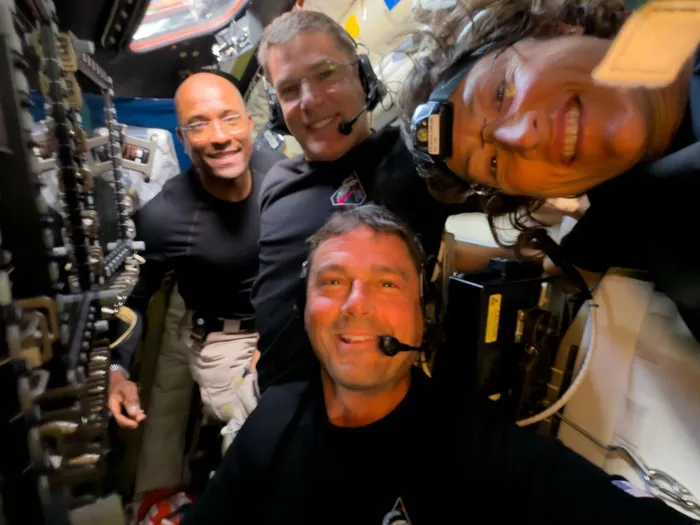
The media is currently swooning over the Artemis II crew like it’s 1968 all over again. They’re calling it a "race into the moon’s embrace." They’re talking about the "quiet Easter" before the storm. It’s poetic. It’s nostalgic. It’s also a complete distraction from the fact that we are spending billions to repeat a mission we already perfected over fifty years ago.
NASA is selling you a "giant leap" that is actually a cautious, expensive shuffle. If you look past the glossy PR photos of the Orion capsule and the heroic orange flight suits, you’ll see a program that is drowning in legacy hardware and political compromise. We aren’t racing to the moon. We are dragging the moon toward a bloated federal budget.
The Apollo 8 Encore Nobody Asked For
Artemis II is a ten-day mission to send four astronauts around the moon and back. They won’t land. They won’t orbit for long. They will simply fly a figure-eight—a "free-return trajectory"—and splash down in the Pacific.
Sound familiar? It should. Frank Borman, Jim Lovell, and Bill Anders did this in December 1968.
The industry consensus says this is a "critical stepping stone." That’s a lie born of risk-aversion. In the 1960s, we went from the first American in orbit to a lunar landing in seven years. Artemis has been "in development" in various forms (starting with the Constellation program) for nearly two decades. We are using a 1960s mission profile to test a 2020s rocket because we are terrified of failure.
When did "exploration" become synonymous with "doing it again, but slower"?
The SLS Is a Jobs Program Not a Rocket
To get to the moon, NASA is using the Space Launch System (SLS). The agency spent over $23 billion developing this vehicle. Each individual launch costs roughly $2.2 billion.
Here is the dirty secret: The SLS is built using refurbished Space Shuttle Main Engines (RS-25) and solid rocket boosters. It is a "Franken-rocket" designed to keep contracts flowing to the same legacy aerospace providers in specific congressional districts.
- The Waste: We are literally throwing away museum-grade engines. The RS-25 engines on the SLS were designed to be reused 20 times. On Artemis II, they will be dumped into the ocean after one flight.
- The Math: For the price of one SLS launch, you could buy roughly 15 to 20 launches of a SpaceX Falcon Heavy.
I have seen companies blow millions on "sunk cost" projects, but the SLS is a masterclass in institutional stubbornness. We are prioritizing "heritage hardware" over modern efficiency. We are choosing the most expensive way to travel because it’s the most politically convenient way to travel.
The Diversity Shield
The press loves to highlight that Artemis II will carry the first woman, the first person of color, and the first Canadian to the lunar vicinity.
Diversity in space is a net positive. Representing the full spectrum of human talent is basic logic. However, NASA is using these historic milestones as a human shield against legitimate budgetary and technical criticism.
If you question the timeline, you’re "anti-progress." If you point out that the heat shield on the Artemis I Orion capsule eroded in ways NASA didn't expect, you’re told you’re "missing the big picture" of inspiration.
True inspiration comes from doing something new. Sending a diverse crew to do a 56-year-old lap around the moon is a performative gesture. Real progress would be landing them on Mars, or building a permanent, self-sustaining lunar base. Artemis II does neither. It just takes pictures.
The Orion Heat Shield Scandal
Let’s talk about the hardware. During the uncrewed Artemis I mission, the Orion heat shield didn't just get hot; it charred and lost material in "unexpected" chunks. This is the shield that is supposed to protect Victor Glover, Reid Wiseman, Christina Koch, and Jeremy Hansen from 5,000°F during reentry.
NASA’s internal response has been a masterclass in bureaucratic "risk management." They are analyzing the data. They are "confident" in the margins. But the reality is that they are flying a crew on a vehicle with a known thermal protection issue because the political pressure to launch is higher than the pressure to be perfect.
I’ve seen this movie before. It was called the Space Shuttle Challenger. It was called the Space Shuttle Columbia. When the "status quo" becomes more important than the "stark reality," people die.
The Lunar Gateway is a Toll Booth in Space
The broader Artemis plan involves the "Gateway"—a small space station that will orbit the moon. NASA says it’s a staging point. In reality, it’s a toll booth.
There is no physical or orbital reason to stop at a station before going to the lunar surface. It adds complexity, it adds weight, and it adds a massive recurring cost. The only reason the Gateway exists is to give the SLS a place to go because it doesn't have the fuel capacity to get a heavy lander directly to the moon and back on its own.
We are building a house in the driveway because our car can't make it to the street.
Stop Asking if We Can Go Back
The public keeps asking, "When will we get back to the moon?" This is the wrong question.
The right question is: "Why are we going back using 20th-century architecture?"
If we actually wanted to be a multi-planetary species, we wouldn't be building expendable rockets. We would be leaning entirely into fully reusable systems. We wouldn't be celebrating a "flyby" in 2025 or 2026. We would be embarrassed that it’s taking us this long to achieve what we did with slide rules and 4KB of RAM.
The Real Numbers
Let's look at the financial weight of this "embrace."
| Component | Cost per Unit/Launch |
|---|---|
| SLS Rocket | $2.2 Billion |
| Orion Capsule | $1.0 Billion |
| Ground Systems | $600 Million |
| Total per Mission | ~$3.8 Billion |
Compare this to the $100 million estimated cost for a Starship launch. You aren't watching a race. You're watching a wealth transfer from the taxpayer to legacy aerospace firms.
The Industry Insider’s Take
I’ve spent years watching how these "monumental" projects are built. The people working on them are brilliant. The engineers are world-class. But they are trapped in a system that rewards "not getting fired" over "getting results."
Artemis II is a safety-first mission in a field that used to be about daring-first. By the time this crew splashes down, the private sector will likely have more mass in orbit than NASA has moved in a decade.
We are being told that this mission is about "returning to the moon to stay." But you don't stay by taking a ten-day cruise. You stay by building infrastructure, lowering costs, and taking risks that a government agency with a PR problem won't touch.
Stop falling for the slow-motion footage and the swelling orchestral music. Artemis II isn't the beginning of a new era. It’s the expensive, final gasp of an old one.
We’re not racing into the moon's embrace. We're paying for a very expensive selfie in its backyard.
The astronauts are heroes. The mission is a relic. Build a better rocket or stay on the ground.