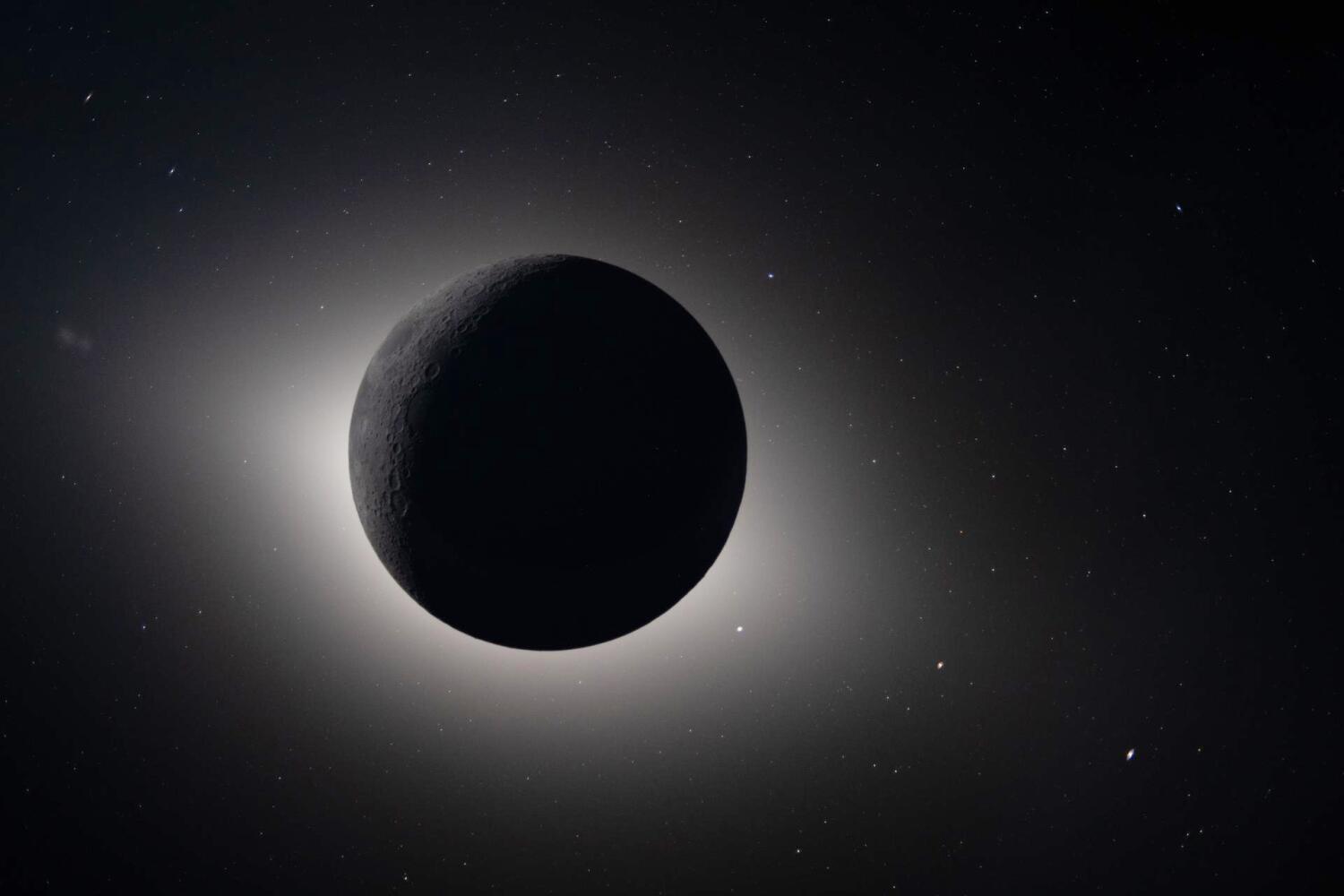
The photos from the dark side of the moon by Artemis II aren't just pretty desktop backgrounds. They represent the first time human eyes have seen that rugged, cratered crust in person since 1972. Most people think of the Moon as a static rock, but these new images prove how little we actually know about the terrain we’re about to call home. If you think this is just a repeat of Apollo, you’re missing the point.
The Artemis II mission is a high-stakes stress test. NASA sent four astronauts—Reid Wiseman, Victor Glover, Christina Koch, and Jeremy Hansen—on a trajectory that swung them around the lunar far side. This isn't the "dark side" in a literal sense. It gets plenty of sunlight. It’s just "dark" to us because it always faces away from Earth. When the crew hit that point in their orbit, they were completely cut off from radio contact. No Wi-Fi. No Houston. Just a massive, ancient shield of rock between them and every other human being.
The Far Side is a Different World
If you look at the photos side-by-side, the near side of the Moon looks like a smooth, stained marble compared to the chaotic mess of the far side. The near side has those large, dark plains called maria. Early astronomers thought they were seas. The far side doesn't have that. It's almost entirely high-altitude, heavily cratered highlands.
Why the difference? It’s one of the biggest debates in lunar science. Some researchers think a second, smaller moon once crashed into the back of our Moon. Others believe the Earth’s heat, back when our planet was a molten ball, kept the near side warm and thin while the far side cooled and thickened. The Artemis II photos give us a high-resolution look at these crustal differences that satellites just can't match. Seeing it through a window provides a sense of scale and shadow depth that helps geologists understand the sheer violence of the early solar system.
Why We Need These High Resolution Images Now
You might wonder why we need new photos when we have the Lunar Reconnaissance Orbiter (LRO) circling the Moon for years. It’s about human-centric navigation. When we start landing near the South Pole with Artemis III and beyond, we need to know exactly how the light hits the craters. The shadows on the Moon are pitch black because there’s no atmosphere to scatter light. It's disorienting.
The Artemis II crew used these photo opportunities to test optical navigation systems. These systems allow the Orion spacecraft to calculate its position by looking at the stars and the lunar horizon. It's a backup for when GPS-style tracking fails. If the computers go dark, the crew needs to know they can find their way home using the landmarks they’re seeing for the first time.
Breaking the Radio Silence Myth
There’s a specific kind of tension that happens when a spacecraft slips behind the Moon. For about thirty minutes, the crew is truly alone. The Artemis II mission recorded data during this window to see how the Orion capsule handles the thermal shift. On the far side, you’re shielded from all the "noise" of Earth. No radio leaks, no TV signals, nothing.
This makes the far side the quietest place in the known universe for radio astronomy. The photos the crew took show the South Pole-Aitken basin, one of the largest and oldest impact craters in the solar system. It’s roughly 2,500 kilometers wide. Scientists are already planning to put radio telescopes back there to look at the "Dark Ages" of the universe—the time before the first stars formed. These photos help us scout those locations without sending a rover first.
The Real Danger of the Lunar Far Side
Space is hostile, but the far side is a special kind of nightmare for mission planners. If something goes wrong while the crew is behind the Moon, they can't call for help. They have to fix it themselves. The Artemis II mission used this flyby to test the life support systems under the highest possible pressure.
We saw images of the crew looking out the windows, but what the photos don't show is the radiation monitoring happening in the background. Orion is designed to protect against solar flares, but the far side offers no protection from cosmic rays. The data gathered during this lunar swing-by tells us if our shielding is actually up to the task of a multi-year trip to Mars.
What Most People Get Wrong About the Dark Side
The term "Dark Side of the Moon" is basically a marketing win for Pink Floyd, but it’s a scientific headache. The Moon rotates. Every part of it gets day and night. The far side actually gets more sunlight in some ways because it’s never eclipsed by the Earth.
When the Artemis II crew took those photos, they were seeing the Moon in its rawest form. Without the "Earthrise" in the background for half the orbit, the isolation is palpable. The images show a desolate, monochrome world that looks like it hasn't changed in four billion years. And honestly, it hasn't. That’s why it’s a perfect time capsule.
What Happens With This Data
NASA isn't just posting these photos on Instagram and calling it a day. Every pixel is being analyzed. They’re looking for:
- Regolith consistency: How the dust sits on steep crater walls.
- Boulder fields: Potential hazards for future robotic scouts.
- Lighting angles: Crucial for the solar panels on the upcoming Lunar Gateway station.
The Gateway will stay in a "near-rectilinear halo orbit," which means it will spend a lot of time over the North and South poles. The Artemis II photos help confirm that our maps of these regions are accurate enough for docking maneuvers.
Making the Moon Accessible
The Artemis program is built on international cooperation. We saw the Canadian Space Agency (CSA) represented by Jeremy Hansen on this flight. This isn't just a US ego trip. The photos captured by the crew are shared globally to help ESA, JAXA, and other partners build their own lunar hardware.
If we’re going to stay on the Moon, we need to stop treating it like a destination and start treating it like a workplace. These images are the first site surveys for the most ambitious construction project in history. We’re looking for water ice in the shadows of those deep craters. If we find enough of it, we can stay. If we don't, the Moon remains a place to visit, not to live.
Your Next Steps to Follow the Mission
If you’re following the progress of the Artemis missions, don't just wait for the grainy press releases. Check the NASA Orion blog for raw image dumps. These often include the unedited shots that show the true, harsh contrast of the lunar surface.
You should also look into the "Eyes on the Solar System" tool. It’s a web-based app that lets you track Orion’s exact position in real-time. Seeing where the ship is relative to the far side gives those photos a lot more context. The mission doesn't end when the capsule splashes down; the data analysis will take years. Keep an eye on the upcoming Artemis III lunar landing site announcements, as the photos from this flyby will directly influence where the first woman and person of color step onto the surface.