The metal of the key felt cold, a sharp contrast to the humid air of the Jordan District. Mrs. Lam’s hand shook as she pressed it into the lock of unit 4C. This was not the triumphant homecoming of a long-awaited vacation. It was a tentative intrusion into a tomb. When the door finally swung open, the smell hit her first—not the scent of ozone or charred wood, but the heavy, suffocating odor of wet soot and chemical foam.
A week ago, this apartment was a sanctuary of cluttered joy. Now, it was a charcoal sketch of a life interrupted.
Hong Kong moves at a breakneck speed, a vertical forest of neon and concrete where space is the ultimate currency. But when the fire ripped through the New Lucky House on Jordan Road, the city stopped. The numbers on the news tickers were staggering: 168 lives extinguished in a matter of hours. In a city where millions live stacked atop one another, a fire isn't just a localized emergency. It is a collective nightmare realized.
The Anatomy of a Spark
To understand why 168 people never made it out, you have to look at the bones of the buildings we call home. Many of these older structures, known as tong lau, are relics of a different era. They were built before modern fire suppression became a legal mandate. They are labyrinths of subdivided units, narrow corridors, and stairwells often choked with the overflow of daily life—cardboard boxes, bicycles, and laundry racks.
The fire likely began in the lower levels, fueled by a cocktail of plastic waste and old wiring. In a modern building, fire doors and sprinklers act as silent sentinels. They are designed to contain a blaze, to starve it of oxygen and keep it confined to its origin point. But in New Lucky House, the architecture itself became a predator. The stairwells, meant to be avenues of escape, turned into chimneys, funneling searing heat and toxic smoke upward at terrifying speeds.
Consider the physics of a high-rise fire. Heat rises. Smoke travels faster than a human can run. When the residents of the upper floors opened their doors to investigate the shouting, they weren't met with a clear path to safety. They were met with a wall of black air so hot it could sear the lungs in a single breath.
The Weight of a Suitcase
Mrs. Lam stepped over a puddle of murky water. Her eyes went straight to the corner of the living room where her grandson’s plastic toy truck sat. It was warped, the primary yellow plastic melted into a grotesque, drooping shape. It looked like a Salvador Dalí painting.
She wasn't looking for jewelry or cash. She was looking for the photographs.
In the digital age, we assume our memories are safe in the cloud. But for the generation that built this city, history is tactile. It is the texture of a wedding album, the crinkle of a birth certificate, the physical presence of a departed husband’s calligraphy set. As she sifted through the debris, the "dry facts" of the disaster began to dissolve.
The media reported 168 deaths. But 168 isn't just a statistic.
It is 168 empty chairs at dinner tables tonight. It is 168 sets of keys that will never again turn a lock. It is the silence in the hallways of the local primary school where three children from the fifth floor used to race each other to the elevator.
The human cost is measured in the things left behind. A single shoe in the hallway. A half-eaten bowl of noodles on a kitchen counter. A cell phone that won't stop buzzing with "Where are you?" texts that will never be answered.
The Invisible Stakes of Urban Density
The tragedy in Jordan exposes the precarious balance of the Hong Kong dream. We live in one of the wealthiest cities on the planet, yet thousands are forced into "coffin homes" and subdivided flats where the distance between safety and catastrophe is measured in inches.
When a landlord carves a single apartment into five separate units to maximize rent, they aren't just altering a floor plan. They are altering the building's nervous system. The original electrical wiring, designed for one family’s rice cooker and television, is suddenly strained by five air conditioners, five induction stoves, and five water heaters.
The math is simple and deadly. Overloaded circuits lead to electrical arcs. Arcs lead to smoldering insulation. Smoldering insulation leads to a flashover.
We often talk about "infrastructure" as if it were a distant, cold concept managed by bureaucrats in glass towers. We forget that infrastructure is the pipe that doesn't leak and the wire that doesn't spark. It is the fire door that actually closes and the smoke detector that still has a working battery. In the pursuit of profit or the desperation for affordable housing, these invisible safeguards are the first things to be sacrificed.
The Long Walk Home
The government has promised a full investigation. There will be task forces. There will be new regulations drafted in elegant fonts on heavy paper. There will be inspections of thousands of similar buildings across the territory.
But for those returning to New Lucky House this week, the political fallout is white noise.
They are navigating a landscape that is both familiar and alien. One man, Mr. Chen, was seen carrying a single, soot-stained birdcage. The bird was gone, but he held the cage as if it were a holy relic. For him, the cage represented the routine of his mornings—the whistling, the feeding, the small connection to a world that made sense before the sirens started.
How do you reclaim a home that has betrayed you?
The walls of Mrs. Lam’s apartment are still standing, but the sense of security is gone. Every creak of the floorboards now sounds like a warning. Every whiff of someone’s cooking from a neighbor’s kitchen carries a hint of panic. This is the psychological shrapnel of a disaster. The physical fire is out, but the internal one—the one fueled by anxiety and grief—will smolder for years.
The Logic of the Aftermath
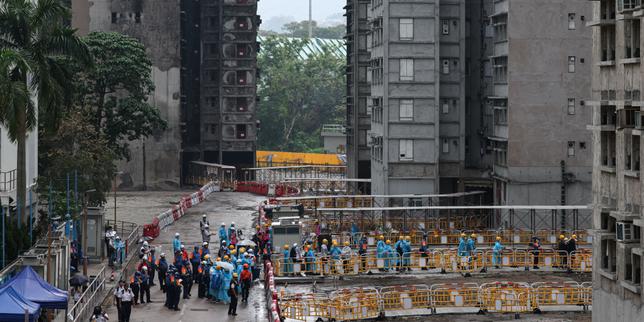
There is a grim ritual to these homecomings. The residents are escorted by police and fire officials, given a limited window of time to retrieve essentials. It is a frantic, heartbreaking exercise in triage.
- Priority One: Identification and legal documents. Without these, you are a ghost in the system.
- Priority Two: Medications. High blood pressure and diabetes don't pause for a tragedy.
- Priority Three: Sentiment. The things that prove you existed before the fire tried to erase you.
As they emerge from the building, their faces are masked not just against the lingering dust, but against the cameras of the world. They are the faces of a city that is tired. A city that is mourning.
We like to believe that we are in control of our environments. We buy insurance, we lock our doors, we choose "safe" neighborhoods. But the reality is that we are all deeply interdependent. Your safety is only as robust as the wiring in the apartment below yours. Your exit strategy is only as clear as the hallway your neighbor chooses not to clutter.
Beyond the Yellow Tape
The fire in Jordan was a failure of systems, yes. But it was also a failure of empathy.
When we look at the skyline of Hong Kong, we see the triumph of verticality. We see the wealth, the commerce, and the ambition. We rarely look at the shadows cast by those towers—the aging blocks where the paint is peeling and the fire extinguishers are ten years past their expiration dates.
The 168 souls lost in New Lucky House are a reminder that a city’s greatness isn't measured by its tallest skyscraper, but by its safest tenement.
Mrs. Lam eventually walked out of the building. She carried a small bag. Inside was the warped toy truck and a damp, soot-streaked wedding photo. She didn't look back at the scorched windows or the bouquets of white lilies piling up at the entrance. She just kept walking toward the subway station, her footsteps lost in the roar of the city that had already moved on.
The tragedy is not just that the fire happened. The tragedy is how quickly we will allow ourselves to forget the heat until the next spark flies.
The soot on her hands will wash off. The memory of the black smoke in the hallway, however, is a permanent stain. It is the ghost that will sit at every new dinner table she ever lays, a silent witness to the night the city’s heart burned in the dark.