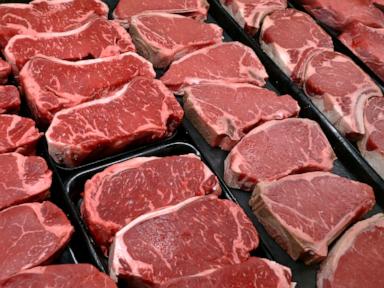
Everyone asks where the beef is. Nobody asks who paid to raise the steer.
That line has survived decades of political journalism because it sounds punchy, folksy, and tough. In midterm cycles, commentators dust it off to demand substance over slogans and price tags over promises. It feels like hard-nosed scrutiny. It usually turns out to be lazy theater.
When a headline asks "where's the beef?" and "how much does it cost?" during a midterm election, it treats public policy like a fast-food value menu. You point at a program, check the sticker price, and decide whether the patty is thick enough for your money. That framing is comforting. It is also fundamentally broken for how midterm politics, fiscal trade-offs, and economic incentives actually operate.
Midterms are not checkout counters. They are mid-course corrections in a system where the real costs rarely show up on the receipt voters read in November.
The Lazy Consensus Around Midterm "Substance" and Sticker Prices
The standard midterm commentary follows a predictable script. First, it complains that candidates rely on culture wars, soundbites, or partisan grievances instead of detailed policy blueprints. Second, it pivots to cost—either accusing challengers of blowing up the deficit or accusing incumbents of starving public services. Third, it frames voters as rational shoppers comparing concrete deliverables against clear price tags.
There is a kernel of truth in that frustration. Campaigns do lean on shorthand. Voters do feel inflation, housing strain, healthcare premiums, and tax friction in their daily lives. Pretending voters do not care about money or tangible outcomes would be absurd.
The mistake is assuming that "substance" equals a line-item legislative menu and "cost" equals a top-line budget score.
In real-world governance—and I have watched policy shops, advocacy groups, and campaign strategists burn millions of dollars chasing this exact illusion—voters rarely reward candidates for reciting ten-year budget tables during a thirty-second ad break or a two-minute debate answer. What looks like a demand for "the beef" in punditry is often a demand for credibility under constraint. Voters want to know whether a politician understands the trade-off they are asking the public to swallow, or whether they are selling steak at hamburger prices.
Even more importantly, treating cost as a simple dollar figure hides the most expensive parts of midterm politics: opportunity cost, compliance friction, regulatory drag, and delayed fiscal reckonings. A policy can look "cheap" on a budget projection while imposing massive hidden costs on households and small businesses. Another can carry a scary headline number while preventing far larger downstream expenses.
If you only ask "where's the beef?" and "how much does it cost?", you evaluate the menu without ever walking into the kitchen.
Why Midterms Are Built for Friction, Not Clean Deliveries
To understand why midterm substance looks different from presidential grandeur, you have to start with institutional reality. Midterms happen in the middle of an administration's four-year term, under divided or razor-thin majorities, with every House seat and roughly a third of the Senate on the line.
Political scientists from Morris Fiorina to Frances Lee have spent decades documenting how electoral incentives and legislative gridlock shape congressional behavior. When margins are tight and nationalization is high, members of Congress face intense pressure to signal loyalty to their base while protecting themselves in swing or shifting districts. That structure rewards messaging, blocking maneuvers, and constituent service over sweeping, unilateral overhaul.
Expecting a midterm campaign to deliver a neat, fully priced, standalone policy package—and then blaming voters or candidates when it does not arrive—confuses campaign theater with constitutional mechanics.
Consider how policy actually moves in a polarized, narrow-majority environment:
- Incrementalism beats grandiosity. Major statutory overhauls are hard to pass even with large majorities. In tight midterms, leverage often sits in appropriations riders, oversight hearings, regulatory pushback, or targeted tax and spending tweaks.
- Messaging is part of the mechanism. Campaigns test which arguments hold coalition support and give lawmakers a mandate or a shield for the next two years. Calling all messaging "fluff" misses how political coalitions are assembled and held together.
- Implementation lags behind elections. Even when a law passes, agency rulemaking, state-level execution, court challenges, and market adjustment take years—not election cycles.
When pundits demand "the beef" in a midterm, they often want final results from a process designed for negotiation, stalemate, and partial steps. That does not mean voters should accept empty slogans. It means analysts should measure candidates by what they can realistically move, block, or reform—not by fantasy wish lists.
The Hidden Costs That Sticker Prices Miss
Ask ten analysts what a proposal "costs," and nine will reach for a budget score or a campaign talking point. That is the easy part. The harder—and far more revealing—question is what changes in behavior, prices, risk, and time once the policy hits reality.
Imagine a scenario where a midterm platform promises lower consumer costs through a sweeping new subsidy or price cap without touching supply bottlenecks. On paper, a targeted subsidy might look modest for a year or two. In practice, if supply is inelastic—say in housing construction, skilled trades, or medical capacity—subsidies can get absorbed into higher prices or longer wait times while shifting fiscal pressure elsewhere. Conversely, a supply-side reform like cutting redundant permitting or licensing hurdles might carry almost no direct federal budget cost while lowering real-world friction for builders and workers.
Traditional "how much does it cost?" framing flattens both cases into a single number. It treats a transfer payment, a tax expenditure, a regulatory mandate, and a supply bottleneck as if they all work the same way. They do not.
Direct Outlays vs. Hidden Friction
A government program can cost relatively little in direct appropriated dollars while imposing heavy indirect costs through paperwork, delays, compliance overhead, or distorted incentives. Anyone who has run a small business or tried to build something regulated knows that compliance and delay are taxes in disguise. They do not always show up neatly in a campaign's cost estimate, yet families and employers pay them every week.
Short-Term Relief vs. Long-Term Balance Sheets
Midterm debates are notorious for collapsing time horizons. Politicians love immediate relief and distant costs; critics love pointing out distant costs while ignoring immediate household strain. Both sides can be right at once and still miss the point. A short-term measure might give breathing room to a squeezed family today while creating fiscal or market distortions later. Pretending there is a free lunch—or pretending every cost is identical—keeps the conversation shallow.
Dismantling the "People Also Ask" Traps of Midterm Coverage
If you look at the questions voters and searchers actually type around midterms, most of them fall into predictable traps. Answering them honestly requires pushing back on the premise baked into the question.
"Do midterm candidates actually have real policy plans, or just slogans?"
Many have real policy positions, white papers, and legislative records—buried beneath mass-market slogans built for low-attention media environments. The trap is assuming that because a thirty-second spot sounds like a slogan, no serious policy work exists behind it. Look past the ad copy to committee assignments, past votes, amendments offered, and specific trade-offs they are willing to name. If a candidate refuses to name any trade-off—claiming they can cut taxes, expand benefits, and shrink debt effortlessly—that is your signal that the "beef" is gristle.
"How can voters tell if a policy promise is affordable?"
Start by asking two sharper questions than "What does it cost?": How is it paid for, and what happens if revenue projections miss or costs overrun? A plan backed by concrete revenue offsets, realistic growth assumptions, and clear priorities is fundamentally different from one built on wishful math or open-ended commitments. Even then, remember that budget estimates are projections, not guarantees. Fiscal discipline shows up in how lawmakers handle overruns, not just in what they claim on the campaign trail.
"Why do midterm campaigns focus so much on cost and inflation instead of long-term reforms?"
Because voters live in the present tense. When groceries, rent, insurance, utilities, or borrowing costs squeeze a household budget, long-term structural reforms sound abstract—or worse, like an excuse to ignore today's pain. Politicians talk about cost of living in midterms because pocketbook pressure is immediate, not because long-term issues do not matter. The smart move is to judge whether a candidate's short-term pitch conflicts with or supports long-term solvency and productivity.
"Are midterms mostly a referendum on the president or a vote on local issues?"
It is rarely an either/or choice; it is a tug-of-war between national alignment and local fit. National tides shape turnout and partisan framing, while local economic conditions, candidate quality, and district-specific issues tilt close races at the margins. Analysts who declare midterms purely a presidential referendum miss crucial district dynamics; analysts who ignore national tides miss the wave sweeping the board.
What Smart Voters and Analysts Should Do Instead
If asking "where's the beef?" and "how much does it cost?" is too blunt an instrument, what replaces it? Not cynicism—cynicism is just laziness with a smirk. Replace slogans with a sharper set of diagnostic checks.
- Demand the trade-off, not just the price tag. Every serious choice gives up something: money, time, speed, simplicity, or political capital. Force candidates and commentators to state what gets squeezed when Priority A moves ahead.
- Separate immediate relief from structural fixes. A tax break or rebate checks a different box than zoning reform, permitting speed, workforce training, or competition policy. Know which problem a proposal actually targets.
- Watch the bottleneck. Before cheering or panicking over a policy's price, ask where the real-world bottleneck sits. If labor, materials, approvals, or infrastructure cannot expand, throwing money at demand behaves very differently than fixing supply.
- Track institutional feasibility. A bold pledge in a closely divided legislature faces steep odds unless paired with a realistic coalition strategy or executive/administrative authority. Distinguish between what a candidate wants to pass and what can realistically survive contact with Congress.
- Audit your own biases. Watch for the temptation to demand rigorous math from the side you oppose while giving a free pass to slogans from the side you favor. That double standard is the real reason midterm debates stay stuck in mud.
Where My Contrarian Take Can Go Wrong
Any contrarian framework carries its own blind spots, and pretending otherwise would be dishonest.
First, over-indexing on "hidden costs" and "systemic friction" can make every reform sound impossible or doomed to unintended consequences. Sometimes a straightforward policy does work roughly as advertised, and overcomplicating it is just a sophisticated way to paralyze action.
Second, dismissing "where's the beef?" can accidentally excuse genuine vacuity. Some campaigns really are all sizzle and no substance—driven by grievance, distraction, or donor capture with zero serious governing agenda. Nuance should never become a cover for hollowness.
Third, focusing heavily on structural mechanics and long-term trade-offs can sound detached from urgent human stakes. For a family choosing between medicine, childcare, and rent this month, macroeconomic nuance is cold comfort. Good analysis has to hold both the spreadsheet and the kitchen table in view.
Stop Grading Midterms Like a Drive-Thru Menu
Midterm elections will keep tempting writers and voters to ask for a neat menu with crisp prices and instant results. That impulse is human, and it makes for easy headlines.
It is also the wrong lens for a messy, high-friction political system where real costs hide in bottlenecks, delays, and unstated trade-offs. Stop asking only where the beef is and what the sticker says—start asking who pays the hidden price, what bottleneck breaks first, and who actually has the leverage to deliver.