The room smelled like stale soda and warm electronics, the familiar perfume of a marathon gaming session stretching past midnight. Outside, the quiet streets of Austin sat dark under a humid Texas sky, while inside, tens of thousands of people watched a single webcam feed with the breathless intensity usually reserved for a championship penalty shootout.
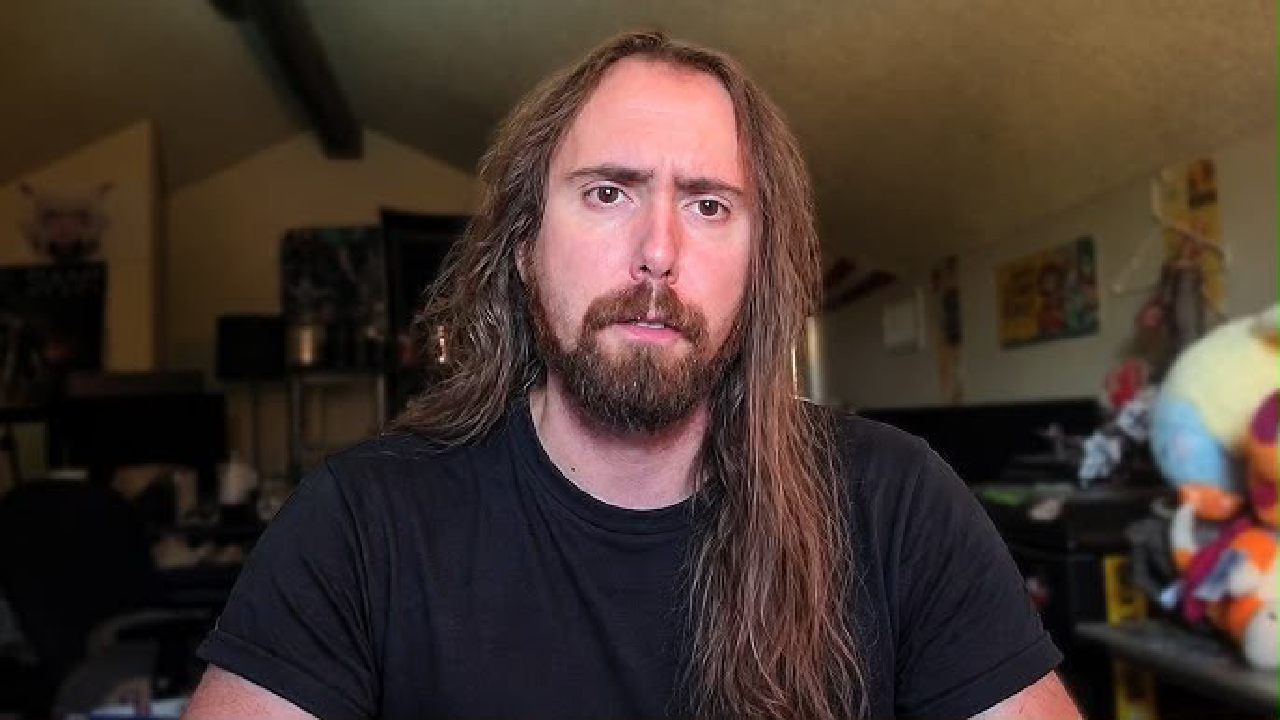
Zack Hoyt, known across the internet simply as Asmongold, leaned back in his ergonomic chair, ran a hand through his hair, and exhaled. He had just finished rolling credits on the most anticipated piece of entertainment in human history. For thirteen years, the world had waited for Rockstar Games to return to the neon-soaked swamps and sun-bleached highways of Vice City. Careers had started and ended in the gap between Grand Theft Auto V and this exact moment.
Then came the verdict. Nine out of ten.
On the surface, that number looks like a victory lap. A nine is an indisputable triumph, a validation of billion-dollar budgets and a decade of obsessive polygon polishing. Yet within seconds of the score leaving his mouth, the chat window exploded into a blur of confusion and furious debate. Because right alongside that glowing endorsement, Asmongold had delivered a blunt, unflinching critique of the man sitting in the driver's seat for half the game.
Jason Duval.
To understand why a cynical, battle-hardened streamer would hand a near-perfect score to a game whose co-protagonist left him cold, you have to understand the quiet tension at the heart of modern blockbusters. We live in an era where technical perfection is easier to buy than a soul, and nowhere is that friction more visible than in how a single player experiences a split narrative.
The Weight of Thirteen Years
Wait long enough for anything, and expectation stops being excitement. It becomes a weapon.
When Rockstar finally released Grand Theft Auto 6, the cultural gravity was suffocating. Consider a hypothetical player—let's call him Marcus, a thirty-two-year-old accountant who played GTA V in his college dorm room and now had a mortgage, a toddler, and exactly ninety minutes of free time after 9:00 PM. For Marcus, and for millions watching streams at work, this wasn't just a video game. It was a referendum on whether big-budget art could still surprise us.
Asmongold has built an empire by acting as the ultimate cynical consumer. He does not care about marketing buzzwords, developer pedigrees, or Hollywood actors lending their voices to digital avatars. He cares about one brutal, binary question: Is it fun, or is it wasting my time?
When he booted up the streets of Leonida, the answer to the first half of that question was overwhelmingly, undeniably yes.
The world itself operates like a living organism that happens to tolerate your presence. Swamp water doesn't just ripple; it churns with sediment and gators that actually hunt based on sound and movement. Traffic patterns shift organically with the time of day, turning coastal causeways into parking lots at five in the afternoon and empty drag strips at three in the morning. When Asmongold praised the game, he wasn't reciting press-release talking points. He was reacting to the sheer, intoxicating friction of a world that pushes back against every input.
Every gunshot carries an ugly, metallic weight. Every police chase escalates with terrifying, tactical coordination rather than spawning magical patrol cars out of thin air. For hours, the sheer mechanics of existing in Vice City carried the broadcast. Viewers watched him get sidetracked for forty-five minutes just testing how vehicle damage affected steering alignment on wet asphalt.
That is the secret sauce of a nine-out-of-ten experience. It isn't one giant feature. It is ten thousand invisible micro-interactions working in harmony so smoothly that your brain stops seeing code and starts seeing a place.
The Hollow Man in the Passenger Seat
Silence. That was the first warning sign during the story missions.
Not the deliberate, dramatic silence of a master filmmaker letting a scene breathe, but the flat, awkward quiet of a character who has nothing compelling to say while driving across a bridge.
Grand Theft Auto 6 splits its narrative spine between two criminals: Lucia Caminos and Jason Duval. On paper, the Bonnie-and-Clyde dynamic is classic crime-fiction gold. Two desperate people pinned against the wall by bad luck and worse choices, relying entirely on each other to survive the criminal underworld of modern Florida.
In practice, according to Asmongold's blunt post-game breakdown, the partnership is wildly lopsided.
While Lucia commands the screen with sharp instincts, clear motivation, and an unmistakable hunger to claw her way out of the dirt, Jason often feels like a tourist in his own heist. Asmongold pointed directly at this imbalance when explaining why the game fell a single point short of perfection. He found Jason bland, reactive, and strangely detached from the high-stakes chaos swirling around him.
Think of it like watching a high-wire act where one performer is juggling flaming torches while the other stands three feet behind holding a clipboard. You are still amazed by the spectacle, and you definitely don't want the act to stop, yet every time the camera cuts to the guy with the clipboard, the tension leaks out of the tent.
Why does a character like Jason feel so flat inside a world bursting with personality?
Part of the problem lies in the trap of the "everyman" protagonist. Writers often sand down the sharp edges of a male lead so the average player can easily project themselves onto the screen. Give him a generic military or small-town background, keep his opinions mild, let him nod along while louder characters explain the plot, and hope the player fills in the blanks.
Twenty years ago, when video game characters were blocky collections of three hundred polygons, that blank-slate trick worked brilliantly. Today, when you can see the individual pores on Jason's sunburned neck and the micro-tremor in his jaw during an interrogation, an empty personality doesn't read as relatable. It reads as vacant.
Asmongold, who has spent tens of thousands of hours dissecting character design and narrative pacing across hundreds of titles, spotted the flaw immediately. When Jason spoke, he sounded like a vehicle for exposition rather than a desperate man making terrible decisions. Meanwhile, the satirical madness of Leonida—the social media influencers filming robberies in real time, the corrupt local politicians, the unhinged swamp militias—threatened to swallow him whole.
Why Flawed Stories Still Win
Here is where conventional review logic completely breaks down.
If you look at entertainment purely through the lens of cinema or literature, a weak co-lead is a fatal wound. Nobody gives a movie a nine out of ten if half the main cast puts the audience to sleep. We walk out of the theater, complain about the script, and forget the film by Tuesday.
Video games do not play by those rules.
To see why, imagine buying a breathtaking, custom-built vintage motorcycle. The engine roars like thunder, the suspension eats potholes for breakfast, and carving through mountain switchbacks feels like flying. Now imagine the leather seat is slightly too stiff on long straightaways. Do you park the bike in the garage and call it garbage? Of course not. You shift your weight, grip the handlebars tighter, and keep riding because the machine beneath you is extraordinary.
That stiff leather seat is Jason Duval. The motorcycle is everything else Rockstar built.
When Asmongold weighed the complete experience, he refused to let a lukewarm character overwrite fifty hours of transcendent gameplay. This distinction is crucial, and it is something rigid critics constantly get wrong. Players do not experience a game as a checklist of literary achievements; they experience it as a playground of agency.
Even when Jason's dialogue felt flat, the moment the cutscene ended and control snapped back to the player, the magic returned instantly. Planning an armored truck ambush in the middle of a tropical downpour didn't require Jason to deliver a Shakespearean monologue. It required timing, spatial awareness, and the nerve to improvise when an unmarked cruiser unexpectedly turned the corner.
Furthermore, Lucia's strength as a character acted as a counterweight. Whenever the narrative threatened to stall in neutral, her presence pulled the momentum back onto the rails. The contrast between her ferocious urgency and Jason's passive demeanor almost seemed intentional at times, though Asmongold remained unconvinced that boredom was an artistic choice.
The Streamer's Paradox
There is an invisible dynamic at play whenever a creator of Asmongold's scale reviews a cultural juggernaut.
In the modern gaming ecosystem, outrage is the cheapest currency on the market. Saying a beloved franchise is "trash" or "ruined" guarantees millions of rage-clicks, endless reaction videos, and weeks of algorithmic oxygen. Conversely, blindly praising a studio to protect early access privileges is the fastest way to lose an audience's trust forever.
Walking the razor's edge between those two extremes requires brutal honesty.
By praising the game's core loop while openly criticizing Jason Duval, Asmongold did something rare: he treated his audience like adults capable of holding two competing thoughts at the same time. You can love a masterpiece and still point out the crack in the corner of the frame. In fact, pointing out the crack is the only way anyone believes you actually looked at the painting.
His critique resonated because viewers had felt that exact friction themselves while watching the playthrough. They had seen the chat go quiet during Jason-heavy errands, and they had seen the chat erupt into chaos during open-world shootouts and Lucia's high-wire missions. Naming the elephant in the room validated what thousands of people were already thinking.
This is the real reason legacy gaming outlets often struggle to connect with everyday players. A traditional review tends to average everything out into a polite, diplomatic soup, smoothing over sharp disagreements so nobody gets offended. A creator speaking live to an unscripted crowd has nowhere to hide. If a character bores him, seventy thousand people see his eyes glaze over in real time.
What Comes After the Credits
Long after the final mission wrapped up and the broadcast ended, the conversation around Jason Duval continued to ripple across forums, Discord servers, and late-night group chats.
Will players mod him out? Probably on PC within a year. Will Rockstar lean harder into Lucia for future story expansions? Almost certainly, given how overwhelmingly the community gravitated toward her perspective.
Yet the most telling detail from that marathon broadcast wasn't the critique of Jason, nor was it the final numerical score tacked onto the end of the night. It was what happened twenty minutes after the credits finished rolling.
Asmongold didn't close the application. He didn't switch to another game, and he didn't immediately launch into a twenty-minute rant about character arcs. He simply stole a beat-up sedan off a rain-slicked intersection near Ocean Drive, turned on the radio, and drove south toward the Keys just to see how the morning light hit the water.