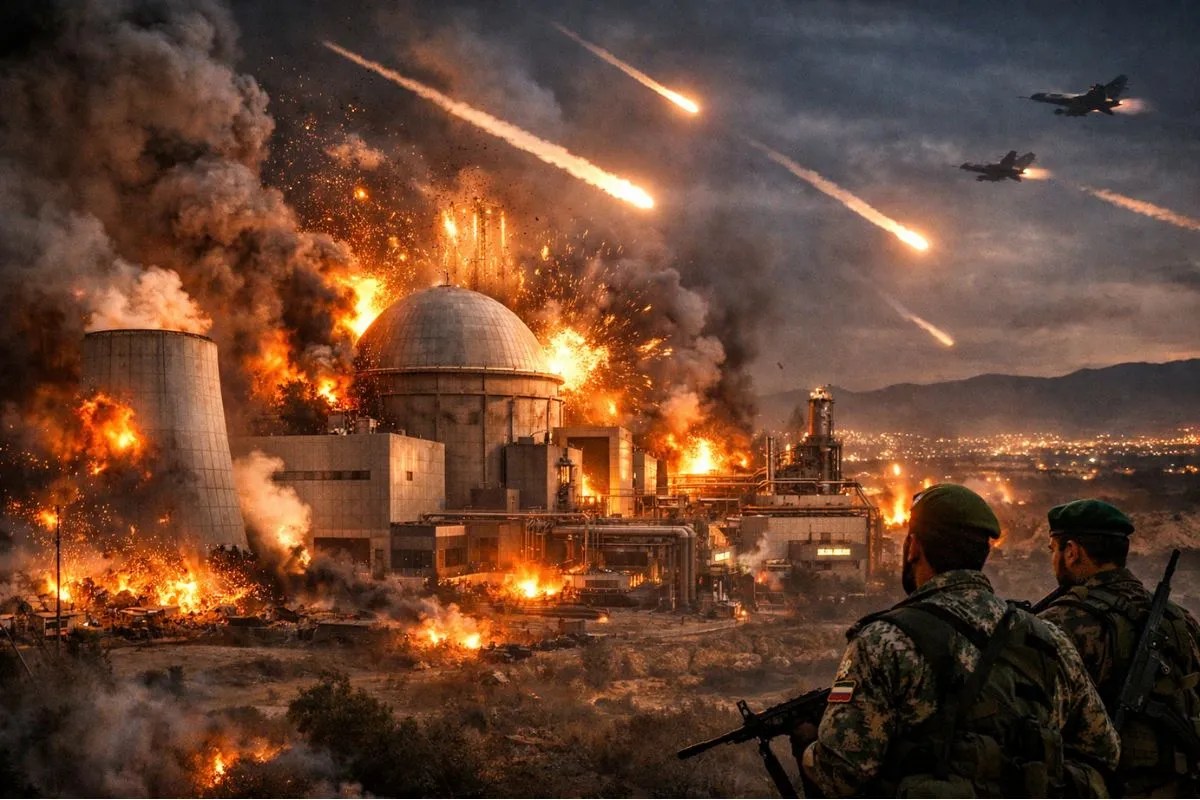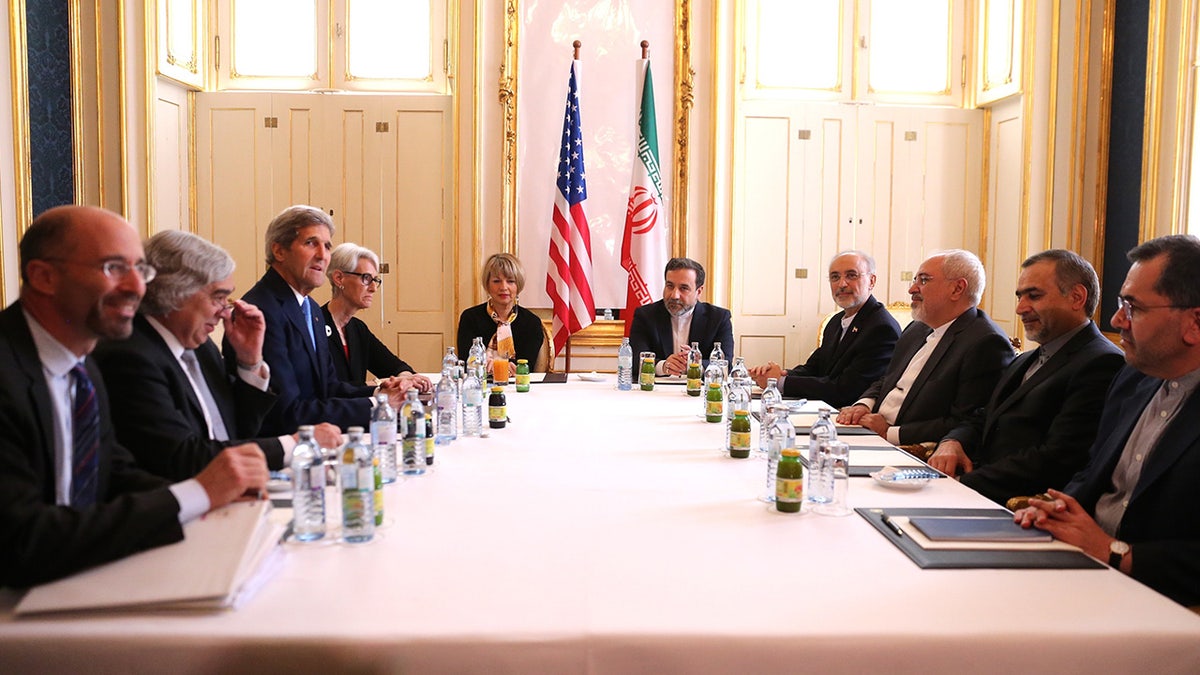
Market volatility surrounding the recent projections of a protracted conflict between the United States and Iran is not a reaction to the threat of kinetic warfare alone, but to the specific logistical and economic friction of a "multi-week" engagement window. When Senator Marco Rubio signaled that a conflict could stretch for weeks, he defined a temporal boundary that shifts the strategic risk from a single-event shock to a sustained systemic drain. In a global economy optimized for just-in-time delivery and low-margin stability, a twenty-one to thirty-day disruption in the Persian Gulf triggers a non-linear compounding of costs across energy markets, maritime insurance, and sovereign debt yields.
The Triad of Escalation Friction
The assumption that a modern conflict with a middle-tier power like Iran can be "contained" or "surgical" ignores the structural realities of asymmetric defense. The "weeks" referenced in recent geopolitical briefings represent the time required to address three specific operational bottlenecks: Recently making headlines recently: The Kinetic Deficit Dynamics of Pakistan Afghanistan Cross Border Conflict.
- Integrated Air Defense Suppression: Unlike the rapid degradation of command and control seen in smaller theaters, Iran’s territorial depth and mobile S-300 batteries require a methodical, multi-phase SEAD (Suppression of Enemy Air Defenses) campaign.
- Swarm Logic and Littoral Denial: The Islamic Revolutionary Guard Corps (IRGC) Navy utilizes a distributed lethality model. Neutralizing hundreds of fast-attack craft and hidden anti-ship cruise missile (ASCM) sites along 1,400 miles of coastline is a high-frequency, low-yield task that cannot be compressed into a forty-eight-hour window.
- The Proxy Latency Effect: Iran’s "Forward Defense" doctrine relies on externalized nodes (Hezbollah, Houthi rebels, and various PMFs). The activation of these cells creates a secondary and tertiary front that forces the U.S. to divert assets, effectively resetting the conflict clock every time a new geography is pressurized.
The Energy Risk Function and Price Elasticity
The market "recoil" is a mathematical response to the threat of a closed or contested Strait of Hormuz. Roughly 21 million barrels of oil per day (bpd) pass through this chokepoint, representing 21% of global petroleum liquids consumption. A multi-week timeline transforms a "fear premium" into a "physical shortage."
The Logistic Decay of Global Reserves
Global crude markets operate on a buffer system. While the Strategic Petroleum Reserve (SPR) and OECD commercial stocks provide a cushion, they are designed for supply interruptions, not the total loss of the Gulf's export capacity. The price of Brent Crude in this scenario follows a specific decay function: Additional insights on this are covered by BBC News.
$P(t) = P_0 \cdot e^{k \cdot d(t)}$
Where $P(t)$ is the price at time $t$, $P_0$ is the baseline price, $k$ is the scarcity coefficient, and $d(t)$ is the cumulative duration of the Strait's closure.
In the first 72 hours, the price is driven by speculative hedging. By day ten, the "Physical Delivery Gap" manifests. Refineries in East Asia (specifically China, India, and Japan), which rely heavily on Middle Eastern sour grades, cannot simply pivot to West Texas Intermediate (WTI) due to sulfur-processing configurations. This creates a localized price explosion that ripples through the manufacturing supply chain.
Maritime Insurance and the Collapse of Logistics
The overlooked variable in the Rubio timeline is the "Hull and Machinery" (H&M) and "War Risk" insurance markets. Underwriters at Lloyd’s of London do not require a ship to be sunk to halt trade; they only require the probability of loss to exceed a certain threshold.
Once a conflict is categorized as a "weeks-long" event, War Risk premiums move from a fixed annual rate to a "voyage-by-voyage" basis. This can increase the cost of a single transit by 500% to 1,000%. For a Suezmax tanker, this translates to an additional $500,000 to $1 million per trip. When these costs are sustained for twenty days, the "Floating Pipeline"—the continuous movement of goods—stagnates as ship owners refuse to enter the Persian Gulf "Exclusion Zone."
The Psychological Contagion in Debt Markets
Capital flight during a multi-week Iranian conflict follows a "Flight to Quality" pattern, but with a twist. Traditionally, the U.S. 10-Year Treasury is the ultimate hedge. However, a sustained war in the Middle East introduces inflationary pressure through energy costs, which complicates the Federal Reserve’s interest rate trajectory.
If energy-driven inflation spikes while the economy slows due to supply chain breaks, the "Stagflationary Pivot" occurs. Investors begin to price in a higher "Risk Premium" on sovereign debt for all involved parties. The cost of insuring against a default (Credit Default Swaps) for regional players like Saudi Arabia or the UAE rises sharply, even if their infrastructure remains untouched. The mere proximity to the "Kinetic Zone" devalues their creditworthiness in the eyes of automated trading algorithms.
Cyber Attrition as a Duration Multiplier
A prolonged conflict ensures the transition from kinetic strikes to digital sabotage. Iran’s cyber capabilities are optimized for "wiper" attacks against industrial control systems (ICS). In a two-day conflict, cyber is an afterthought. In a twenty-day conflict, it becomes a primary tool for "Horizontal Escalation."
The objective of these attacks is not total destruction but "Frictional Degradation." By targeting the financial clearing systems or the power grids of U.S. allies, Iran can exert pressure on Washington to accept a ceasefire. This adds a "Cyber Risk Variable" to the valuation of every multinational corporation with exposure to the region, further depressing global indices.
The Strategic Bottleneck of Munitions Stocks
One of the most critical, yet least discussed, reasons for market anxiety is the "Munitions Burn Rate." Modern high-intensity conflict consumes Precision-Guided Munitions (PGMs) at a rate that exceeds current industrial replacement capacity.
- Tactical Air-to-Surface Missiles: A week of intensive sorties can deplete specific PGM inventories by 15-20%.
- Interceptors: Defense against Iranian ballistic missile volleys requires a high volume of SM-3 and Patriot PAC-3 interceptors. These are low-volume, high-cost items.
A multi-week conflict raises the specter of "Inventory Exhaustion," where the U.S. might be forced to choose between maintaining its Middle Eastern posture or preserving its readiness for a Pacific contingency. Markets view this as a geopolitical "Liquidity Crisis," where the U.S. runs low on the "currency" of kinetic deterrence.
Structural Incentives for Miscalculation
The danger of the "Multi-Week" rhetoric is that it creates a window for "Sunk Cost Escalation." Once a state has committed assets for fourteen days and incurred significant economic damage, the political cost of retreating without a decisive victory becomes unbearable.
This leads to "Proportionality Creep," where each side increases the scale of its targets to justify the losses already sustained. For Iran, this means moving from harassing tankers to targeting desalination plants or oil processing facilities (like Abqaiq). For the U.S., it means moving from tactical military targets to "Regime-Sustaining Infrastructure."
Navigating the Volatility of Sustained Escalation
To manage the fallout of this projected timeline, institutional players must decouple from "Spot Market" reactions and focus on "Structural Durability." The primary indicator of a deepening crisis is not the price of oil, but the movement of the "Term Structure" in volatility indices (VIX). If the long-term volatility curve remains elevated above the short-term curve, the market is pricing in a permanent shift in the geopolitical risk floor.
Exposure must be shifted toward "Friction-Resistant Assets." This includes:
- Regional Hegemon Hedges: Defensive positions in aerospace and defense firms with deep-backlog PGM contracts.
- Energy Infrastructure: Entities specializing in midstream bypass routes (e.g., pipelines that terminate outside the Persian Gulf, such as the East-West Pipeline in Saudi Arabia).
- Cyber-Security Integrators: Firms providing the "Hardened Shell" for critical infrastructure in the Gulf Cooperation Council (GCC) countries.
The most effective strategic move is the implementation of a "Conflict-Duration Alpha" strategy: shorting high-debt, energy-dependent manufacturing while simultaneously going long on the "Logistic Redundancy" sector. As the conflict enters its third week, the premium shifts from those who produce goods to those who can safely move them. The market is not just recoiling from war; it is recalibrating for a world where the "Weeks" of conflict are the new baseline for global risk.
Monitor the "Insurance-Exclusion" announcements from the International Group of P&I Clubs. The moment they expand the "Listed Areas" for war risk to include the entire North Arabian Sea, the multi-week attrition phase has officially begun, and the secondary market collapse is imminent. Move capital into high-liquidity cash equivalents or gold to weather the "Invoicing Gap" that will follow the inevitable maritime standstill.
Would you like me to generate a quantitative breakdown of the specific "Munitions Burn Rate" for a typical carrier strike group during a twenty-one-day high-intensity engagement?