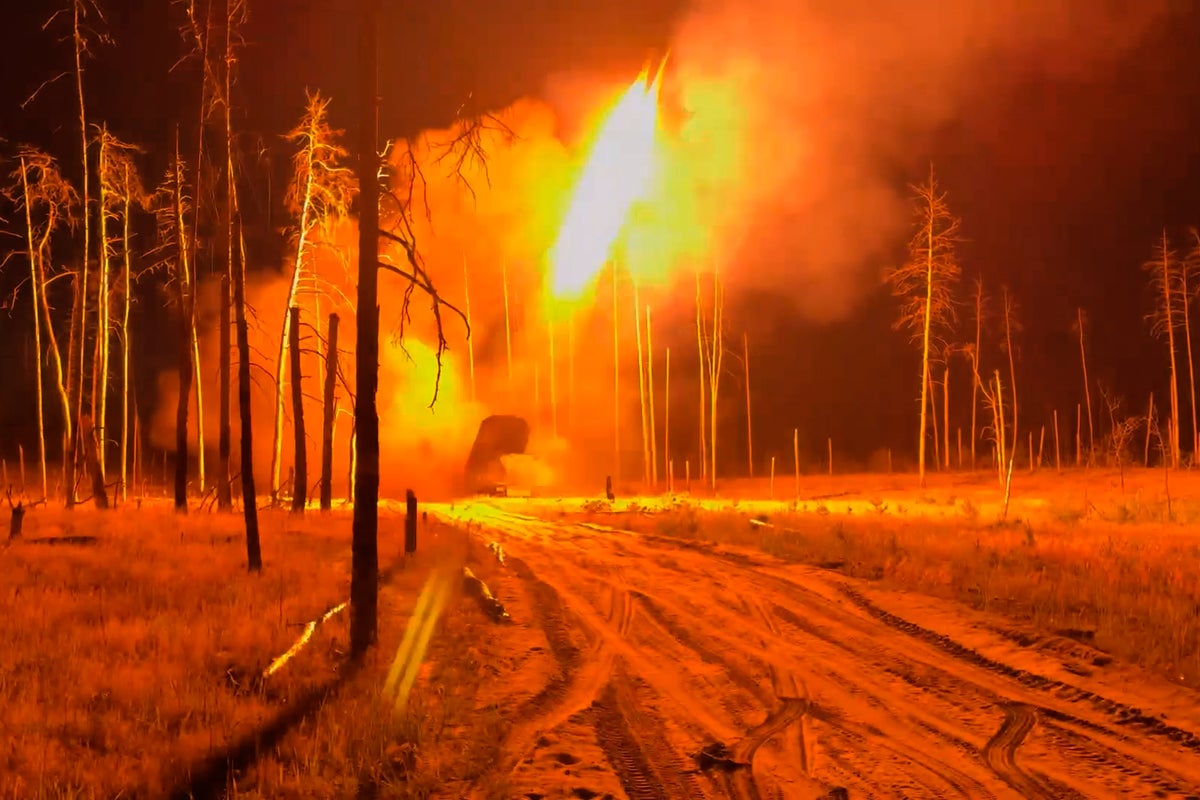
The repeated deployment of long-range one-way attack (OWA) unmanned aerial systems (UAS) against the Moscow Oil Refinery—striking the facility twice within a single week—marks a structural transition in the conflict's attrition model. Rather than executing symbolic strikes, Ukraine is conducting a systematic, high-density interdiction campaign against Russia’s downstream energy infrastructure. This operational shift directly exploits the structural vulnerabilities of continuous-process chemical engineering plants, forcing the Kremlin into a high-stakes trade-off between military logistical consumption and domestic macroeconomic stability.
Understanding the compounding impact of these strikes requires moving past sensationalized reporting and analyzing the precise mechanical, logistical, and economic choke points currently under strain.
The Strategic Trilemma of Downstream Vulnerability
Petroleum refining relies on a highly integrated, sequential thermal and catalytic distillation process. Unlike raw extraction sites, which feature highly distributed wellheads, refineries concentrate billions of dollars of complex capital equipment into static, highly visible geographical footprints. Ukrainian targeting methodology indicates an intentional focus on the critical nodes within this architecture, establishing a specific multi-variable bottleneck.
1. Fractional Distillation Columns (Atmospheric and Vacuum)
The primary atmospheric distillation tower ($CDU$) splits crude oil into its baseline fractions (naphtha, kerosene, diesel, and heavy fuel oil). These structures are typically 40 to 60 meters tall, unarmored, and contain highly volatile hydrocarbon vapors under elevated temperatures and pressures. A precise kinetic impact on a fractionating column induces structural failure via thermal deformation, instantly halting the entire primary processing stream.
2. Catalytic Cracking and Hydrocracker Units
To maximize high-value light distillates like high-octane gasoline and aviation fuel, refineries use secondary units like Fluid Catalytic Crackers ($FCC$) and hydrocrackers. These units rely on precise metallurgical compositions, rare-earth catalyst beds, and extreme pressure environments.
3. Centralized Control Rooms and Pump Stations
While a burning storage tank creates highly visible smoke plumes, it represents easily bypassable logistical storage. Conversely, striking the centralized control infrastructure or the high-pressure manifold pump houses introduces systemic paralysis, rendering the undamaged processing units completely inoperable.
The Asymmetric Cost Function
The operational calculus of this campaign favors the offense by orders of magnitude. The underlying mathematics of this asymmetric equation reveal why traditional air defense models fail to protect these distributed industrial assets.
Let the total operational cost to the offense ($C_{off}$) be defined by the production and deployment cost of a long-range OWA drone swarm:
$$C_{off} = \sum_{i=1}^{n} D_i$$
Where $D_i$ represents the unit cost of a single long-range drone (estimated between $20,000 and $50,000 based on composite fiberglass fuselages, commercial-grade GPS/GNSS anti-jamming modules, and low-bypass internal combustion engines). For a high-density attack utilizing 20 drones, the total offensive capital expenditure tops out at roughly $1,000,000.
Conversely, the total cost to the defense ($C_{def}$) is a function of active air defense consumption and direct capital asset destruction:
$$C_{def} = \sum_{j=1}^{m} M_j + K_r + E_{loss}$$
Where:
- $M_j$ is the unit cost of interceptor missiles (e.g., Pantsir-S1 or S-400 effectors costing between $100,000 and $2,000,000 per launch).
- $K_r$ is the direct capital replacement cost of the damaged refining unit (ranging from $50,000,000 to over $200,000,000 for complex cracking towers).
- $E_{loss}$ is the compounding economic revenue loss generated by daily unproduced refined product barrels.
This structural imbalance means that even if Russian air defenses achieve a 90% interception rate, the 10% kinetic leakage is sufficient to inflict catastrophic economic asymmetry.
Dissecting the Sanctions-Induced Repair Bottleneck
The Western sanctions regime imposed on Russia has fundamentally altered the timeline and feasibility of industrial repairs. The core bottleneck is not a lack of raw financial capital, but rather an acute dependency on specialized Western technology.
Prior to 2022, the modernization of Russia’s major refineries—including the Moscow, Kstovo, and Yaroslavl facilities—was executed almost exclusively by European and American engineering conglomerates such as Linde, Honeywell UOP, and Technip. The custom fractionating trays, high-pressure valves, and digital control systems (SCADA) are proprietary designs.
Consequently, Russia faces three severe structural constraints when attempting to repair targeted facilities:
- The Tooling Deficit: Russian domestic heavy machinery manufacturers lack the specialized metallurgy and precision casting capabilities required to forge high-pressure hydrocracker vessels.
- The Catalyst Crisis: Modern high-octane fuel synthesis requires sophisticated chemical catalysts. Supply chain friction impairs the replacement of fouled or destroyed catalyst beds, lowering the overall quality and volume of domestic gasoline yields.
- The Grey Market Premium: Sourcing industrial components via third-party intermediaries introduces severe lead-time delays, stretching what would normally be a three-week maintenance turnaround into an indeterminate multi-month or multi-quarter outage.
Macroeconomic Contagion and Domestic Fuel Rationing
The compounding loss of refining capacity has triggered a highly visible domestic fuel crisis, transforming a localized security problem into a systemic macroeconomic vulnerability.
Industry intelligence indicates that approximately one-third of Russia's domestic refining capacity has been knocked offline. This has caused an unprecedented 25% year-on-year drop in crude processing volumes, hitting a historic low of roughly 3.95 million barrels per day. Gasoline production alone has contracted by 17%, dropping to 850,000 barrels per day.
The immediate consequence of this supply shock is the breakdown of internal distribution logistics. Because Russia's refining capacity is geographically concentrated in the European part of the country, regional supply lines are highly sensitive to disruption. This has manifested in several distinct structural failures.
The Agricultural Bottleneck
The current refining deficit coincides directly with the peak agricultural harvest season. Agriculture demands highly predictable, high-volume flows of diesel fuel. Regional shortages directly threaten harvesting timelines, creating an inflationary risk for domestic food supplies.
Spatial Distribution Misalignment
While Russia maintains strategic fuel reserves, these stocks are highly concentrated and unevenly distributed. Transporting refined products from unaffected Siberian refineries to the population centers of western Russia requires extensive rail capacity, which is already severely congested by military logistics moving toward the front lines.
Price Distortions and Mandatory Interventions
To stabilize the domestic market, the Kremlin has resorted to non-market regulatory interventions, including blanket bans on gasoline exports and discussions surrounding diesel export restrictions. In more than half of Russia's administrative regions, authorities have implemented strict fuel rationing policies, limiting consumer purchases to fixed caps (e.g., 50 liters per vehicle in certain state-run networks).
Structural Adaptations and Future Trajectory
Faced with an intensifying campaign that it cannot fully deter via air defense localization, the Kremlin is forced to shift its defensive and economic posture.
The state will likely attempt to replace damaged Western automated systems with less efficient, analog, or Chinese-sourced components. This will keep plants running but at lower yield efficiencies, higher operating costs, and reduced safety margins. Furthermore, Russia will increasingly rely on importing refined petroleum products from neighboring allied states, such as Belarus, converting a historically lucrative export engine into a net logistical liability.
On the security front, the military must reallocate highly constrained point-defense assets (such as Pantsir and Tor missile systems) away from active front-line positions to protect deep-rear industrial coordinates. This creates a zero-sum trade-off: every air defense battery assigned to protect a refinery in Moscow or Yaroslavl is a battery stripped from protecting tactical logistics nodes, command posts, and ammunition depots in the occupied territories. Ukraine’s deep-strike strategy successfully forces its adversary to choose between securing its industrial core or maintaining tactical air cover over its invading forces.
Ukraine strikes Moscow oil refinery for second time this week
This video provides critical visual evidence and boots-on-the-ground context detailing the scale of the fires at the Moscow Oil Refinery and the resulting disruptions to the capital's transportation network.