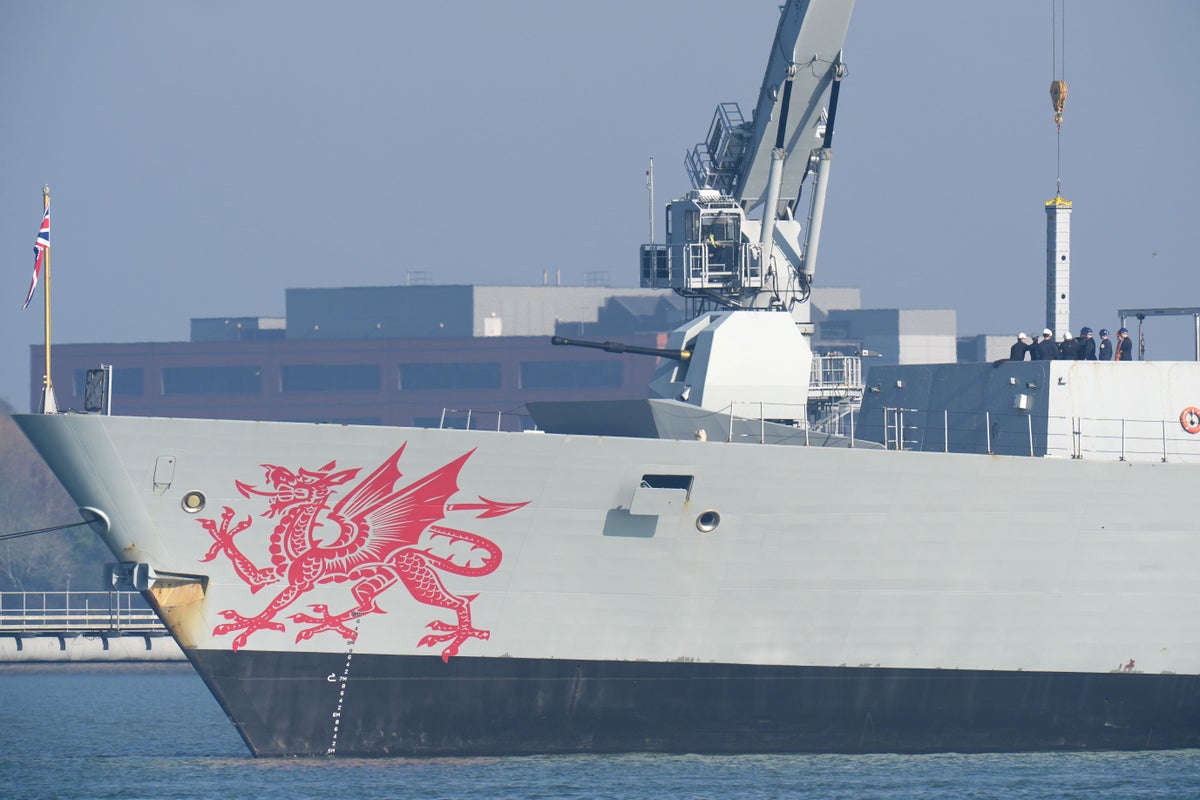
The maritime friction between Iran and the United Kingdom in the Strait of Hormuz is not a series of isolated verbal threats but a calculated application of asymmetric cost imposition. When Tehran warns that British warships will be met with a "decisive response," it is signaling a shift from reactive posturing to a proactive defensive doctrine designed to exploit the specific vulnerabilities of high-value naval assets in confined waters. The strategic logic rests on the premise that while the Royal Navy possesses superior kinetic technology, the Iranian Revolutionary Guard Corps Navy (IRGCN) maintains a superior attrition-to-cost ratio.
The Geography of Kinetic Constraint
The Strait of Hormuz represents a geographic choke point where traditional naval advantages—such as long-range radar and standoff missile capabilities—are structurally degraded. At its narrowest point, the shipping lanes are only two miles wide, flanked by Iranian-controlled islands like Abu Musa and the Tunbs. This creates a "kill zone" where the Reaction Time Constant for a Type 45 Destroyer or a Queen Elizabeth-class carrier is reduced to seconds.
Iran’s "decisive response" framework utilizes three specific geographic levers:
- Bathymetric Complexity: The shallow, cluttered waters of the Persian Gulf allow Iran’s fleet of Ghadir-class midget submarines to remain acoustically masked against the seafloor.
- Topographic Shielding: Iran’s mountainous coastline provides natural cover for mobile coastal defense cruise missile (CDCM) batteries, such as the Noor or Qader systems. These can be deployed, fired, and relocated before a naval task force can achieve a positive target ID.
- Proximity Saturation: The IRGCN utilizes "swarm" tactics involving hundreds of fast inshore attack craft (FIAC). This creates a target-saturation environment where the defensive systems of a British warship, despite their sophistication, face a mathematical probability of being overwhelmed by sheer volume.
The Cost Function of Naval Defense
The primary driver of this conflict is the Economic Asymmetry of Engagement. A British Type 45 Destroyer represents an investment of approximately £1 billion. Its primary defense against incoming threats, the Sea Viper (PAAMS) missile system, utilizes interceptors that cost between £1 million and £2 million per unit.
In contrast, the Iranian threat vectors are orders of magnitude cheaper:
- HESA Shahed-series Loitering Munitions: Costing approximately $20,000 to $50,000.
- Unmanned Surface Vessels (USVs): Improvised or purpose-built explosive boats costing under $100,000.
- Unguided Rockets and Mines: Costing in the low thousands.
The British Navy faces a Negative Attrition Loop. To defend against a $20,000 drone, the UK must expend a $2 million missile. In a sustained engagement, the Royal Navy’s magazine depth—the number of ready-to-fire interceptors—becomes the limiting factor. Once the VLS (Vertical Launch System) cells are empty, the ship is effectively neutralized as a strategic asset, regardless of its remaining structural integrity. Iran’s strategy is not necessarily to sink a British ship, but to force a mission failure through Depletion of Defensive Inventory.
The Three Pillars of Iranian Tactical Doctrine
The "decisive response" mentioned by Iranian commanders is built upon three operational pillars designed to counter Western naval presence without triggering a full-scale regional war.
1. Hybrid Sea-Denial
Iran does not seek sea control (the ability to use the water freely) but rather sea denial (the ability to prevent others from using it). This is achieved through the integration of sea mines with mobile missile batteries. The UK’s mine countermeasures (MCM) capabilities are world-class, but they are slow and vulnerable during operation. By threatening MCM vessels with land-based missiles, Iran creates a "locked door" scenario where the Strait becomes impassable for commercial insurance reasons, even if the physical threat is unverified.
2. Multi-Domain Saturation
A "decisive response" involves the simultaneous launch of sub-surface, surface, and aerial threats. This forces the ship’s Combat Management System (CMS) to prioritize targets across different vectors.
- Electronic Warfare (EW): Iran has increasingly invested in GPS jamming and spoofing to degrade the precision of Western naval assets.
- Information Operations: By filming close-quarters encounters and broadcasting them, Tehran exerts psychological pressure and targets the domestic political will of the UK government.
3. Proxy Displacement
Iran often utilizes its "Axis of Resistance" to execute its maritime strategy, providing plausible deniability. However, the direct warning to British warships suggests a move toward Sovereign Escalation. This implies that the IRGCN is prepared to take direct responsibility for engagements, likely calculating that the UK’s limited naval footprint—exacerbated by commitments in the Red Sea and North Atlantic—prevents a sustained retaliatory campaign.
The Royal Navy’s Operational Constraints
The British deployment to the Strait of Hormuz is hampered by Force Generation Deficits. The Royal Navy currently operates a limited number of frigates and destroyers capable of high-end air defense and anti-submarine warfare.
- Maintenance Cycles: For every ship deployed, two are typically in maintenance or training. This means a commitment of two ships to the Gulf effectively ties up the majority of the UK’s available surface fleet.
- Logistic Vulnerability: British ships in the region rely on regional hubs like the UK Naval Support Facility in Bahrain. Iranian missile capabilities put these fixed logistics nodes at risk, potentially "beheading" the fleet’s supply chain.
Escalation Dominance and the Threshold of Conflict
The core of the current standoff is the pursuit of Escalation Dominance. This occurs when one party can increase the stakes of a conflict in a way that the opponent cannot match without incurring unacceptable costs.
Iran holds the advantage in the local theater because it can escalate from "harassment" to "blockade" using low-cost internal resources. The UK, to counter-escalate, would need to move from "escort" to "strike," which involves attacking Iranian territory. Such an action would likely trigger a wider conflict that the UK is not currently positioned to manage without heavy US involvement. Therefore, the Iranian "warning" is an attempt to define the Rules of Engagement (ROE) in their favor, betting that the British will prioritize de-escalation over asserting freedom of navigation.
Strategic Forecast: The Shift to Autonomous Defenses
The current model of sending high-value, manned destroyers into the Strait of Hormuz is becoming strategically obsolete due to the cost-imposition factors analyzed above. The British "decisive response" to Iranian threats will likely evolve away from visible "gunboat diplomacy" toward a Distributed Maritime Operations (DMO) model.
The next tactical phase will involve:
- Unmanned Escorts: Deploying autonomous surface and sub-surface vessels to act as "missile sponges" or forward sensors, shifting the attrition math back in the UK’s favor.
- Directed Energy Weapons (DEWs): The deployment of laser-based systems like DragonFire, which reduces the cost-per-shot to less than £10, effectively neutralizing the economic advantage of Iranian drone swarms.
- Over-the-Horizon Targeting: Moving high-value assets further out into the Gulf of Oman, outside the immediate "kill zone" of the Strait, and utilizing long-range precision strikes to maintain deterrence.
The Iranian warning is a recognition of this closing window of opportunity. As Western navies integrate low-cost autonomous defenses, the IRGCN’s current asymmetric advantage will diminish. The current period of heightened rhetoric represents a "pressure test" of British resolve during this technological transition.
The most effective strategic play for the UK is not an increase in hull count, but an accelerated deployment of autonomous systems and EW suites that decouple the cost of defense from the cost of the platform. Until that transition is complete, the Strait of Hormuz remains a theater where Iranian geography and asymmetric investment hold a temporary but potent check on British naval power. Strategies must prioritize the hardening of logistic hubs and the expansion of magazine depth through modular weapon systems to survive a saturation-style "decisive response."