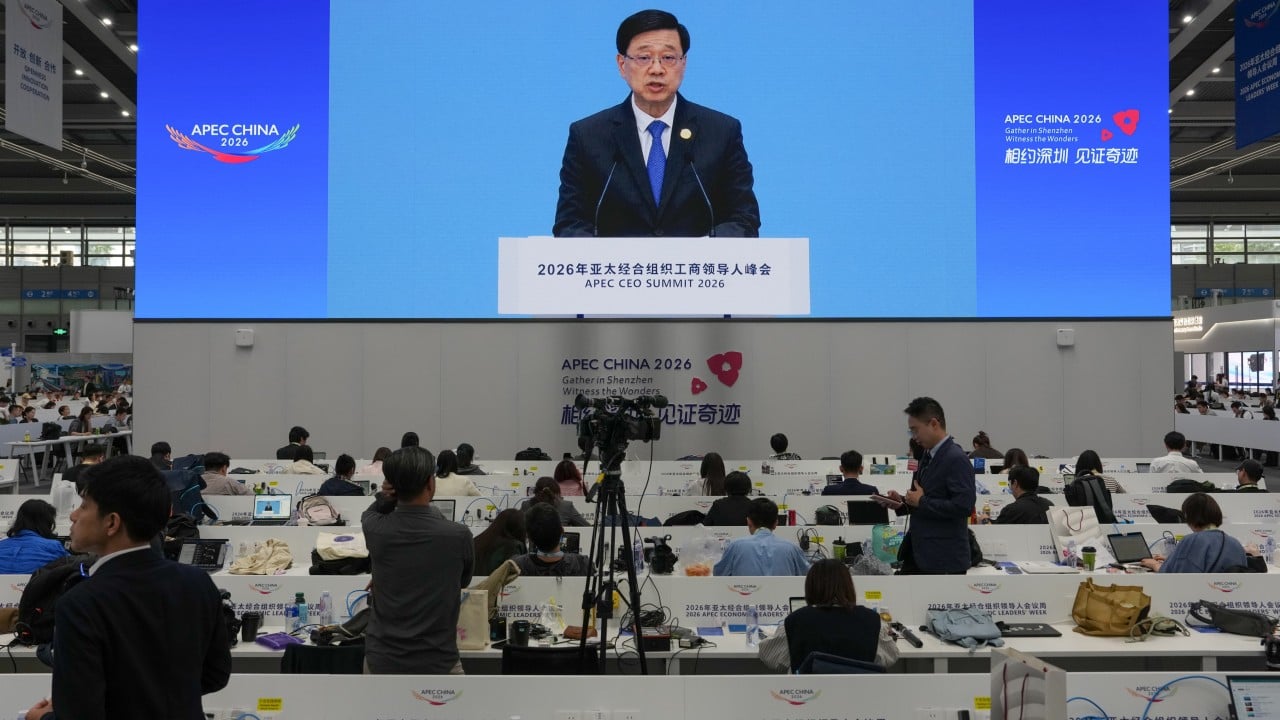
Global enterprises evaluating their Asian footprint frequently treat Shenzhen and Hong Kong as competing nodes in a zero-sum game. That framing is operationally flawed. Shenzhen functions as a high-velocity hardware prototyping and commercial scaling engine, whereas Hong Kong operates as an institutional trust and capital-allocation layer. When international delegations tour Shenzhen’s autonomous mobility corridors, drone logistics networks, and artificial intelligence clusters during multilateral summits like APEC, the visible hardware spectacle obscures the invisible financial, legal, and regulatory architecture required to commercialize those technologies globally. For multinational corporations, the optimal entry and expansion strategy in the Greater Bay Area relies on structural arbitrage—routing research, prototyping, and supply chain execution through Shenzhen while anchoring intellectual property, cross-border capital flows, and dispute resolution in Hong Kong.
The Institutional Arbitrage Model
To understand why Hong Kong retains structural necessity alongside Shenzhen’s industrial velocity, executives must separate production efficiency from transaction cost economics. Following Ronald Coase’s theory of the firm, companies expand across borders only where external transaction costs—contract enforcement, regulatory compliance, currency conversion, and intellectual property protection—remain predictable and low.
Shenzhen compresses physical iteration costs. Its dense supplier network allows hardware engineers to move from CAD file to functional printed circuit board assembly in days rather than months. However, Shenzhen operates within mainland China’s civil law jurisdiction, capital account controls, and data localization mandates. For a Western or regional multinational, housing core treasury functions, global patent portfolios, or cross-border equity structures directly inside a mainland operating entity introduces friction that slows down international M&A, joint ventures, and liquidity repatriation.
Hong Kong solves this friction through four distinct institutional mechanisms:
- Common Law Predictability: Hong Kong remains the sole jurisdiction in China operating under English common law. Commercial contracts, shareholder agreements, and licensing terms are adjudicated by an independent judiciary using precedent familiar to London, New York, and Singapore counsel.
- Unrestricted Capital Mobility: The Hong Kong Dollar operates under a linked exchange rate system pegged to the US Dollar, backed by deep foreign exchange reserves and zero capital controls. Multinationals move dividends, royalties, and intercompany loans in and out of Hong Kong without State Administration of Foreign Exchange approval bottlenecks.
- Territorial Tax Simplicity: Corporate profits are taxed on a two-tier territorial basis—8.25 percent on the first HK$2 million and 16.5 percent thereafter—with zero tax on dividends, capital gains, or offshore-sourced income, provided economic substance requirements are satisfied.
- Mutual Market Access: Through Stock Connect, Bond Connect, and Wealth Management Connect, Hong Kong acts as a closed-loop regulatory valve. Global institutional investors access mainland liquidity without onshore custody exposure, while mainland firms raise international capital under global disclosure standards.
This creates a bifurcated operational model. Shenzhen builds the physical product; Hong Kong prices the risk, secures the intellectual property, and clears the capital.
Deconstructing the Greater Bay Area Value Chain
When global executives observe Shenzhen’s technological showcases—ranging from low-altitude economy unmanned aerial vehicles to solid-state battery manufacturing—they often ask whether Hong Kong’s service economy risks disintermediation. The empirical reality points toward deeper functional specialization rather than obsolescence.
Consider the lifecycle of a deep-tech enterprise scaling out of Southern China. The process divides into four sequential stages, each governed by different comparative advantages.
Stage One Basic Research and Upstream Talent Generation
Hong Kong concentrates five of the world’s top 100 universities within a compact geographic footprint, generating peer-reviewed breakthroughs in biotechnology, robotics, microelectronics, and financial engineering. Because Hong Kong lacks heavy industrial zoning and cheap land, basic research conducted in its university laboratories rarely scales locally. Instead, principal investigators spin out entities that immediately cross the Shenzhen River to access fabrication facilities.
Stage Two Rapid Prototyping and Supply Chain Execution
In Shenzhen’s Nanshan and Bao’an districts, startups and multinational R&D centers tap into an unmatched concentration of precision tooling, injection molding, sensor manufacturing, and firmware engineering. An iteration loop that requires six weeks of vendor coordination in Europe or North America occurs across a single afternoon in Shenzhen. This speed lowers the capital expenditure required to reach minimum viable product status.
Stage Three Intellectual Property Structuring and Clinical or Regulatory Validation
Once a prototype demonstrates commercial viability, the enterprise faces global regulatory and IP hurdles. If a biotechnology firm develops a novel therapeutic molecule using Shenzhen lab capacity, global pharmaceutical partners will rarely license that asset directly from a mainland subsidiary due to cross-border IP enforcement concerns and data export restrictions. By assigning the core patent portfolio to a Hong Kong holding company and conducting multi-center clinical trials recognized by both the US Food and Drug Administration and China’s National Medical Products Administration, the firm preserves global licensing value.
Stage Four Cross-Border Capital Raising and Global Treasury Management
Scaling internationally requires multi-currency liquidity and institutional equity. Hong Kong’s capital markets provide deep secondary liquidity, private equity syndication, and structured trade finance. Global banks headquartered in Central manage regional cash pooling, foreign exchange hedging, and supply chain financing for factories operating across Guangdong and Southeast Asia.
The Economics of Cross-Border Data and Intellectual Property
A major blind spot in superficial regional comparisons involves data governance and intangible asset valuation. Modern industrial technology—whether autonomous vehicles, smart grid hardware, or AI-driven diagnostics—generates continuous telemetry. Under mainland China’s Data Security Law and Personal Information Protection Law, exporting operational datasets across borders triggers mandatory security assessments and regulatory filings.
Hong Kong occupies a specialized intermediate position in this regulatory architecture. Under bilateral facilitation frameworks established between Beijing and the Hong Kong Special Administrative Region, streamlined standard contracts govern data flows within the Greater Bay Area. Global enterprises can aggregate anonymized industrial and commercial datasets in Hong Kong data centers, apply global analytics stacks, and deploy insights across international markets without violating mainland data sovereignty rules.
The same structural logic applies to intellectual property monetization:
- Holding Structure: The multinational establishes a Hong Kong regional headquarters that holds regional trademarks, software copyrights, and patent rights.
- Contract R&D: The Hong Kong entity commissions specific engineering tasks from a wholly foreign-owned enterprise in Shenzhen on a cost-plus basis.
- Ownership Retention: Under the contract R&D agreement, all resulting foreground intellectual property vests directly in the Hong Kong parent upon creation.
- Global Licensing: The Hong Kong parent licenses the finished technology stack to operating subsidiaries in Southeast Asia, Europe, and North America, collecting royalty streams in freely convertible currency.
Without the Hong Kong intermediary, executing this four-step IP isolation model inside mainland China exposes the parent corporation to complex technology import-export registration rules and withholding tax friction.
Structural Constraints and Operational Friction
Relying on the Hong Kong-Shenzhen dual-hub model is not friction-free. Strategy teams that ignore the operational limitations of both cities frequently miscalculate total landed costs and execution timelines.
High Factor Costs in Hong Kong
Hong Kong suffers from structural supply constraints in commercial real estate and executive housing. Grade-A office space in Central or Admiralty ranks among the most expensive globally, while residential rents inflate expatriate compensation packages. Placing back-office administrative functions, routine customer support, or junior software engineering roles in Hong Kong destroys unit economics. Only functions that directly capture regulatory, legal, or capital-market arbitrage belong in the city.
Talent Misalignment and Demographic Shifts
While Hong Kong excels in corporate finance, commercial law, and academic research, it lacks a deep pool of mid-career industrial engineers, hardware product managers, and factory operations specialists. Conversely, Shenzhen possesses abundant engineering talent but faces periodic shortages of bilingual executives fluent in international compliance, cross-border tax structuring, and Western corporate governance. Enterprises must actively manage cross-border commuting workflows—utilizing the 14-minute high-speed rail link between West Kowloon and Futian—to bridge these cultural and functional silos.
Geopolitical and Export Control Exposure
Global supply chains operating across the Pearl River Delta face tightening semiconductor, artificial intelligence, and dual-use technology export controls from the United States and allied jurisdictions. Hong Kong is treated alongside mainland China under several US export administration regulations regarding advanced computing chips and semiconductor manufacturing equipment. Multinationals cannot use Hong Kong as a transshipment workaround for restricted hardware. Compliance architectures must maintain strict physical and digital firewalls between restricted Western technology stacks and mainland R&D teams.
Regulatory Divergence in Digital Assets and AI
As Shenzhen accelerates deployment of generative AI models and autonomous systems under mainland algorithmic filing regimes, Hong Kong maintains distinct regulatory frameworks overseen by the Securities and Futures Commission and the Office of the Privacy Commissioner for Personal Data. Firms deploying AI-enabled financial or healthcare products across both jurisdictions must maintain dual compliance pipelines rather than assuming mutual regulatory recognition.
Evaluating Singapore Versus Hong Kong as Regional Command Centers
Multinational boards routinely benchmark Hong Kong against Singapore when selecting an Asian regional headquarters. Both jurisdictions offer common law systems, low corporate taxes, and deep talent pools, yet they serve fundamentally different geographic and industrial mandates.
Singapore functions as the premier control tower for Southeast Asia—coordinating operations across Indonesia, Vietnam, Thailand, Malaysia, and India. Its time zone, multilateral trade agreements, and neutral diplomatic posture make it ideal for managing fragmented ASEAN supply chains and regional treasury centers focused on South and Southeast Asia.
Hong Kong, by contrast, is inextricably bound to the industrial and capital gravity of the Chinese mainland. No other financial center sits within a one-hour commute of a manufacturing ecosystem matching the scale of Guangdong province. If a corporation’s revenue growth, supply chain resilience, or R&D pipeline depends on direct integration with Chinese hardware manufacturing, consumer markets, or capital flows, managing those operations remotely from Singapore introduces a four-hour flight penalty and weakens institutional connectivity. The two cities are not interchangeable substitutes; Singapore optimizes for ASEAN diversification, while Hong Kong optimizes for Greater Bay Area integration.
Operational Blueprint for Market Entry and Restructuring
Global enterprises seeking to capture Shenzhen’s hardware velocity without sacrificing institutional security should execute a disciplined four-part organizational design:
- Centralize Governance and Capital in Hong Kong: Establish the regional holding company, treasury center, and core IP ownership entity in Hong Kong. Anchor regional general counsel, tax directors, and corporate development teams in the city to manage cross-border contracts and M&A execution.
- Deploy Lean Engineering Pods in Shenzhen: Avoid building bloated administrative offices in Shenzhen. Operate focused engineering, prototyping, and supplier quality assurance teams positioned directly adjacent to key tier-one component vendors in Nanshan, Bao’an, or Dongguan.
- Implement Strict Data and IP Partitioning: Structure intercompany R&D agreements so that Hong Kong funds and owns core architectural IP, while Shenzhen executes modular engineering sprints. Maintain segregated cloud environments to ensure compliance with both mainland data export rules and international privacy standards.
- Exploit Bilateral Policy Sandboxes: Register eligible entities in designated cooperation zones—such as the Hetao Shenzhen-Hong Kong Science and Technology Innovation Cooperation Zone or Qianhai—to access cross-border research funding, streamlined customs clearance for prototype equipment, and preferential corporate tax rates for qualifying high-tech activities.
The spectacle of Shenzhen’s industrial and technological output demonstrates what happens when massive engineering density meets state-backed infrastructure. Yet hardware velocity alone cannot sustain global enterprise scale without an institutional framework capable of pricing risk, enforcing contracts, and clearing international capital. Corporations that treat Hong Kong as an expensive legacy outpost miss its true function. In the architecture of modern Asian business, Shenzhen provides the physical kinetic energy, while Hong Kong provides the legal and financial operating system that makes that energy investable for the rest of the world.