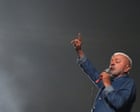
Luiz Inácio Lula da Silva’s 2022 return to the Brazilian presidency was not an organic wave of nostalgia, nor was it a simple replication of the digital populism pioneered by Jair Bolsonaro in 2018. It was the result of an asymmetric dual-channel mobilization model that synchronized high-density physical ground operations with decentralized, counter-algorithmic digital distribution. While conventional political commentary treats "the streets" and "social media" as separate arenas, the campaign functioned as a single integrated conversion funnel: physical presence generated high-trust emotional proof, which was then atomized into low-friction digital assets to bypass hostile algorithmic environments and secure a narrow 1.8-percentage-point victory.
The Structural Deficit Entering the 2022 Cycle
To understand the mechanics of the comeback, one must first quantify the operational asymmetry facing the Workers' Party (PT) and its broader coalition at the start of the electoral cycle. The incumbent administration possessed two overwhelming structural advantages that rendered traditional campaign playbooks obsolete.
First, Bolsonaro held an entrenched digital monopoly. Over four years, his network had constructed an automated, hyper-engaged distribution apparatus across WhatsApp, Telegram, YouTube, and Instagram. This ecosystem operated on high-arousal negative emotion—fear, outrage, and cultural grievance—which naturally aligns with the engagement-maximizing objective functions of commercial recommendation algorithms. Attempting to outspend or out-post this network on its own terms would have resulted in negative return on ad spend and algorithmic suppression.
Second, the incumbent deployed state-backed fiscal stimulus directly into the electorate months before the vote. Through the expansion of Auxílio Brasil, fuel tax cuts, and targeted subsidies for truck drivers and taxi operators, the state effectively subsidized voter retention in key swing demographics.
Lula’s coalition could not match the incumbent's algorithmic velocity, nor could it outbid the federal treasury in the short term. The strategic solution was to change the unit of competition. Instead of competing for raw digital impressions, the campaign optimized for trust-weighted conversion—using physical, offline gatherings to manufacture authentic social proof that digital bots could not replicate, and using micro-influencers to inject that proof into closed messaging networks.
Pillar One The Physical Ground Game as an Acquisition Engine
In modern digital-first campaigns, physical rallies are often treated as vanity metrics or legacy rituals for the base. In Brazil’s 2022 cycle, the physical ground game operated as the primary content-creation engine and voter-registration mechanism.
The Mechanics of Street-Level Proof
When political polarization reaches saturation, voters develop immunity to top-down advertising. A polished television spot or a sponsored Instagram post carries low credibility because the audience recognizes it as paid persuasion. However, raw, user-generated footage of tens of thousands of citizens occupying public squares in São Paulo, Recife, or Salvador functions as a costly signal. It communicates social consensus and momentum in a way that synthetic media cannot.
The campaign structured its physical mobilization around three operational layers:
- Institutional Union and Movement Infrastructure: Unlike 2018, when the PT was fractured and Lula was imprisoned, the 2022 effort reactivated the dormant capillary networks of the Central Única dos Trabalhadores (CUT), the Landless Workers' Movement (MST), and student unions. These organizations provided predictable baseline turnout, eliminating the "empty room" risk that destroys early campaign momentum.
- The Comitês Populares (Popular Committees): Rather than centralizing all events through national headquarters, the campaign incentivized the creation of thousands of hyper-local neighborhood committees. These units operated with minimal central funding, focusing on door-to-door canvassing, street-level debates, and localized cultural events. This distributed the cost of customer acquisition across thousands of unpaid volunteers.
- Strategic Geography and Vote-Margin Defense: Physical appearances were not distributed evenly. The itinerary followed a strict marginal-utility logic: maximizing turnout in the Northeast (Lula’s historical stronghold, where running up massive vote totals was mathematically required to offset losses in the South and Center-West) while making targeted, high-visibility appearances in the industrial belts of the Southeast—specifically Minas Gerais and the São Paulo metropolitan periphery—where the election would be decided by slim margins.
The Youth Registration Bottleneck
A critical failure mode for left-leaning coalitions globally is demographic turnout drop-off among voters aged 16 to 24 (voting in Brazil is optional at 16 and 17, and mandatory at 18). Early polling showed strong ideological alignment between young Brazilians and Lula, yet voter registration numbers lagged dangerously behind historical averages ahead of the May 2022 deadline.
The solution combined cultural street mobilization with peer-to-peer digital pressure. Artists, musicians, and cultural figures used major music festivals—most notably Lollapalooza Brazil—to turn voter registration (tirar o título) into a counter-cultural status symbol. This offline cultural pressure triggered an online cascade, resulting in over two million new young voters registering before the cutoff. Without this specific intervention, the final runoff margin of 2.1 million votes would have been mathematically insurmountable.
Pillar Two Counter-Algorithmic Digital Distribution
The second pillar of the strategy addressed the digital asymmetry. Recognizing that centralized campaign accounts could not penetrate the closed echo chambers of Bolsonarismo, the digital team shifted from a broadcast model to a distributed network topology.
Overcoming the Algorithmic Penalty
Social media algorithms prioritize content that generates immediate, intense reactions. Outrage, conspiracy, and moral panic consistently outperform policy proposals or hopeful messaging in raw click-through rates. Early in the campaign, Lula’s official digital presence suffered from low organic reach because its tone was overly institutional and reactive.
To fix this, the digital operation restructured around asymmetric content arbitrage:
- De-centralizing the Messenger: The campaign actively recruited and briefed hundreds of mid-tier and micro-influencers across gaming, comedy, lifestyle, and pop culture—verticals with high trust and low political fatigue. When a gaming streamer or a comedy creator endorsed Lula or mocked the incumbent, the message bypassed the audience’s political defense mechanisms. It entered the user's feed through an entertainment algorithm rather than a news or politics filter.
- The Janones Protocol (Attention Hijacking): During the second round, federal deputy André Janones integrated into the campaign’s digital war room, introducing aggressive, high-frequency counter-programming. Rather than waiting hours to issue formal fact-checks—by which time a false narrative had already saturated WhatsApp—this unit deployed immediate, emotionally resonant counter-narratives designed to dominate trending topics on Twitter and force the incumbent’s network onto the defensive. The objective was not to win an academic debate, but to fracture the opponent's focus and disrupt their daily messaging discipline.
- Frictionless Asset Libraries: Recognizing that supporters in closed WhatsApp groups lacked the graphic design or video editing skills to fight the incumbent's meme factories, the campaign built centralized, mobile-optimized repositories (such as the Zap do Lula infrastructure). Volunteers could download pre-cut, vertical, subtitled video clips tailored for specific demographics—evangelicals, small business owners, mothers—and forward them into family and neighborhood chats within seconds.
Fact vs. Hypothesis in Digital Attribution
While the structural mechanics of this digital shift are well-documented, rigorous analysis requires separating verified operational facts from unproven attribution hypotheses.
It is a verifiable fact that Brazil’s Superior Electoral Court (TSE) intervened aggressively during the 2022 cycle, ordering the removal of hundreds of coordinated disinformation posts and demonetizing major pro-Bolsonaro channels. This regulatory friction demonstrably degraded the reach of the incumbent's digital apparatus during the critical final weeks of the runoff.
Conversely, the hypothesis that influencer endorsements alone flipped undecided swing voters remains unproven. In hyper-polarized environments, celebrity and creator endorsements primarily function as turnout activation mechanisms rather than persuasion tools. They reduce the social friction of voting for a specific candidate among already sympathetic peers, thereby solving the abstention problem rather than converting ideological opponents.
The Synchronization Loop How Streets and Screens Amplified Each Other
The decisive factor in Lula’s victory was not the independent execution of street rallies or digital campaigns, but the feedback loop engineered between them. Treating these two channels as separate budgets is a classic strategic error; in 2022, they operated as a closed-loop system.
[Physical Street Rally / Cultural Event]
                 |
                 v
[Raw User-Generated Video & High-Trust Social Proof]
                 |
                 v
[Micro-Influencer Amplification & WhatsApp Atomization]
                 |
                 v
[Reduced Voter Isolation -> Higher Turnout at Next Rally]
This loop solved the preference falsification problem. In regions dominated by pro-Bolsonaro sentiment—such as the agricultural interior of São Paulo or parts of southern Brazil—Lula supporters often hid their political preferences to avoid social or professional ostracization. When an isolated voter sees a polished campaign ad on television, they remain hesitant. When that same voter receives a raw smartphone video via WhatsApp showing thousands of people marching in their own state capital, accompanied by a humorous commentary from a creator they follow, their perception of social risk drops.
The street mobilization provided the raw material that made the digital messaging believable. The digital distribution ensured that the physical momentum was visible to voters who never attended a rally.
Operational Limitations and Failure Modes
A rigorous audit of this strategy must also account for its severe vulnerabilities. The 2022 comeback was a razor-thin victory, not a landslide, and the model exhibited distinct structural ceilings that nearly caused it to fail.
1. The Evangelical Distribution Wall
Despite extensive efforts to produce targeted digital assets and organize meetings with religious leaders, the campaign failed to penetrate the institutional network of neo-Pentecostal churches. In these communities, the physical ground game (the church itself) and the digital network (pastoral WhatsApp groups) were already fused under the incumbent’s ideological alignment. Lula’s coalition lacked the trusted local intermediaries required to authenticate its message inside these closed networks, resulting in Bolsonaro winning the evangelical vote by a wide margin.
2. Defensive Bandwidth Drain
Because the incumbent’s network relied on high-volume falsehoods—ranging from claims about voting machine fraud to fabricated threats of church closures—Lula’s digital team had to allocate a massive percentage of its creative and analytical bandwidth to reactive defense. Every hour spent debunking a viral fabrication on TikTok was an hour not spent communicating economic policy to undecided lower-middle-class voters in the Southeast.
3. The Cost of Coalition Dilution
To build a broad enough physical and institutional front to defeat an incumbent, Lula assembled a sprawling ideological coalition ranging from socialist movements to center-right figures like his running mate, Geraldo Alckmin. While this maximized institutional endorsements and television airtime, it diluted the clarity of the core economic message. In digital environments, where nuance is penalized by short attention spans, a broad, centrist consensus message is inherently harder to weaponize into viral content than a sharp, populist grievance.
Strategic Execution Blueprint for Asymmetric Campaigns
For political strategists, organizational leaders, and movement builders operating against entrenched incumbents with superior digital reach or state resources, the 2022 Brazilian election provides a clear operational blueprint. Success requires abandoning symmetric competition and executing four sequential plays:
- Audit and Segment Distribution Channels by Trust, Not Reach: Stop optimizing for raw impressions on algorithmic feeds dominated by outrage. Identify the high-trust, low-saturation nodes in your target ecosystem—whether they are local community leaders, niche hobbyist creators, or offline trade associations—and build bespoke content pipelines specifically for those intermediaries.
- Design Offline Events as Content Factories: Never host a physical gathering solely for the people in the room. Structure every rally, town hall, or local activation around the visual assets it will generate for digital distribution. Ensure lighting, sound, crowd density, and stage framing are optimized for vertical, mobile-first video capture by attendees.
- Eliminate Friction in Peer-to-Peer Sharing: Your most persuasive advocates are ordinary supporters speaking to their own families and peers, yet they lack production capabilities. Build lightweight, mobile-accessible asset hubs that deliver pre-edited, context-specific micro-content directly to volunteers, reducing the time between a narrative emerging and your base sharing it to under fifteen minutes.
- Target Turnout Bottlenecks Early: Identify the specific demographic cohorts that align with your thesis but suffer from structural registration or participation barriers. Deploy cultural and peer-pressure interventions months before the final campaign sprint to lock in their eligibility, treating voter registration as a primary conversion metric rather than an administrative afterthought.


