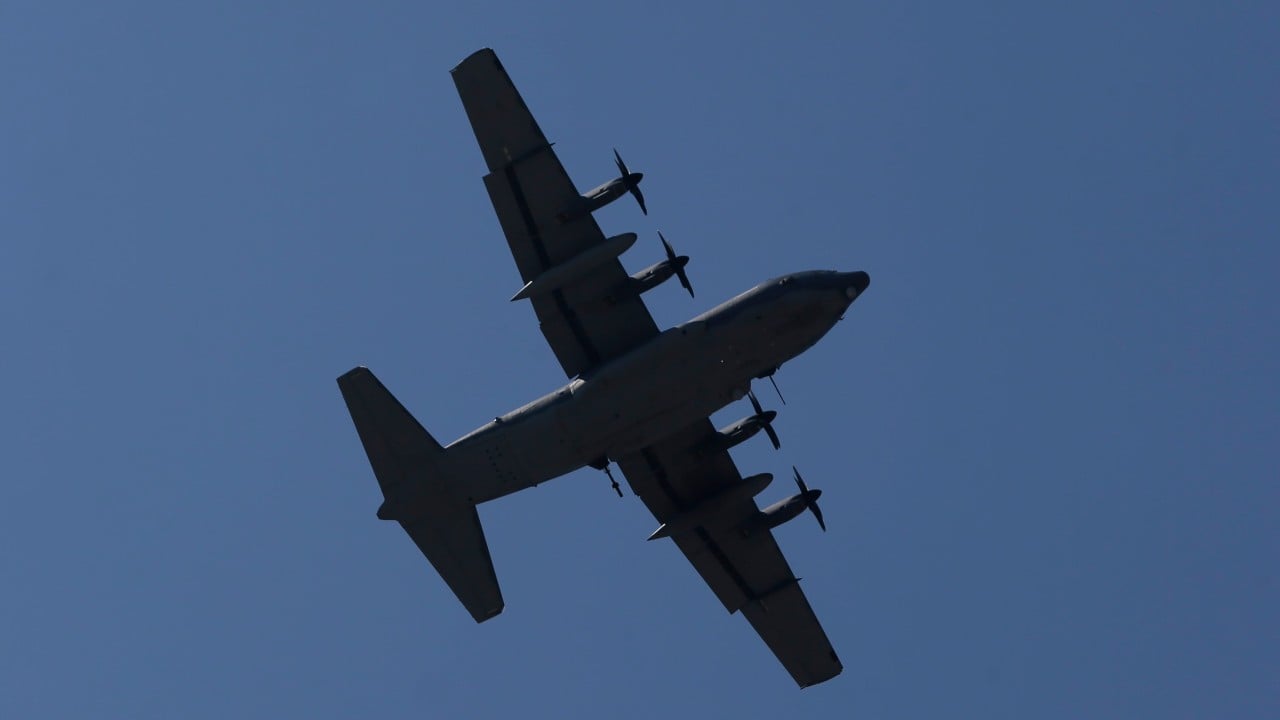
A single individual armed with a hand tool inflicting catastrophic structural damage on a multi-million-dollar military aircraft represents a textbook failure of asymmetric defense economics. When a low-cost kinetic threat—specifically, a domestic axe—penetrates a civilian-military dual-use airfield and disables a US$60 million airframe, the incident exposes a fundamental flaw in how defense infrastructure allocates capital between operational readiness and physical perimeter security. The core failure is not merely a lapse in sentry vigilance; it is a systemic miscalculation of the threat surface created when sovereign military assets rely on civilian transit infrastructure for logistical staging.
The Structural Anatomy of Dual-Use Airfield Vulnerability
Modern military logistics frequently depend on civilian commercial airports for refueling, crew rest, and transit staging. This operational model, often seen at strategic transit hubs like Shannon Airport in Ireland, reduces the capital expenditure required to maintain permanent forward operating bases. However, this cost-saving mechanism introduces an acute security liability: the dilution of perimeter control. Meanwhile, you can explore similar developments here: The Strategic Architecture of Strikes on Qeshm Island in the Strait of Hormuz.
A purely military installation operates under a concentric ring defense doctrine. This model relies on cleared buffer zones, armed patrols with clear rules of engagement, intrusion detection systems, and hardened aircraft shelters. Conversely, a dual-use civilian airport optimizes for throughput, commercial accessibility, and regulatory compliance with civil aviation standards rather than military force protection.
When a high-value military asset—such as a specialized transport, reconnaissance platform, or advanced tactical aircraft valued at approximately US$60 million—parks on a civilian apron, it inherits the security posture of the host facility. The vulnerability emerges from three structural gaps: To see the bigger picture, check out the recent report by USA Today.
- Jurisdictional Fragmentation: Security responsibility splits between civilian airport authorities, local law enforcement, and a minimal military security detachment. Local police operate under domestic criminal law, which restricts lethal force and prioritizes de-escalation over immediate asset denial.
- Perimeter Permeability: Civilian airfields span vast acreage surrounded by chain-link fencing designed to deter casual trespassers and wildlife, not a determined actor equipped with basic breaching or striking tools.
- Sensor-to-Shooter Latency: Even when perimeter sensors or closed-circuit cameras detect an incursion, the time required to verify the threat, dispatch local law enforcement, and physically intercept the intruder routinely exceeds the time required for an individual to sprint across an open tarmac and strike an unhardened airframe.
The Mechanics of Kinetic Airframe Destruction
Standard news reporting often treats the destruction of a US$60 million aircraft by an axe as an absurdity, failing to explain the physical and engineering realities that make modern military aviation uniquely fragile against blunt or edged trauma. Military aircraft are engineered to survive high-G aerodynamic loads, extreme thermal variations, and specific ballistic profiles in flight, not localized, high-impulse mechanical strikes while stationary on the ground.
The vulnerability of a parked aircraft rests on the concentration of mission-critical subsystems immediately beneath thin composite or aluminum skins.
Composite Skin Delamination and Structural Compromise
Modern airframes rely heavily on carbon-fiber-reinforced polymers and honeycomb composite structures to minimize weight and maximize fuel efficiency or stealth characteristics. Unlike ductile aluminum, which dents under impact and can often be patched with riveted doublers, composite materials suffer from internal delamination. A single high-velocity strike from a steel axe blade severs load-bearing fibers and propagates micro-fractures through the resin matrix. Because the structural integrity of a pressurized fuselage or a primary lifting surface cannot be guaranteed once delamination occurs, entire structural sections must be scrapped and replaced rather than repaired in the field.
Avionics, Radomes, and Sensor Arrays
The nose cone (radome) and forward fuselage house the highest concentration of capital value on the aircraft. Radomes are constructed from specialized dielectric materials engineered to be transparent to radar frequencies. They are inherently brittle. Piercing a radome destroys its electromagnetic uniformity and exposes active electronically scanned array (AESA) radar components, electro-optical targeting systems, and pitot-static sensors to immediate physical destruction. Replacing a damaged radar array and recalibrating the airframe's electronic warfare suite accounts for a disproportionate share of the total airframe valuation.
Hydraulic and Fuel Line Ruptures
Along the landing gear assemblies and wing roots, high-pressure hydraulic lines (operating at 3,000 to 5,000 psi) and integral fuel tanks sit exposed during maintenance or turnaround windows. Severing these lines introduces catastrophic fluid loss, environmental contamination, and severe fire hazards. The ingestion of metallic debris or foreign objects into engine intakes—even without direct blade strikes—requires a complete engine teardown and borescope inspection, immediately grounding the asset for months.
The Cost Function of Asymmetric Infrastructure Damage
To evaluate the true operational impact of the incident, one must look beyond the headline figure of US$60 million. The financial loss is not a static replacement cost; it is a compounding function of direct repair expenditures, fleet readiness degradation, and logistical disruption.
Let the total economic cost ($C_{total}$) of the incident be modeled as:
$$C_{total} = C_{repair} + C_{downtime} + C_{remediation}$$
- $C_{repair}$ (Direct Material and Labor Cost): This encompasses the procurement of specialized airframe components, composite fabrication, avionics replacement, and depot-level engineering labor. Because military aircraft operate on low-rate production runs, spare parts are rarely sitting in inventory. Manufacturing a bespoke bulkhead or radome requires tooling reactivation, driving unit costs exponentially higher than original production prices.
- $C_{downtime}$ (Opportunity Cost of Lost Sorties): Military fleets operate on strict availability metrics. Removing one airframe from a limited pool forces remaining aircraft to fly higher operational tempos, accelerating airframe fatigue across the entire fleet and compressing maintenance intervals. The strategic value of delayed cargo, intelligence collection, or troop movement cannot be recovered once the operational window closes.
- $C_{remediation}$ (Systemic Security Overhaul): Following a high-profile breach, defense ministries and host nations must fund immediate security audits, deploy additional personnel, and retrofit physical barriers across comparable transit hubs. These reactive expenditures represent unplanned drains on operational budgets.
Against this multi-million-dollar loss function, the attacker's capital expenditure is negligible—the retail cost of a hardware-store axe and minimal transit expenses. This creates an asymmetric cost ratio exceeding 1,000,000:1. In defense economics, any security architecture that permits an adversary—whether state-sponsored or a lone actor—to achieve a million-to-one cost-exchange ratio is fundamentally broken.
Legal and Geopolitical Friction in Host-Nation Policing
When an incident of this magnitude occurs on foreign soil, such as an Irish civilian airport hosting United States military aircraft, the aftermath transitions immediately from a tactical security failure to a complex legal and diplomatic liability.
The prosecution of the perpetrator under domestic criminal statutes—typically charges related to criminal damage, trespass on a critical infrastructure site, and possession of an offensive weapon—highlights a sharp divergence in institutional incentives.
For the host nation, the primary objective is maintaining public order, upholding domestic due process, and preserving sovereign legal jurisdiction. Domestic courts evaluate the act through the lens of property damage and public safety, often intersecting with political debates regarding national neutrality and the permissible use of civilian airports by foreign militaries. In jurisdictions with active anti-war or neutrality movements, high-profile trials involving damage to foreign military hardware frequently become platforms for political defense strategies, where defendants argue lawful excuse or necessity to prevent perceived international harm.
For the visiting military force, the priority is absolute asset protection and operational continuity. However, Status of Forces Agreements (SOFAs) or diplomatic transit clearances rarely grant foreign military personnel the authority to exercise police powers or deploy lethal force outside strictly demarcated compound boundaries. Consequently, the visiting force faces a strategic bind: it cannot legally secure its own assets using its own tactical doctrine, yet the host nation's civilian policing model is structurally incapable of guaranteeing the physical integrity of high-value military hardware against sudden, localized kinetic attacks.
Limitations of Current Deterrence and Perimeter Models
Standard institutional responses to tarmac breaches typically involve reactive, manpower-intensive measures: increasing the frequency of vehicle patrols, adding razor wire to existing perimeter fences, and expanding CCTV coverage. In operational practice, these measures fail to solve the underlying vulnerability because they address detection rather than denial.
- The Fallacy of Surveillance: High-definition cameras and thermal sensors do not stop an axe. They merely record the destruction in higher resolution. Unless a sensor triggers an immediate physical barrier or an armed response capable of closing the distance within seconds, surveillance is purely forensic.
- Patrol Predictability: Roving patrols around a multi-mile airport perimeter operate on observable intervals. Any individual observing the airfield from outside the fence can time the gap between patrols, breach a standard chain-link barrier in under fifteen seconds using basic bolt cutters or climbing aids, and reach the tarmac long before a patrol completes its circuit.
- The Hardened Shelter Deficit: Constructing hardened aircraft shelters (HAS) at every civilian transit stop is economically unfeasible. A single reinforced concrete shelter capable of housing a large transport or reconnaissance aircraft costs tens of millions of dollars and requires permanent land allocation that civilian airport authorities will not surrender.
Strategic Doctrine for High-Value Transit Security
To eliminate the asymmetric vulnerability of high-value military aircraft operating through civilian transit hubs, defense planners must abandon passive reliance on host-nation perimeter fences and adopt a localized, asset-centric denial strategy.
- Deploy Rapid-Erect Ballistic and Physical Cordon Systems: Rather than attempting to secure a ten-mile civilian airport perimeter, security detachments must establish an immediate, localized exclusion zone directly around the parked airframe. Deploying modular, anti-climb, sensor-integrated physical barriers within a 50-meter radius of the aircraft creates a hardened inner sanctum. Breaching this inner cordon triggers localized acoustic deterrents and strobe disorientation systems, buying critical seconds for the immediate response team.
- Establish Dedicated Close-In Reaction Forces: Military transit detachments must maintain an armed, on-apron security element stationed within line-of-sight of the aircraft throughout the entire ground turnaround window. Rules of engagement negotiated under transit agreements must explicitly authorize non-lethal kinetic incapacitation (such as conducted electrical weapons or kinetic impact projectiles) for immediate trespassers within the 50-meter inner cordon, bypassing the latency of waiting for local civilian police dispatch.
- Shift to Dynamic Transit Scheduling and Dispersal: Predictable refueling schedules and static parking assignments allow lone actors and organized groups to conduct pre-operational reconnaissance. Transit operations must randomize arrival windows, vary parking stands across non-public cargo aprons, and minimize ground turnaround times through hot-pit refueling procedures where permitted, reducing the exposure window of the airframe from hours to minutes.
- Enforce Contractual Indemnification and Security Minimums: Defense ministries utilizing commercial or dual-use foreign airfields must tie landing fees and fuel contracts to strict, auditable physical security service-level agreements (SLAs). If a host airfield fails to maintain dedicated airfield intrusion radar and rapid-response interdiction capabilities, the transit route must be downgraded or bypassed in favor of sovereign military installations, absorbing the higher fuel burn of longer flight legs as an insurance premium against catastrophic ground loss.