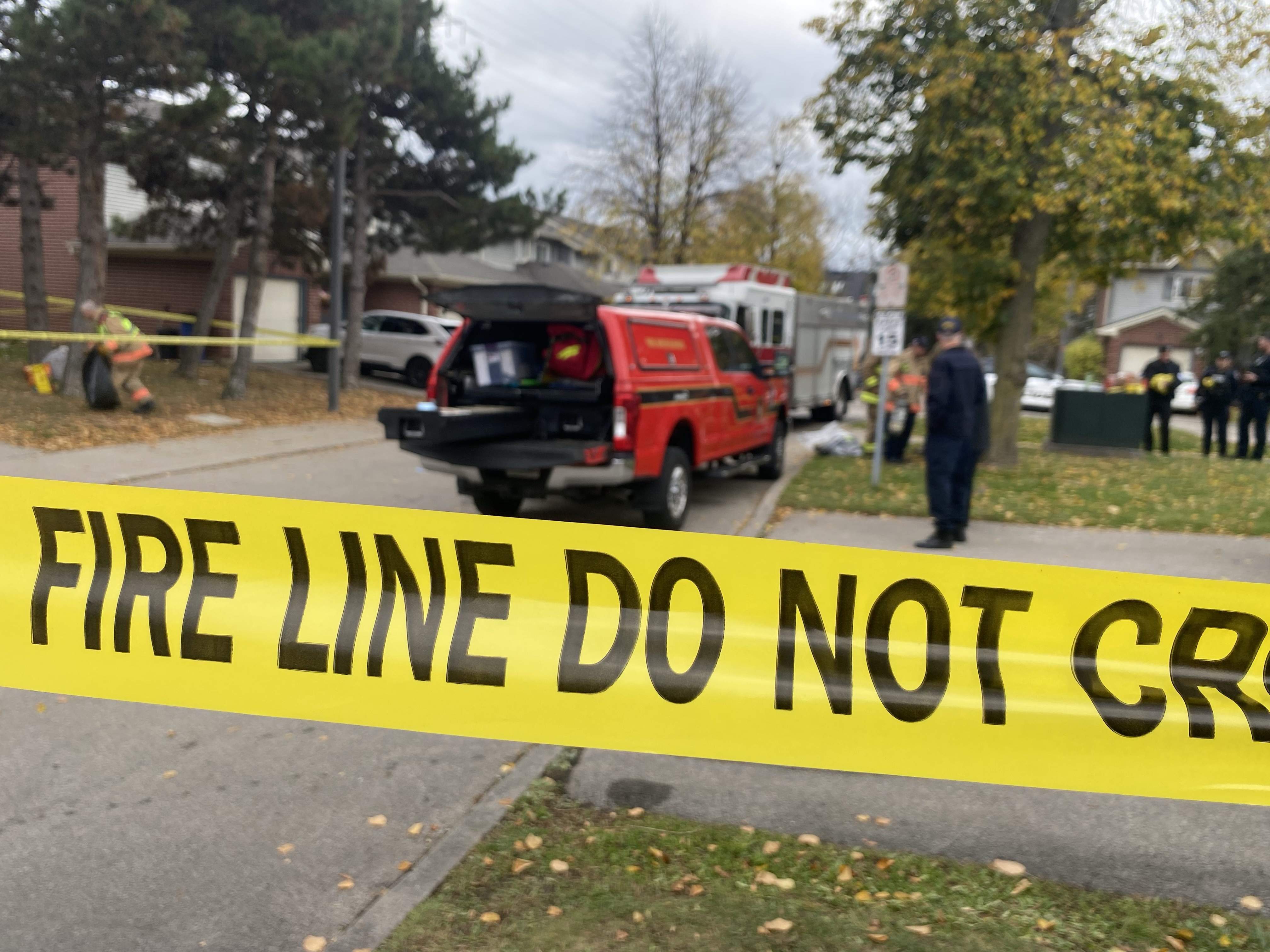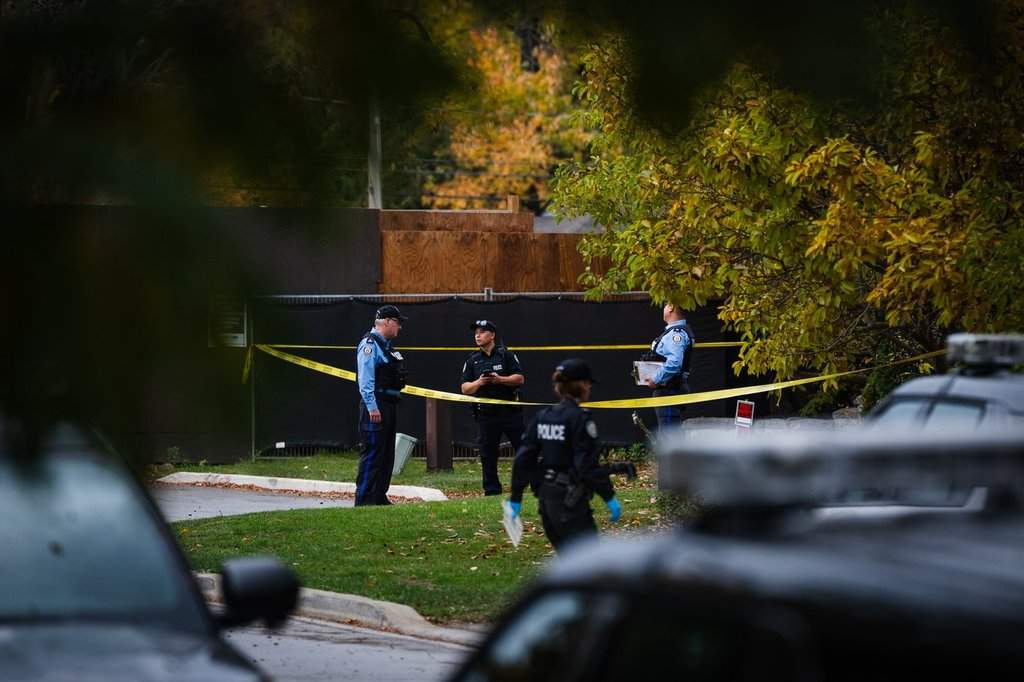
The apprehension of three suspects following a five-person home invasion in Toronto's Bridle Path neighborhood exposes a critical operational reality in modern urban security. While standard news coverage reduces such events to simple police blotter tallies—three in custody, two at large—a structural analysis reveals a predictable collision between organized criminal logistics and high-density law enforcement response protocols. High-net-worth enclaves present an asymmetric risk profile: massive, concentrated liquid value paired with geographic isolation that simultaneously slows initial response times and creates predictable egress bottlenecks for fleeing offenders.
The Structural Vulnerability of Affluent Enclaves
To understand why a five-person crew targets a specific residential zone like the Bridle Path, analysts must evaluate the environment through the lens of Rational Choice Theory and Routine Activity Theory. Criminological models dictate that predatory crime occurs when three variables converge in space and time: a motivated offender, a suitable target, and the absence of a capable guardian.
In ultra-affluent neighborhoods, the "suitable target" variable is maximized. Properties routinely hold high-value, easily portable assets—luxury timepieces, jewelry, cash, and high-end vehicles—that bypass the liquidity friction of traditional fencing networks. However, the physical architecture designed to ensure privacy inadvertently degrades natural surveillance.
Large lot sizes, dense foliage, perimeter walls, and deep setbacks from the street eliminate the "eyes on the street" mechanism identified by urban theorists. While a dense suburban street offers dozens of passive observers, an estate enclave isolates each structure into a discrete tactical box. Once an offender breaches the outer perimeter, the absence of immediate external visibility grants them an operational window to execute a forced entry without triggering third-party emergency calls.
Crew Dynamics and Operational Friction
Deploying a five-person team for a residential incursion indicates a specific tactical doctrine centered on rapid overwhelm rather than stealth. In criminal operations, scaling personnel increases force multiplication during the initial breach, allowing the crew to secure multiple floors, neutralize occupants, and sweep for valuables simultaneously.
This scaling introduces severe coordination costs and exponentially increases the probability of investigative failure. Every additional participant multiplies the points of failure across three distinct phases:
- Pre-Operational Logistics: Five individuals require synchronized transport, secure communications, and staging areas. Digital footprints, cell tower pings, and vehicle rentals scale linearly with headcount, leaving a wider evidentiary wake for investigators to trace backward.
- Incursion Execution: Maintaining discipline among five operatives inside an unfamiliar, complex floor plan under high adrenaline is notoriously difficult. Split-second deviations from the plan—such as an unexpected occupant encounter or a triggered silent alarm—create immediate friction, delaying the extraction timeline.
- Post-Event Containment: Once the crew disperses, operational security relies entirely on the weakest link. The arrest of three out of five suspects indicates that law enforcement successfully exploited either a tactical bottleneck during the escape or an intelligence fracture immediately following the event.
The Interdiction Mechanics of Partial Apprehension
When police secure 60% of a five-person crew while 40% remain outstanding, the investigation shifts from reactive patrol containment to network exploitation. Understanding this transition requires breaking down how law enforcement isolates and dismantles multi-offender cells.
Geographic Bottlenecks and Perimeter Containment
The Bridle Path is bounded by natural and infrastructural barriers, including the Don River valley system and major arterial roadways like Bayview Avenue and Lawrence Avenue East. While these features provide exclusivity, they also restrict vehicular escape routes to a finite number of chokepoints.
When a high-priority call originates from this sector, tactical units do not merely converge on the target address; they execute a containment ring at these primary arterial intersections. If the five suspects utilized a single transport vehicle, a successful intercept yields a total capture. The fact that three were arrested while two escaped points to one of two operational scenarios:
- The Split-Vehicle Protocol: The crew operated in two separate vehicles, allowing one unit to clear the containment perimeter before tactical units locked down the primary egress corridors.
- Foot Bail and Dispersion: The getaway vehicle was disabled or intercepted near the perimeter, forcing the occupants to abandon the transport and scatter on foot into the surrounding ravine systems. In foot-bail scenarios, containment units routinely capture the slower or less directionally oriented offenders while a subset successfully utilizes the dense terrain to evade immediate thermal or canine tracking.
The Prisoner's Dilemma in Post-Arrest Interrogation
With three suspects in custody, the operational dynamic shifts to game theory. The two outstanding suspects are no longer operating with a unified command structure; they are isolated fugitives facing a rapidly collapsing information environment.
Law enforcement investigators immediately apply the classic Prisoner's Dilemma framework to the three detained individuals. By separating the suspects and controlling the flow of information, interrogators introduce acute uncertainty. Each detainee must calculate the probability that one of the other two will cooperate to secure a reduced sentence, thereby implicating the rest of the group.
For the two suspects still at large, this creates an immediate resource crisis. They must assume their identities, known associates, safe houses, and secondary vehicles are already compromised. Any attempt to access their standard support network risks walking directly into a surveillance trap. Consequently, outstanding suspects in partial-arrest scenarios typically make unforced errors within the first 72 hours—such as using unencrypted communications, soliciting assistance from peripheral acquaintances, or attempting to liquidate stolen assets prematurely to fund flight.
Limitations of Residential Hardening
A common reaction among property owners following high-profile incursions is to over-invest in passive perimeter technology. This approach frequently fails because it misunderstands the adversary's timeline.
Standard residential security systems are built around deterrence and detection, not physical denial. High-definition cameras record high-resolution evidence of masked perpetrators, and monitored alarms notify dispatch centers, but neither physically stops a determined five-person crew from breaching a glass door in under fifteen seconds. When a crew operates on a strict three-to-five-minute smash-and-grab clock, an eight-minute police response time—even an expedited tactical dispatch—leaves a three-minute gap where the offenders hold total control of the interior environment.
Relying solely on municipal response times or unmonitored camera arrays ignores the fundamental physics of forced entry. Without hardened physical barriers capable of delaying entry beyond the law enforcement response threshold, high-value properties remain vulnerable to rapid-incursion tactics.
Defensive Architecture and Tactical Protocol
Securing high-value residential assets against organized, multi-person crews requires shifting from passive surveillance to active delay and compartmentalization. Property managers and security directors must restructure residential defenses around three operational realities.
First, eliminate single-point perimeter failures by introducing layered physical delay mechanisms. Laminated security glazing on all ground-level glass surfaces and reinforced multi-point locking frames on exterior doors transform a ten-second breach into a multi-minute struggle. The objective is not to make the structure impenetrable, but to force the crew to expend time and generate noise, exhausting their operational window before they reach the interior.
Second, implement interior compartmentalization through automated access control. In a multi-person incursion, the primary danger to occupants is the crew's ability to sweep the entire structure unimpeded. Hardened safe rooms or automated stairwell partitions isolate sleeping quarters from main living areas, denying offenders access to occupants and forcing them to abandon the premise once the primary alarm triggers.
Third, integrate real-time acoustic and visual verification into monitoring protocols. Municipal police prioritize verified crimes in progress over unverified automated alarms. Systems that provide live audio-visual feeds directly to central monitoring stations allow dispatchers to confirm a multi-suspect breach within seconds, compressing the delay between perimeter violation and tactical unit deployment. By reducing police dispatch latency and increasing physical breach time, the defender closes the operational window that makes high-net-worth enclaves attractive targets.