When regional military escalation threatens the Persian Gulf, Bahrain’s security apparatus treats domestic clerical dissent not as a localized political dispute, but as an immediate existential threat vector. The kinetic conflict involving Iran acts as an accelerant on a structural vulnerability built into the island nation’s political architecture: a Sunni ruling monarchy governing a majority Shia population within artillery and missile range of Tehran. Understanding the state’s crackdown on clerics requires stripping away surface-level sectarian narratives and examining the cold operational mechanics of regime survival under external siege conditions.
The Structural Vulnerability Matrix
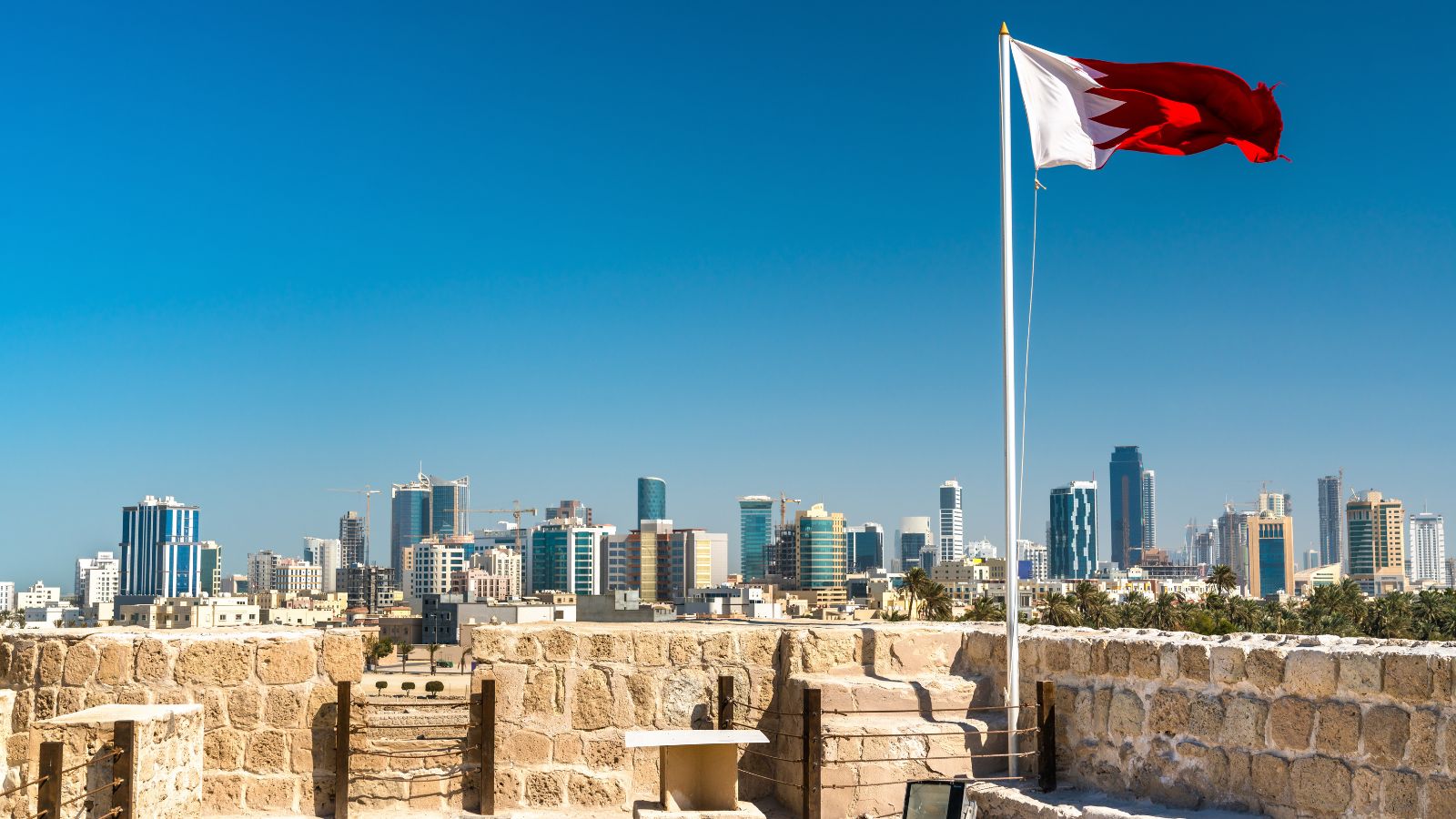
Bahrain operates under a persistent security dilemma defined by geography, demographics, and alliance dependency. Covering roughly 780 square kilometers and connected to Saudi Arabia via the King Fahd Causeway, the kingdom hosts the headquarters of the United States Navy’s Fifth Fleet. This strategic footprint makes Bahrain an indispensable logistics and command node for Western power projection in the Middle East, while simultaneously turning the island into a primary target during any confrontation between Tehran and Washington or its regional partners.
Domestically, the state manages a sharp demographic asymmetry. Estimates consistently place the Shia citizen population between 60 and 70 percent, while political, military, and economic power remains concentrated within the Al Khalifa royal family and allied Sunni tribes. Since the 2011 uprising, the government has systematically dismantled formal opposition parties, such as Al-Wefaq, and revoked the citizenship of high-profile dissidents.
With formal political channels closed, the mosque and the husseiniya (Shia congregation halls) remain the sole mass-gathering infrastructure capable of mobilizing large segments of the population. During peacetime, state intelligence monitors these networks through licensing laws, surveillance, and sermon guidelines. During active regional warfare involving Iran, the tolerance threshold drops to zero. The state views any independent clerical voice as a potential command-and-control node for fifth-column disruption.
The Three Pillars of Preemptive Pacification
Rather than reacting to street protests after they form, Bahraini security doctrine relies on preemptive neutralization. When regional tensions spike, the Ministry of Interior and the National Security Agency execute a synchronized suppression protocol built on three distinct mechanisms.
1. Decapitation of Moral Authority
The first pillar targets the clerical leadership itself. Clerics possess unique social capital; their pronouncements carry religious weight that secular activists cannot replicate. Security forces deploy summonses, short-term detentions, travel bans, and formal charges of "inciting hatred against the regime" or "threatening civil peace."
The operational objective is not necessarily long-term incarceration for every targeted figure, though prominent leaders face extended sentences. Instead, rapid interrogation and conditional release create a deterrent effect across the entire clerical class. By imposing immediate personal costs—loss of stipends, passport confiscation, and legal jeopardy—the state forces clerics to self-censor before a Friday sermon is ever drafted.
2. Chokehold on Communal Infrastructure
The second pillar restricts the physical and financial spaces where mobilization occurs. The Directorate of Religious Affairs exercises strict oversight over mosque registrations and preacher appointments. During periods of heightened alert, authorities enforce rigid compliance protocols:
- Sermon Auditing: Security personnel record weekly sermons across major districts, particularly in Shia-majority villages like Diraz, Sitra, and Sanabis, flagging any rhetoric that links regional military events to domestic grievances.
- Financial Interdiction: The state freezes charitable collections and religious endowments (khums) suspected of flowing outside state-approved channels, severing the economic autonomy of independent religious institutions.
- Gathering Restrictions: Authorities restrict unauthorized processions and enforce curfews or heavy checkpoint deployments around major religious sites during sensitive dates on the Islamic calendar.
3. Information Quarantine and Narrative Control
The third pillar isolates the domestic population from external ideological broadcasts. Bahrain’s cybercrime units aggressively monitor social media platforms, messaging applications, and satellite broadcasts linked to Iranian or Iraqi Shia networks. Sharing content that expresses solidarity with Tehran, criticizes Gulf Cooperation Council military alignments, or documents domestic security raids is prosecuted under strict counter-terrorism and cybercrime statutes.
This information quarantine prevents the synchronization of regional narratives with local frustrations. If a cleric or citizen amplifies external messaging frames—such as portraying the regional war as an existential struggle against Western-backed monarchies—the state treats the act as operational psychological warfare rather than protected speech.
The Cause-and-Effect Chain of External Escalation
To understand why a military flare-up hundreds of kilometers away triggers arrests in Manama, one must trace the exact transmission belt connecting regional geopolitics to domestic policing.
[Regional Military Escalation Involving Iran]
                     │
                     ▼
[Heightened Threat Perception of Fifth-Column Sabotage]
                     │
                     ▼
[Identification of Clerical Networks as Mobilization Nodes]
                     │
                     ▼
[Preemptive Detentions, Sermon Audits, & Digital Surveillance]
                     │
                     ▼
[Short-Term Street Compliance vs. Long-Term Radicalization Risk]
First, kinetic conflict involving Iran immediately raises the risk of asymmetric retaliation against US assets and Gulf energy infrastructure. Because Bahrain hosts critical naval facilities, security planners assume Iranian intelligence networks—such as the Islamic Revolutionary Guard Corps Quds Force—will seek to activate dormant cells or exploit domestic unrest to tie down Bahraini and Saudi security forces.
Second, this threat perception eliminates the distinction between peaceful political dissent and covert subversion inside the state’s decision-making apparatus. A cleric criticizing government foreign policy or calling for solidarity with civilians affected by regional strikes is categorized under the same threat matrix as an operative facilitating sabotage.
Third, the security services execute sweeping arrests to clear the battlespace. By locking down prominent clerics and community organizers early, the state ensures that even if external shocks occur—such as missile strikes in the Gulf, economic disruptions, or regional casualties—the domestic population lacks the leadership structure required to organize coordinated demonstrations.
The Cost Function of Coercive Stability
While preemptive crackdowns achieve immediate tactical compliance, they impose severe structural costs on the Bahraini state over the medium and long term. Security strategists evaluate these trade-offs through a stark cost-benefit lens, prioritizing immediate regime survival over long-term social cohesion.
The Erosion of Moderate Intermediaries
Every time the state detains or silences mainstream, quietist, or reform-oriented clerics, it destroys the very intermediaries capable of restraining younger, more radicalized segments of the population. Historically, senior Bahraini clerics—even those critical of the monarchy—favored non-violent political pressure and institutional reform. Removing them from the public square creates a leadership vacuum. Younger activists, alienated by state repression and devoid of local religious guidance, become far more receptive to uncompromising external voices broadcast from abroad.
Deepening Security Dependency on Riyadh
Internal coercion reinforces Bahrain’s geopolitical subordination to Saudi Arabia. Just as the 2011 intervention by the Peninsula Shield Force demonstrated that Manama relies on Saudi military backing to survive major domestic upheaval, ongoing internal suppression requires continuous financial and security underwriting from Riyadh. Bahrain’s fiscal position—characterized by high public debt and reliance on Gulf aid packages—leaves little room for economic concessions to buy social peace. Coercion becomes the default policy tool precisely because the state lacks the sovereign wealth reserves that allow neighbors like the United Arab Emirates or Qatar to subsidize citizen loyalty.
Reputational Friction with Western Allies
Crackdowns on religious figures generate recurring diplomatic friction with Western legislatures and human rights organizations. While executive branches in Washington and London prioritize base access and regional deterrence during active crises, parliamentary scrutiny complicates arms sales, defense cooperation agreements, and diplomatic normalization efforts. Manama mitigates this risk by framing all domestic arrests strictly within counter-terrorism and anti-Iranian containment frameworks, aligning its internal policing narrative with the strategic priorities of its defense guarantors.
Distinguishing Verified Mechanics from Analytical Hypotheses
Rigor requires separating established operational facts from strategic projections regarding how this cycle evolves.
Established Facts:
- Bahrain’s legal framework explicitly criminalizes unlicensed religious gatherings, unauthorized political speech from the pulpit, and digital expression deemed sympathetic to designated hostile entities.
- State security forces have consistently utilized preventative detention, citizenship revocation, and travel bans against Shia clerics during periods of heightened regional tension since 2011.
- The island’s economic constraints limit its ability to deploy large-scale fiscal stimulus to offset domestic political grievances during regional downturns.
Analytical Hypotheses:
- The Threshold Hypothesis: If regional warfare expands to include direct, sustained strikes on Gulf infrastructure or maritime blockades in the Strait of Hormuz, Manama will likely transition from targeted clerical arrests to blanket martial law protocols in key Shia municipalities, suspending even state-monitored religious gatherings.
- The Underground Shift: Sustained pressure on public mosques will push religious and political organizing into encrypted digital spaces and decentralized, leaderless micro-cells, making intelligence penetration significantly harder for state security services over the next three to five years.
Limitations of the Containment Model
No security doctrine built entirely on preemptive suppression eliminates underlying structural grievances; it merely compresses them. The primary limitation of Bahrain’s approach is its inability to resolve the core legitimacy deficit between the state and a majority of its citizenry. Surveillance and detention suppress the symptoms of instability—strikes, protests, and public dissent—while leaving the drivers intact: unequal access to public sector employment, political disenfranchisement, and perceived second-class citizenship.
Furthermore, reliance on intelligence-led preemption carries a high false-positive rate. Arresting respected community elders over ambiguous sermon phrasing generates intense localized resentment, turning neutral families into committed opponents of the state. Over time, the intelligence apparatus must expend exponentially more resources monitoring an increasingly alienated populace, creating diminishing returns on security spending.
Strategic Forecast and Operational Trajectory
Bahrain’s trajectory remains locked to the regional threat environment. As long as military confrontation involving Iran persists or threatens to reignite, Manama will maintain a posture of maximum domestic preemption. Expect the Ministry of Interior to institutionalize emergency sermon regulations into permanent administrative law, further narrowing the legal space for independent religious expression.
For regional observers, defense planners, and political risk analysts, the key indicator to watch is not the volume of street protests—which state security can reliably suppress in the short term—but the cohesion of the remaining moderate clerical establishment. If state pressure fractures or eliminates the last credible community intermediaries in Manama, any future external shock in the Gulf will hit a brittle domestic society with no shock absorbers left to prevent uncontrolled civil disruption.