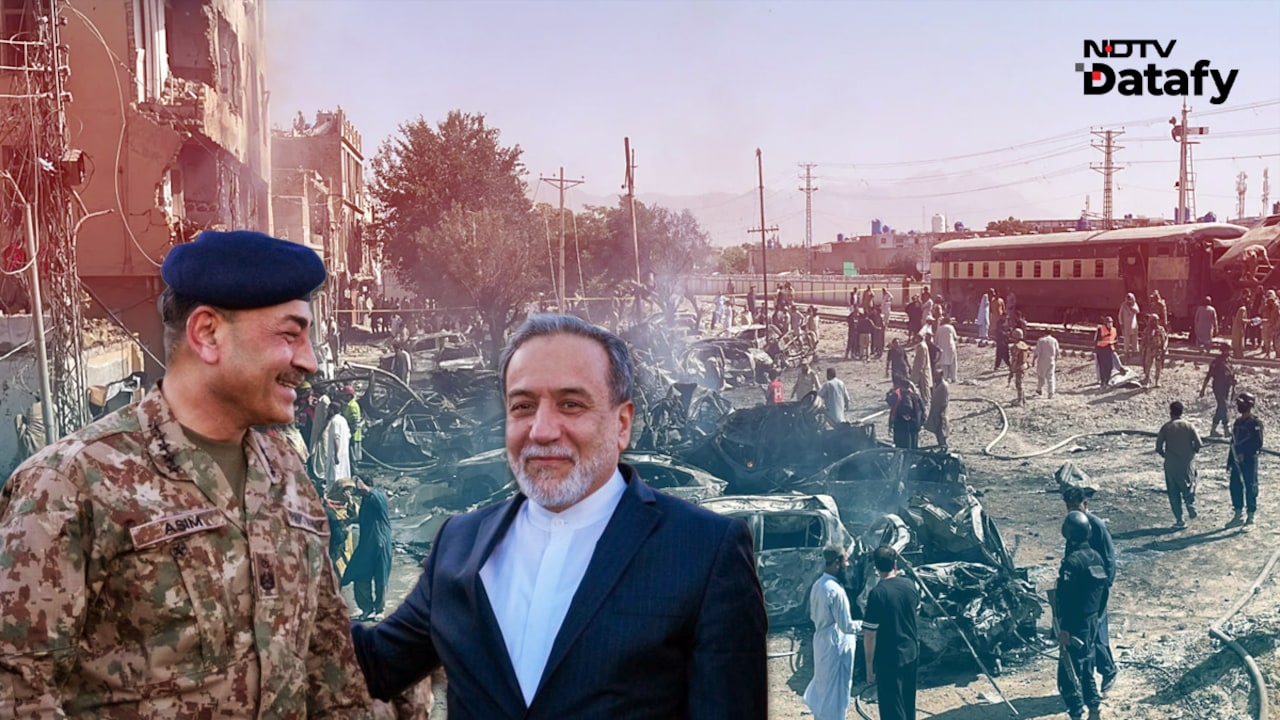
The operational model of the Pakistani state rests on a structural paradox: the military leadership attempts to project external stabilizing power while the internal macroeconomic and political foundations undergo systemic decay. General Asim Munir’s dual role as Chief of Army Staff and de facto economic arbiter exemplifies this dichotomy. By positioning the military as a regional mediator and investment guarantor, the institution seeks to generate strategic arbitrage—converting external diplomatic utility into domestic regime survival and financial liquidity. However, this model faces severe constraints due to compounding internal crises that threaten to decouple Pakistan's external security value from its domestic economic reality.
To evaluate the sustainability of this strategy, the interaction between Pakistan's foreign policy maneuvers and its domestic constraints must be broken down into three distinct operational vectors: the external mediation framework, the domestic economic stabilization mechanism, and the internal security cost function. Recently making waves lately: The Weaponization of the US Patent System in the Washington Beijing Cold War.
The Tri-Polar External Mediation Framework
Pakistan’s current diplomatic strategy relies on a tri-polar framework designed to extract maximum rent and security guarantees from three distinct global actors: the Gulf Cooperation Council (GCC), China, and the United States. Each relationship services a specific operational vulnerability within the Pakistani state.
                  +-----------------------------------+
                  |     Pakistani State Security      |
                  |        (Military Leadership)      |
                  +-----------------+---+-----------+
                                    |   |
         +--------------------------+   +--------------------------+
         |                                                         |
         v                                                         v
+-----------------------------+                           +-----------------------------+
|   External Value Network    |                           |    Internal Risk Factors    |
+-----------------------------+                           +-----------------------------+
| 1. GCC (Capital Inflows)    |                           | 1. Fiscal Insolvency        |
| 2. China (CPEC Infrastructure)                          | 2. Kinetic Insecurity       |
| 3. US (Counter-Terror Utility)                          | 3. Political Legitimacy Gap |
+-----------------------------+                           +-----------------------------+
The GCC Capital Channel
The relationship with Saudi Arabia and the United Arab Emirates has shifted from traditional state-to-state aid to transactional investment vehicles. The creation of the Special Investment Facilitation Council (SIFC) formalizes the military’s role as the sole institutional guarantor for foreign capital. By bypassing civilian bureaucratic friction, the military offers GCC investors direct access to state-owned assets, agricultural land, and mining projects. The strategic objective is to secure non-debt-creating inflows to shore up foreign exchange reserves without ceding political control over economic policy. Additional details on this are covered by NBC News.
The Chinese Infrastructure Corridor
The China-Pakistan Economic Corridor (CPEC) serves as the industrial backbone of Pakistan's defense infrastructure. However, the mechanism is currently constrained by debt-servicing bottlenecks and security liabilities. Beijing’s willingness to rollover sovereign loans is increasingly contingent on Pakistan's ability to protect Chinese personnel from kinetic threats in Balochistan and Khyber Pakhtunkhwa. Consequently, military diplomacy with Beijing functions primarily as a risk-mitigation exercise, attempting to balance debt restructuring demands against escalating internal security costs.
The United States Counter-Terrorism Arbitrage
With the post-Afghanistan reduction in direct financial aid, Islamabad’s utility to Washington has been recalibrated around regional intelligence sharing, counter-terrorism cooperation, and airspace access. Pakistan leverages this residual security architecture to ensure favorable terms during International Monetary Fund (IMF) reviews, where US voting share remains decisive. The diplomatic calculus is precise: maintain sufficient counter-terrorism utility to prevent Western isolation while avoiding direct alignment in the US-China systemic rivalry.
The Cost Function of Domestic Economic Stabilization
The military’s expansion into economic governance via the SIFC is a direct response to the failure of civilian fiscal management. However, entering the economic sphere introduces significant institutional liabilities. The military's economic model operates under a strict cost function where the inputs are political capital and coercive force, and the output is short-term macroeconomic stabilization.
       Input (Coercive Force + Political Capital)
                         │
                         ▼
        ┌──────────────────────────────────┐
        │  Special Investment Facilitation  │
        │         Council (SIFC)           │
        └────────────────┬─────────────────┘
                         │
                         ▼
    Output (Short-term Macroeconomic Stabilization)
                         │
     ┌───────────────────┴───────────────────┐
     ▼                                       ▼
Risk: Fiscal Crowding Out           Risk: Institutional Overextension
This model is vulnerable to two structural failures:
- Fiscal Crowding Out: By prioritizing sovereign debt servicing and military-run commercial enterprises (such as the Fauji Foundation network), the state diminishes the capital available for private sector credit. This suppresses domestic industrial expansion and perpetuates a low-growth equilibrium.
- Institutional Overextension: When the military assumes responsibility for anti-smuggling operations, currency stabilization, and foreign direct investment attraction, it ties its institutional legitimacy directly to macroeconomic indicators. If inflation remains high and foreign reserves dwindle, the public dissatisfaction previously directed at civilian politicians shifts toward the military leadership.
The core vulnerability of this economic strategy is its reliance on external rent extraction rather than structural domestic reform. Pakistan’s tax-to-GDP ratio remains structurally depressed at approximately 9-10%. Without expanding the tax base to include politically sensitive sectors like retail, real estate, and agriculture, the capital inflows secured through military diplomacy act merely as temporary liquidity injections rather than sustainable economic cures.
The Kinetic Security Constraint and Internal Friction
The primary contradiction in General Munir’s global peacemaker narrative is the deteriorating domestic security environment. A foreign policy built on stability projection cannot withstand sustained internal kinetic disruptions.
The resurgence of the Tehreek-e-Taliban Pakistan (TTP) and the intensification of Baloch separatist insurgencies represent a two-front security challenge that directly undermines external economic diplomacy.
                ┌──────────────────────────────┐
                │ Resurgence of Internal TTP/  │
                │     Baloch Insurgencies      │
                └──────────────┬───────────────┘
                               │
            ┌──────────────────┴──────────────────┐
            ▼                                     ▼
┌──────────────────────────────┐      ┌──────────────────────────────┐
│  Capital Flight & Depressed  │      │   Geopolitical Friction:     │
│   Foreign Direct Investment  │      │     Kabul & Beijing Tension  │
└──────────────────────────────┘      └──────────────────────────────┘
The economic consequences of these security failures are immediate:
- Capital Flight: International investors require predictable operating environments. Ongoing attacks on infrastructure and foreign nationals increase insurance premiums and security overhead costs, nullifying the incentives offered by the SIFC.
- Geopolitical Friction: The TTP's utilization of Afghan sanctuary creates a persistent diplomatic bottleneck between Islamabad and the Taliban regime in Kabul. This friction complicates Pakistan’s ambition to serve as a transit corridor for Central Asian energy and trade, undermining its regional integration strategy.
Simultaneously, the suppression of domestic political dissent creates a legitimacy vacuum. The polarization of the electorate following the manipulation of electoral processes creates a fragile governance structure. A state that relies on systemic coercion to maintain domestic order possesses inherently volatile foundations for long-term international agreements. Foreign partners recognize that policy continuity is fragile when it depends on the survival of a specific institutional arrangement rather than broad-based democratic consensus.
Strategic Execution Plan for Institutional Rebalancing
To prevent the decoupling of external diplomacy from internal capacity, the Pakistani state must execute a controlled pivot from short-term tactical arbitrage to structural stabilization. The following sequence outlines the necessary operational adjustments.
Phase 1: Institutional De-risking and Regulatory Cession
The military leadership must transition the SIFC from an execution body to a purely promotional entity, ceding regulatory authority back to civilian ministries and independent regulatory bodies. This insulates the military's institutional reputation from inevitable economic volatility and forces civilian structures to develop technical competency. Capital attraction must depend on statutory guarantees and transparent legal frameworks rather than personalized institutional assurances.
Phase 2: Structural Fiscal Realignment
Foreign policy wins must be leveraged immediately to execute painful domestic reforms. Pakistan must utilize IMF conditionalities as political cover to dismantle energy sector cartels, eliminate untargeted subsidies, and implement a digitalized, consumption-based tax architecture targeting the retail and real estate sectors. External debt restructuring must take precedence over securing new loans, shifting the sovereign balance sheet from a state of perpetual default risk to fiscal sustainability.
Phase 3: Border Security Normalization and Kinetic Containment
External mediation efforts should be narrowed to immediate regional security concerns. Pakistan must formalize a hard-border management strategy along the Durand Line while establishing a combined diplomatic-economic framework with regional powers (including China and Iran) to apply coordinated pressure on Kabul regarding cross-border terrorism. Domestically, counter-terrorism operations must prioritize the protection of economic corridors and industrial zones to restore investor confidence.
The current strategy of using external diplomatic maneuvers to compensate for internal structural failure has reached its point of diminishing returns. No amount of regional mediation or sovereign asset sales can offset the systemic drag of a bankrupt domestic economy and a deeply polarized population. The survival of the Pakistani state apparatus depends not on playing the role of a global peacemaker, but on executing a disciplined, internally focused retrenchment that aligns the country's international ambitions with its actual domestic capabilities.