The air in the Situation Room has a specific weight. It isn't just the literal pressure of being fifty feet underground; it is the atmospheric density of decisions that can vaporize cities. For decades, the manual for dealing with Iran has been written in the ink of "maximum pressure." Sanctions. Posturing. The slow, rhythmic grinding of gears toward a conflict that everyone fears but many seem to view as inevitable.
But the playbook is being shredded.
Donald Trump is reportedly eyeing a maneuver that defies every established geopolitical gravity. He is contemplating a "nuclear retreat"—a strategic withdrawal from the traditional hardline demands regarding Iran’s enrichment capabilities—in exchange for a definitive, permanent end to the shadow war. It is a gamble that trades the pride of absolute restriction for the reality of absolute stability.
To understand why this matters, you have to look past the spreadsheets of centrifuge counts and look at a father in Isfahan or a merchant in Tehran.
The Human Cost of High Enrichment
Consider a hypothetical man named Amir. He isn't a nuclear scientist. He owns a small shop selling Persian rugs and turquoise jewelry. For ten years, Amir’s life has been dictated by the "breakout time"—the theoretical window of time it would take for his government to produce enough weapons-grade uranium for a single bomb. Because of that number, Amir cannot buy imported medicine for his daughter’s asthma. Because of that number, the currency in his pocket loses value while he sleeps.
When diplomats talk about "Uranium Hexafluoride," they are really talking about Amir’s ability to keep his lights on.
The traditional Western stance has been simple: Iran must have zero enrichment. No centrifuges. No nuclear program. Period. It sounds safe on paper. In practice, it has been a recipe for a perpetual stalemate. By demanding everything, we have often received nothing but a more determined adversary.
Trump’s proposed "shock retreat" acknowledges a bitter truth. The cat is out of the bag. You cannot un-learn the physics of the atom. Instead of chasing the ghost of a zero-nuclear Iran, the new strategy shifts the goalposts. It asks a different question: What if we let them keep the technology, provided we have total, unblinking eyes on how they use it?
The Mechanics of the Pivot
The shift isn't about weakness. It’s about a different kind of strength—the strength to be pragmatic.
In a standard negotiation, you hold onto your pieces until the very last second. But the "shock" element here is the preemptive offer. By signaling a willingness to accept a limited, strictly monitored civilian nuclear program, the administration isn't just moving a pawn; it’s flipping the board.
The technical reality is a spectrum. On one end, you have 3.67% enrichment, the stuff used to power lightbulbs. On the other end, you have 90%, the stuff that levels a metropolis. For years, the policy was to prevent Iran from even reaching the 3% mark. The "nuclear retreat" suggests that the 3% isn't the enemy. The lack of transparency is.
If the U.S. retreats from the "zero enrichment" demand, it removes the primary moral and political shield the Iranian regime uses to justify its defiance. It places the burden of peace squarely on Tehran. If the U.S. says, "Fine, keep your power plants," and Iran still refuses to open its doors to inspectors, the world sees the intent for what it is.
The Invisible Stakes
Why would a leader known for "maximum pressure" suddenly pivot to what critics call a retreat?
Money. Power. Legacy.
The Middle East is a resource drain. It is a desert that swallows American attention and trillions of dollars. Trump’s foundational philosophy has always been transactional. If the nuclear issue is solved—even through a compromise that makes hawks bristle—the U.S. can finally pivot its eyes toward the Pacific.
But there is a ghost in the room.
The ghost is the 2015 JCPOA. That deal was built on the same premise of "managed enrichment," yet Trump famously walked away from it. To return to a similar framework now requires a narrative somersault. The difference this time, according to those close to the planning, is the "snapback" mechanism.
Imagine a bank vault with a hair-trigger alarm. The new proposal isn't just a deal; it’s a trap. It offers the carrot of economic integration and the recognition of nuclear status, but it attaches a wire to every single centrifuge. One suspicious vibration, one barred door to an inspector, and the entire weight of the American military-industrial complex resets to zero.
The Psychological Warfare of Peace
Negotiation is often a game of chicken played at Mach 1. Usually, both sides wait for the other to blink. By "retreating," the U.S. is essentially jumping out of the car. It forces the other driver to realize there is no longer a game to play.
There is a profound risk here.
Allies in the region, particularly Israel and Saudi Arabia, view any Iranian enrichment as an existential threat. To them, a "nuclear retreat" looks like a betrayal. They see the $U^{235}$ isotopes not as fuel, but as a ticking clock.
$$U + n \rightarrow Ba + Kr + 3n + \text{Energy}$$
The physics doesn't care about diplomacy. The energy released in a fission reaction is a mathematical certainty. The fear is that a retreat on enrichment levels provides a "legal" path to the threshold of a bomb. Once you are at 20%, the jump to 90% is mathematically shorter than the jump from zero to five.
The Silence of the Machines
In the facilities of Natanz and Fordow, the centrifuges spin with a high-pitched whine. It is a lonely, mechanical sound. These machines have become the physical manifestation of a nation’s pride and a world’s anxiety.
If this "shock retreat" happens, the whine of those machines might finally become background noise rather than a siren.
We are used to the language of fire and fury. We understand the vocabulary of threats. We are less practiced in the language of the strategic concession. It feels wrong. It feels like losing. But in the messy, blood-soaked history of the Middle East, a "win" has never looked like a total victory. It has always looked like a messy, uncomfortable, and slightly terrifying compromise.
The strategy assumes that the Iranian leadership is more afraid of their own collapsing economy than they are in love with the idea of a mushroom cloud. It assumes that a merchant like Amir, if given the choice between a nuclear-armed government and a refrigerator full of food, will choose the food every single time.
It is a bet on human nature over political dogma.
The danger isn't just that the deal might fail. The danger is that the retreat happens, the sanctions lift, and the shadow war simply moves into the dark. Cyberattacks. Proxies. The nuclear issue is often just a fever; the underlying infection is a deep, historical distrust that no treaty can scrub clean.
But for a moment, the world is holding its breath. The "shock" isn't in the policy itself, but in the realization that the most unpredictable player on the world stage is willing to walk backward to find a new way forward.
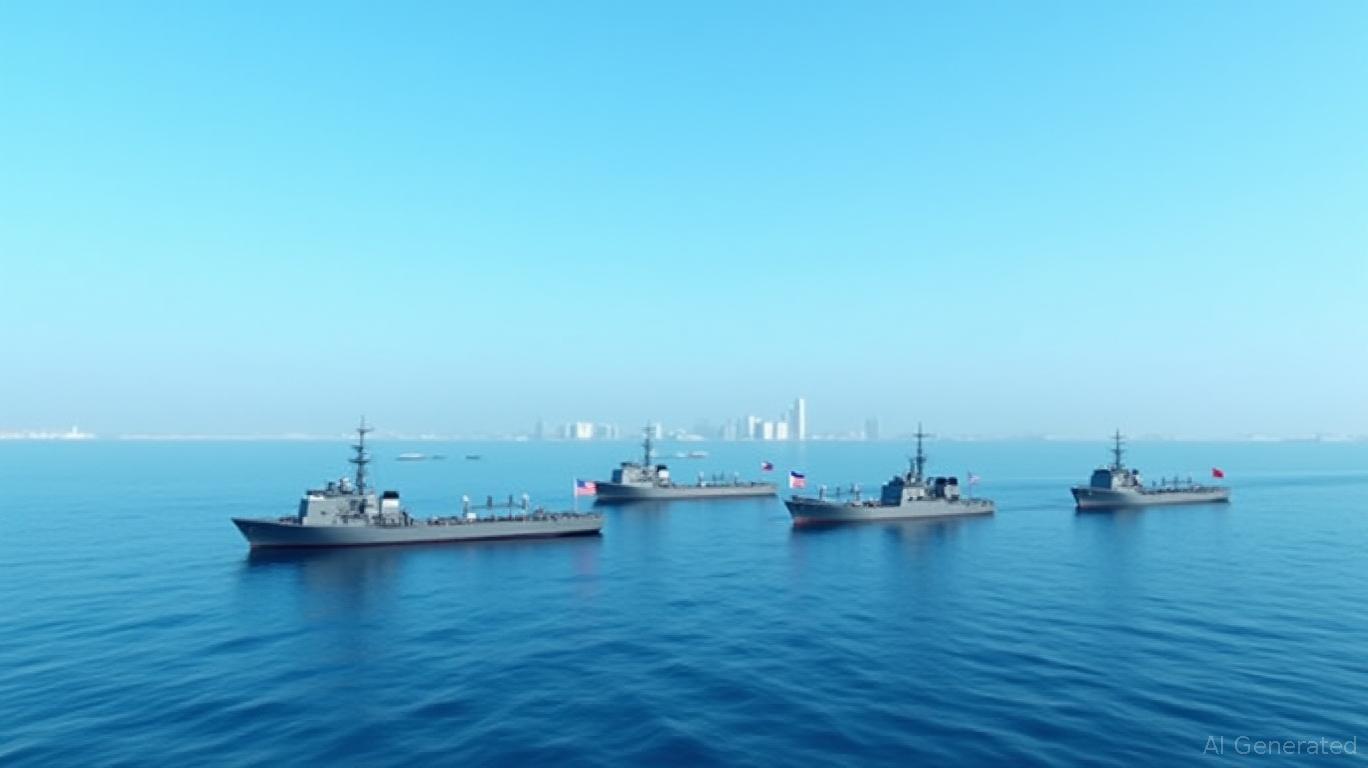
The sun sets over the Persian Gulf, casting long, orange shadows over tankers and warships alike. They sit in the same water, separated by a few miles of salt and decades of hatred. In the silence of the evening, the only thing louder than the threat of war is the sudden, jarring possibility of a quiet exit.
The rug merchant closes his shop. He doesn't know about the meetings in Mar-a-Lago or the secret cables flying between capitals. He only knows that for the first time in years, the news doesn't sound like a drumbeat. It sounds like a door creaking open.
And in that crack of light, there is either a path to a new century or the most sophisticated trap ever set.
The centrifuges continue to spin.