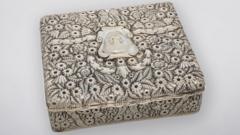
The mainstream media loves a financial fairy tale. You’ve seen the headline drifting around the internet: an unsuspecting family clears out a dusty attic, stumbles upon a forgotten hoard of antique silver, and walks away with a cool £60,000 at auction. It’s heartwarming. It’s aspirational.
It is also total garbage.
As someone who has spent two decades evaluating estates, appraising liquidations, and watching families get punched in the gut by reality, I am here to tell you that these stories do massive damage. They create a toxic delusion. They convince regular people that the tarnished teaset Aunt Martha left behind is a ticket to early retirement.
It isn't. In 99% of cases, that "antique silver" is worth less than the cardboard box it’s sitting in.
The media manufactures these rare, lightning-strike anomalies to generate clicks, completely ignoring the brutal mechanics of the secondary luxury market. Let’s dismantle the fantasy and look at how the silver market actually operates.
The Electroplated Lie That is Eating Your Attic
Let's start with the most basic, devastating misunderstanding in the entire collectibles market: the difference between solid silver and plate.
When a headline screams about a £60,000 windfall, they are talking about sterling silver—an alloy containing 92.5% pure silver. What is actually sitting in your attic is almost certainly EPNS (Electroplated Nickel Silver) or EPBM (Electroplated Britannia Metal).
Sheffield and Birmingham factories churned out millions of tons of silver-plated tableware during the 19th and 20th centuries. It looks shiny when polished. It looks impressively dark and ancient when tarnished.
It is also worth zero.
The Math of the Melt
To understand why your plated collection is worthless, you have to look at the manufacturing process. Electroplating applies a microscopically thin layer of pure silver over a base metal like copper, brass, or nickel.
Imagine a scenario where you have a massive, ornate silver-plated meat dome weighing 5 kilograms. It looks like it belongs in a museum.
- The Silver Content: The actual weight of the silver bonded to that dome is usually less than a few grams.
- The Extraction Cost: Chemical stripping to reclaim that silver costs more in acid, energy, and labor than the precious metal itself is worth.
- The Scrap Value: Scrap dealers will not buy it. Antique dealers do not want it because their shops are already overflowing with it.
If you try to sell a box of electroplated silver, you won't get a check for thousands. You will be told to take it to a charity shop, where it will sit on a shelf for £5 until someone buys it to use as a quirky planter.
Why Even Real Sterling is Freefalling in Value
"But wait," you say. "I checked the hallmarks. My collection is genuine sterling silver. It has the walking lion. I’m rich, right?"
Wrong.
Even if your attic find is 100% solid sterling silver, the £60,000 narrative is still a wild distortion. The market for antique sterling silver has been in a structural freefall for fifteen years.
The Death of Formal Dining
Who is buying your grandma’s 12-place setting sterling cutlery set? Nobody.
The high-end antiques market relied on a generational lifestyle that no longer exists. People do not host formal, twelve-course dinner parties requiring fish knives, asparagus tongs, and soup tureens. Modern luxury consumers value convenience and minimalist aesthetics.
- The Dishwasher Dilemma: Sterling silver cannot go into a modern dishwasher. The intense heat and harsh detergents pit the metal and destroy the handle glue.
- The Polishing Tax: Nobody under the age of fifty wants to spend their Saturday morning breathing in toxic fumes while scrubbing black tarnish off a gravy boat.
- The Style Shift: Modern interior design favors clean lines, stone, and wood. Ornate, rococo-style silver candelabras look ridiculous in a contemporary apartment.
Because demand has collapsed, the vast majority of solid silver items are now worth exactly one thing: their weight in scrap metal.
The Auction House Illusion
When you see an article about a £60,000 auction result, the writers conveniently leave out the math of the house.
Let's look at how an auction actually eats your profit:
| Fee Type | Percentage / Cost | Impact on Your £60,000 |
|---|---|---|
| Vendor's Commission | 15% to 25% | Deducted straight from the hammer price. |
| Loss and Damage Warranty | 1.5% | Forced insurance fee. |
| Illustration / Marketing Fees | Variable | Charging you for the privilege of putting a photo online. |
| Buyer's Premium | 25% to 30% | Paid by the buyer on top of the hammer price, which artificially suppresses how high they are willing to bid. |
If a collection hammers for £60,000, the buyer actually pays closer to £75,000. The seller walks away with perhaps £45,000 after commissions, VAT, and fees. And that is assuming you actually have the ultra-rare, signed 18th-century Paul de Lamerie pieces that collectors actually want. If you have standard Victorian scrap, you are fighting for pennies.
The Exception Provenance, Rarity, and the Right Marks
To achieve a £60,000 result, an attic find cannot just be old. It has to be miraculous. The market is violently bifurcated: 95% of silver is worth scrap value, while the top 5% commands astronomical premiums.
If you want to know if you possess that top 5%, stop looking at the size of the bowl and start looking at the microscopic stamps on the bottom.
The Holy Grail Makers
The pieces that break records are defined by authorship. If your attic hoard contains pieces by these makers, you can start paying attention:
- Paul de Lamerie: The 18th-century master of the Rococo style. His workmanship is flawless, and his pieces are highly sought after by international museums.
- Hester Bateman: One of the few prominent female silversmiths of the Georgian era. Her elegant, understated neoclassical designs carry a massive gender-history premium.
- Paul Storr: The Regency giant who created massive, sculptural presentation pieces for royalty and aristocracy.
- Tiffany & Co. / Georg Jensen: High-end 20th-century makers whose mid-century modernist designs still appeal to contemporary aesthetic tastes.
If your silver was made by a generic factory in Birmingham in 1890, it doesn't matter how shiny it is. It is a commodity, not art.
The Provenance Paradox
A sterling silver teapot owned by an anonymous doctor in 1850 is worth its weight in scrap—roughly £200. That exact same teapot, verified via documentation to have sat on the breakfast table of Winston Churchill or Marie Antoinette, can fetch £20,000.
Value does not reside in the atoms of the silver. It resides in the story. If you do not have letters, receipts, wills, or historical inventories linking your items to historical significance, you do not have an antique asset. You have a heavy metal liability.
How to Handle an Actual Discovery Without Getting Ripped Off
If you do find yourself clearing out an estate and you suspect the metal is real, stop reading fairy-tale news articles. You need to execute a cold, calculated strategy to maximize value before the market dips any further.
1. Separate by Weight, Not Beauty
Get a magnet. Real silver is non-magnetic. If your heavy candelabra strongly attracts a magnet, it is silver-plated iron or steel base metal. Throw it away or donate it.
Next, look for the sterling mark. In the UK, look for the lion passant. In the US, look for the word "Sterling" or "925". If it says "Quadruple Plate," "Triple Plate," or "EP," it is worthless.
2. Calculate the Floor Price
Weigh your verified sterling pieces on a digital kitchen scale in grams. Look up the current spot price of silver per gram online. Multiply the total weight by 0.925 (since sterling is 92.5% pure), then multiply that by the spot price.
This is your absolute floor. This is what a scrap dealer will give you to melt it down into bars. Never accept a penny less than this number from any dealer, auctioneer, or estate buyer.
3. Bypass the Low-Tier Auction Houses
If you think you have genuinely rare makers, do not take them to a local country auction. Local auctions are filled with predatory dealers looking to buy under-the-radar items for cheap.
Take high-res photos of the hallmarks and email them to specialist departments at major houses like Sotheby's, Christie's, or Bonhams. If they ignore your email, it means your item is standard commodity silver. Take the hint, accept the scrap value, and move on with your life.
The media will keep publishing these attic-to-riches stories because fantasy sells papers. But out here in the real world, the silver market is a graveyard of unmet expectations. Stop hoarding tarnished metal in your rafters hoping for a miracle. Check the hallmarks, calculate the melt value, sell it for scrap, and invest the cash into something that actually generates a return.