Opera audiences are notoriously protective. When you mess with tradition, you hear about it immediately. That reality hit curator Marcus Lobbes and his production team hard at the annual Richard Wagner festival in Bayreuth, Germany. As the curtain fell on a performance of Götterdämmerung, a wall of boos and whistles echoed through the historic Festspielhaus.
The cause of the uproar wasn't the singing. Conductor Christian Thielemann and the vocalists earned warm, enthusiastic applause. The crowd turned hostile because of an experiment involving artificial intelligence. Festival organizers introduced machine-generated projections as an active element of the staging, treating the algorithm as an image-generating force rather than a passive backdrop. Don't miss our recent article on this related article.
Audiences rejected the digital experiment outright. It raises a larger question about where traditional arts and modern tech intersect. Can an algorithm truly understand nineteenth-century epic drama? Right now, opera fans say no.
Inside the Bayreuth AI Experiment
Festival director Katharina Wagner chose a semi-staged presentation for the milestone production cycle. Rather than building entirely new physical sets, the festival turned to digital innovation. Under the guidance of Marcus Lobbes from the Academy for Theater and Digitality in Dortmund, an AI system was fed 150 years of Bayreuth history. If you want more about the context of this, Variety provides an in-depth breakdown.
The system processed past Ring cycle designs, historical sketches, and global events tied to the eras of previous revivals. During the performance, it spat out real-time projections onto translucent gauze curtains and bare white walls.
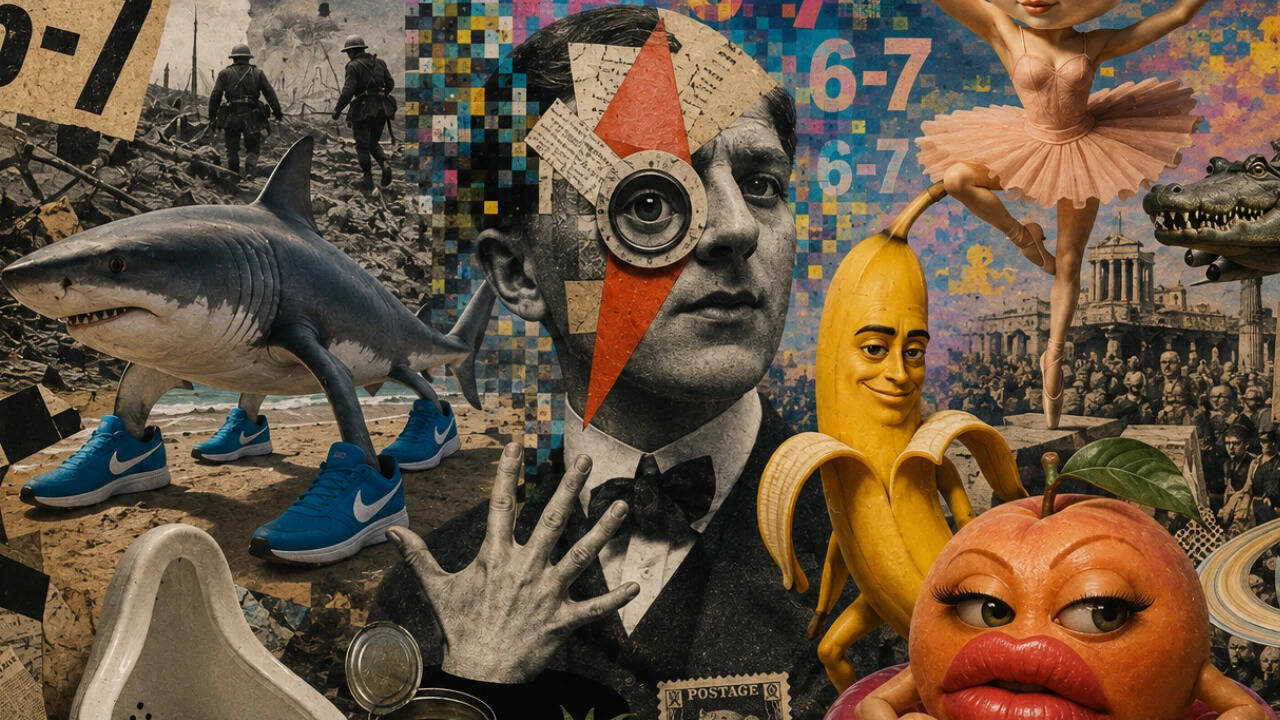
The theory sounded ambitious. The execution felt chaotic. Instead of clarifying Wagner's complex mythologies, the visuals shifted constantly. Spectators watched a dizzying collage flash across the stage. Images of former German Chancellor Helmut Kohl appeared alongside the towers of the World Trade Center after the September 11 attacks, mixed with postal stamps from German reunification.
To many in the hall, it felt like an over-caffeinated screensaver. It pulled focus away from the physical performers entirely.
Why Traditionalists Push Back Against Digital Staging
Opera is an art form rooted in physical presence. You watch living bodies inhabit a shared acoustic space. When an algorithm generates a chaotic stream of historical ephemera, it creates friction.
Critics and attendees noted that the projections didn't interpret the drama. They just overwhelmed it. The singers stood as static focal points while a digital storm raged behind them. Instead of deepening the psychological weight of Wagner's score, the technology acted as a constant distraction.
Opera fans go to Bayreuth for high-level musicianship and theatrical gravity. They do not pay premium ticket prices to watch a neural network throw random twentieth-century historical milestones onto a backdrop. The backlash proves that technological novelty cannot substitute for theatrical direction.
The Balance Between Innovation and Heritage
Opera directors have always experimented. Richard Wagner himself chased cutting-edge theatrical effects during his lifetime, often pushing nineteenth-century stagecraft to its absolute limit. Innovation is part of the genre's DNA.
Yet there is a distinct line between expanding a narrative and introducing algorithmic noise. When tech is shoehorned into a production simply for the sake of being modern, audiences notice the gimmick. Artificial intelligence can process vast archives of historical data in seconds, but it lacks intent. It cannot weigh emotional nuance or theatrical timing.
Opera requires a human eye to curate meaning out of chaos. Until developers and directors find a way to make tools serve the drama rather than obscure it, digital experiments on classical stages will keep inviting hostile crowds.
Keep expectations grounded the next time a cultural institution boasts about a tech-first revamp. True artistic weight comes from human choices, not random data generation.