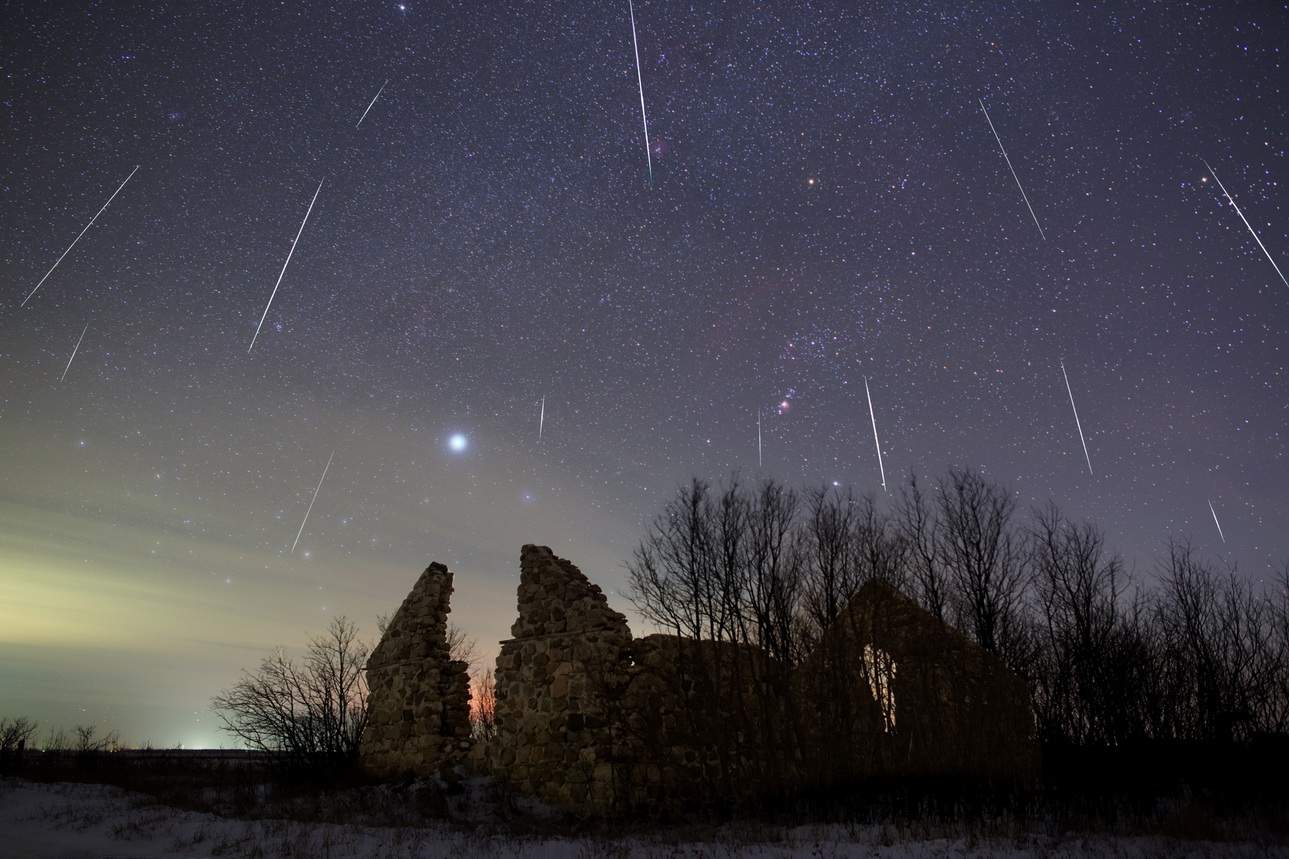
Skywatchers usually wait years for a single astronomical spectacle to capture their attention. Next week changes everything. On August 12, 2026, a rare cosmic convergence brings together a solar eclipse, a planetary alignment, and the peak of the Perseid meteor shower into one intense 24-hour window.
If you think you've seen a good meteor shower before, forget it. This year's Perseids land on the exact day of a new moon. That means zero natural moonlight will wash out the faint shooting stars. Under clear skies, you can expect up to 100 meteors per hour.
The Ultimate Double Feature
The action starts during daylight hours with a solar eclipse. For millions of people across parts of northern Russia, Greenland, Iceland, and northern Spain, the Moon will completely block the Sun. If you live in parts of North America or wider Europe, you'll catch a partial solar eclipse.
Don't grab your regular sunglasses. Staring at a partial eclipse without certified ISO 12312-2 solar filters will fry your retinas. Get proper eclipse glasses ahead of time.
Once the Sun dips below the horizon, the real show begins. The Perseid meteor shower hits its maximum intensity on the night of August 12 into the early hours of August 13.
Where Do the Perseids Come From?
These brilliant streaks aren't actually random shooting stars. They are tiny pieces of cosmic debris left behind by Comet 109P/Swift-Tuttle. Earth plows right through this dusty trail every single summer.
As those tiny rock fragments hit our atmosphere at roughly 133,000 miles per hour, they vaporize. The air compresses in front of them, heating up to more than 3,000 degrees Fahrenheit. That flash of heat creates the glowing trails you see from your backyard.
Most people make the mistake of staring directly at the constellation Perseus. Don't do that. The meteors originate there, but they streak across the entire sky. Lie back on a reclining lawn chair, look straight up, and let your peripheral vision catch the action.
Don't Miss the Morning Planet Parade
As if an eclipse and a meteor shower weren't enough, the pre-dawn sky on August 12 features a six-planet alignment. Mercury, Jupiter, Mars, Uranus, Saturn, and Neptune will stretch across the horizon before sunrise.
You can spot Mars and Saturn with your naked eye. Grab a pair of binoculars if you want to hunt down Uranus and Neptune.
How to Prepare Your Backyard Setup
Success comes down to preparation. Ditch the city lights and drive out to a dark-sky location. Turn off your phone screen entirely. It takes your eyes a full thirty minutes to adapt to total darkness. One quick glance at Instagram resets that timer instantly.
Pack a sleeping bag or a zero-gravity chair. Straining your neck for hours ruins the experience. Bring hot coffee or water, dress in heavy layers because summer nights get surprisingly cold, and check local weather forecasts now. If clouds roll in, you miss the event entirely. Set your alarms, protect your eyes for the daytime eclipse, and look up.