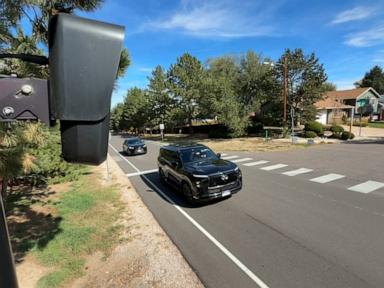
When a municipal police department installs an automated license plate reader, the sales pitch sounds innocuous enough. Citizens are told these high-speed optical systems are passive electronic observers designed strictly to recover stolen vehicles, locate missing persons, and assist law enforcement in solving violent felonies.
Yet, beneath the glossy marketing materials of private vendors lies a sprawling, largely unregulated mass surveillance apparatus. Across the country, everyday drivers are discovering that their daily movements are being logged, categorized, and stored in cross-jurisdictional databases that retain historical location data for months or even years.
The friction between public safety justifications and constitutional privacy rights has finally reached a breaking point in the courtroom. A growing wave of litigation, highlighted by cases where individuals have been wrongfully targeted or falsely accused due to flawed automated alerts, is exposing the systemic failures of automated license plate recognition, or ALPR, technology.
To understand how we arrived at a point where a routine errand can result in an erroneous felony stop, one must look closely at the architecture of modern municipal surveillance.
The Mechanics of Mass Tracking
Traditional policing relied on human observation, probable cause, and targeted investigation. Automated license plate readers invert this paradigm by converting every passing vehicle into a data point. Mounted on utility poles, police cruisers, and traffic signals, these cameras capture multiple photographs of passing cars, recording precise timestamps, geographic coordinates, and license plate characters.
The software behind these devices relies on optical character recognition to translate pixel data into alphanumeric text, instantly cross-referencing every plate against a computerized "hot list."
In theory, this happens in milliseconds. If a plate matches a stolen vehicle report, an alert is dispatched to nearby cruisers.
In practice, the margin for error is wider than police departments care to admit. Dirty license plates, faded temporary paper tags, worn lettering, and obstructed camera angles frequently cause misreads. A single mistranslated character transforms an ordinary commuter into a synthetic suspect.
Consider a hypothetical scenario that mirrors frequent operational errors: a camera misreads a single digit on a commercial delivery van's license plate, confusing a zero for the letter O. The system flags the vehicle as a stolen SUV linked to an armed robbery committed three states away. When local officers intercept the vehicle, they do so under the assumption that the occupant is armed and dangerous, transforming a mundane traffic mistake into a high-risk gunpoint detention without independent verification.
The Private Vendor Ecosystem
The expansion of public surveillance is no longer funded solely by municipal tax dollars or federal grants. Much of the infrastructure is driven by private corporations, most notably firms like Flock Safety, which deploy massive networks of roadside cameras.
These private vendors operate under business models that rely on scale. By encouraging homeowners' associations, private shopping centers, and commercial property managers to integrate their private security cameras into the broader law enforcement network, these companies create dense webs of observation that cover entire metropolitan regions.
This public-private mashup bypasses traditional legislative oversight. When a police department leases equipment from a private vendor, the data collected does not just sit on a local municipal server. It often flows into regional intelligence hubs and shared national repositories accessible to thousands of outside agencies with minimal vetting or audit trails.
Civil liberties advocates point out that this decentralized data-sharing creates massive vulnerabilities. Independent audits of municipal databases have repeatedly revealed instances of unauthorized use, ranging from officers running personal checks on acquaintances to systemic failures in data retention policies that ignore state-mandated destruction timelines.
When Algorithms Become Accusers
The human cost of algorithmic policing is becoming impossible to ignore. When automated systems malfunction or produce false positives, the burden of proof shifts instantly onto the citizen.
Legal challenges currently winding through state and federal courts argue that mass location tracking violates constitutional protections against unreasonable searches. When a database records every time a citizen visits a medical clinic, a place of worship, a political protest, or a licensed counseling center, the government builds an intimate behavioral profile of individuals who have never been accused of a crime.
Courts have historically grappled with the distinction between being observed in public and being subjected to continuous, systematic tracking over extended periods. While an officer could theoretically follow a single car for miles, the cost and manpower required made comprehensive tracking a practical impossibility. Automated networks eliminate those friction points, making mass surveillance cheap, continuous, and invisible.
Municipalities that rushed to adopt these technologies are now facing legal liability for failing to vet the software's accuracy and failing to supervise how law enforcement personnel utilize the harvested intelligence. The argument that technology is infallible no holds weight when internal police audits repeatedly uncover widespread policy violations and improper searches.
The current litigation is not merely about a single erroneous stop or a misplaced accusation. It represents a fundamental reckoning over whether communities are willing to trade basic civil liberties for the illusion of algorithmic omniscience, or if the law will finally catch up with the digital panopticon erected along our roadways.