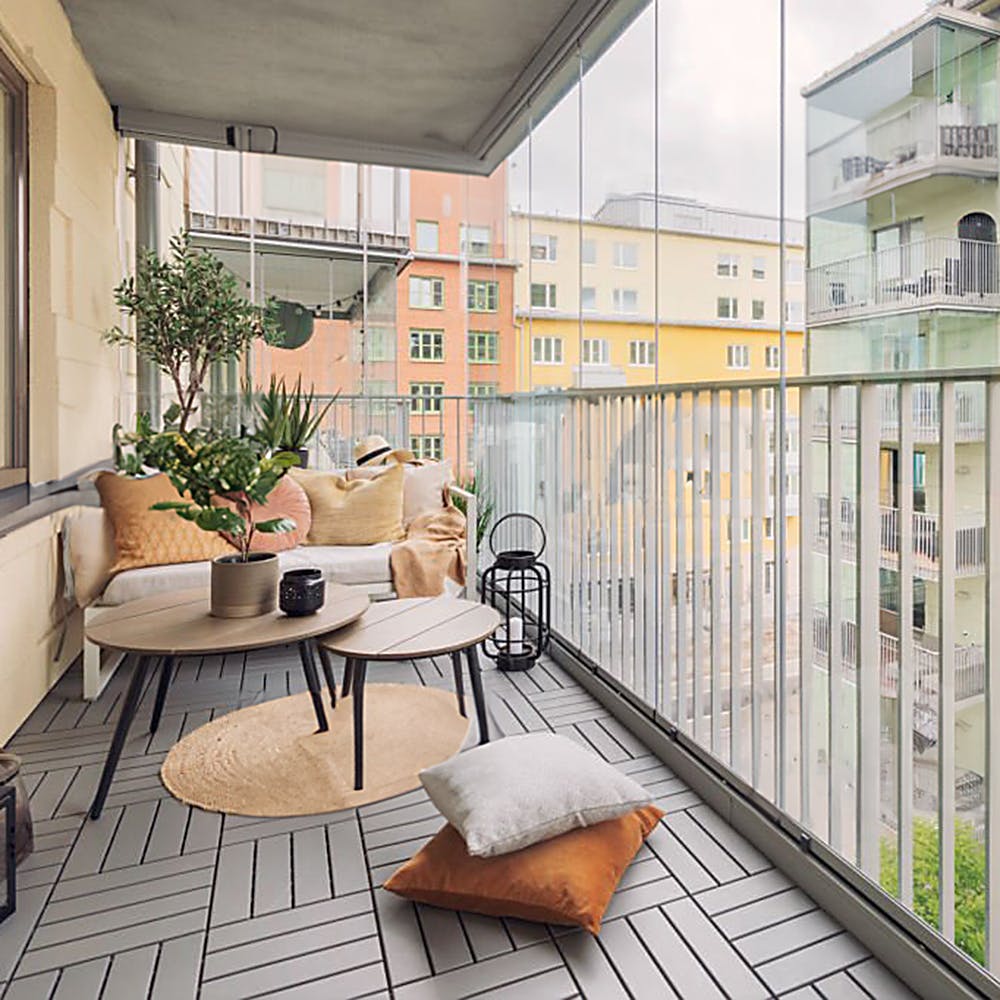
Yes, California renters can technically buy and plug in balcony solar panels, and legislative efforts are actively working to clear away utility interconnection hurdles. However, the real bottleneck is not the electrical grid or the hardware. It is a tangled web of landlord restrictions, municipal building codes, Homeowner Association bylaws, and strict fire safety clearances that can turn a simple plug-and-play appliance into a lease violation overnight.
For years, residential solar in the Golden State has been an exclusive club for homeowners with pristine roofs, high credit scores, and tens of thousands of dollars to burn. Meanwhile, nearly 45 percent of California households—roughly 17 million people—rent their homes. They pay the exact same punishing kilowatt-hour rates to investor-owned utilities like PG&E, Southern California Edison, and SDG&E, yet they remain locked out of the clean energy transition. Plug-in balcony solar promises to shatter that barrier, borrowing a page from Germany’s massive Balkonkraftwerk boom, where over half a million apartment dwellers have clipped lightweight solar panels to their railings and plugged them directly into standard wall outlets.
But California is not Berlin. Importing a European energy revolution into the most heavily regulated building environment in North America exposes deep structural friction between clean energy mandates and property law.
The Physics and Politics of Plug-In Power
To understand why utilities and building inspectors get nervous about balcony solar, you have to understand how a standard apartment circuit works. In a traditional rooftop solar installation, power flows from the panels, through an inverter, and directly into the home's main electrical service panel via a dedicated circuit breaker. It is hardwired, inspected, and permitted.
Balcony solar bypasses the main panel entirely. A typical kit consists of one or two lightweight solar panels—usually rated between 300 and 800 watts total—connected to a microinverter. You mount the panels on a balcony railing or patio rack, and you plug a standard three-prong cord directly into an existing 120-volt wall outlet. The microinverter synchronizes the direct current (DC) power from the sun with the alternating current (AC) power running through your apartment's walls, feeding electricity backward into that specific branch circuit. Your refrigerator, router, and television draw from that solar current first, reducing the amount of power your meter pulls from the utility grid.
It sounds effortless. On paper, it is. Modern microinverters are equipped with anti-islanding protection, a critical safety mechanism required under UL 1741 standards. If the neighborhood power grid goes down during a wildfire shutoff or a winter storm, the microinverter detects the loss of grid voltage and shuts off within milliseconds. This ensures that electricity does not backfeed onto dead power lines and electrocute utility lineworkers.
Yet, when you introduce power into a standard branch circuit rather than the main breaker box, electrical engineers raise a legitimate concern known as busbar or circuit overloading. Consider a hypothetical example to see how this plays out in an older apartment building. Suppose a bedroom or living room circuit is protected by a standard 15-amp circuit breaker, which is designed to trip if the current exceeds 15 amps to prevent the copper wiring inside the walls from overheating and catching fire. Now, imagine your balcony solar kit is pumping 3 amps of current into that circuit via a patio outlet, while the main breaker box is simultaneously supplying 14 amps from the utility grid to run a portable air conditioner and a space heater on the exact same circuit. The total current flowing through that section of wall wire is now 17 amps. Because the circuit breaker at the main panel only sees the 14 amps coming from the grid, it does not trip. The wire inside the wall quietly overheats.
In Germany, regulators solved this by capping plug-in solar output at 800 watts and mandating specific outlet standards or circuit checks. In the United States, the National Electrical Code (NEC) does not yet have a straightforward, universally adopted provision for plug-in generation devices feeding standard branch circuits. Until the NEC and California’s electrical code explicitly standardize these devices, local building departments view them with deep suspicion.
The Utility Interconnection Wall
Before a single watt can legally flow backward into California’s grid, the utility demands a say. Under current rules governed by the California Public Utilities Commission (CPUC), any generating device connected to the grid—even a tiny 400-watt balcony panel—technically requires an interconnection agreement.
Utilities argue they need to know where distributed generation sits on their feeders to manage voltage fluctuations and transformer loads. While a single 600-watt system is a rounding error on a neighborhood transformer, ten thousand of them clustered in a dense urban apartment complex in Los Angeles or San Francisco changes the load profile of that local grid segment.
Historically, applying for interconnection in California has meant paying hundreds of dollars in application fees, submitting single-line electrical diagrams, and waiting months for utility engineers to sign off. For a system that costs $600 to $1,000 retail, a $400 interconnection fee and a bureaucratic permitting process destroy the economics before the panels even come out of the box.
Legislative efforts in Sacramento—such as proposals modeled after Utah’s pioneering plug-in solar legislation—aim to exempt small, UL-certified plug-in solar devices under a certain wattage threshold (typically 800 to 1,200 watts) from onerous utility interconnection fees and formal permitting. These bills seek to treat low-wattage balcony solar more like a household appliance than a miniature power plant. If passed and implemented smoothly, utilities would simply require a basic notification rather than a formal engineering review, and they would not be penalized if a tiny amount of uncompensated excess power trickles back through a smart meter.
The Landlord and Lease Trap
Even if Sacramento strips away every utility barrier tomorrow, renters still face an immovable object: their lease.
Most standard California residential leases—including templates widely distributed by the California Association of Realtors—contain strict clauses prohibiting tenants from making alterations to the property, attaching anything to exterior walls or railings, or placing items on balconies that alter the building’s outward appearance.
Property managers have several practical reasons to push back against balcony solar, and dismissive clean-energy advocates often ignore them:
- Wind Load and Liability: California experiences severe wind events, from the Santa Ana winds in the south to the Diablo winds in the north. A solar panel mounted poorly to an aluminum balcony railing acts like a sail. If a gust rips a 35-pound glass-and-aluminum panel off a fourth-floor balcony and drops it onto a parked car or a pedestrian below, the property owner faces catastrophic premises liability.
- Structural Integrity: Many apartment balconies are cantilevered structures designed to hold human weight, not sustained horizontal wind shear pulling on the top rail. Property managers rarely know if a tenant used heavy-duty stainless steel brackets or cheap zip ties to secure their panels.
- Aesthetic Uniformity and HOAs: For renters living in rented condominiums, the landlord is not even the final authority. Homeowner Associations wield immense power over exterior aesthetics. Even though California’s Solar Rights Act (Civil Code Section 714) prevents HOAs from outright banning solar installations, the law allows associations to impose "reasonable restrictions" that do not significantly increase the cost or decrease the efficiency of the system. In practice, fighting an HOA board over what constitutes a reasonable aesthetic restriction on a shared balcony railing requires legal stamina that almost no tenant possesses.
Unlike California Civil Code Section 1947.6, which explicitly grants tenants the legal right to install electric vehicle charging stations at their own expense under specific conditions, California has no corresponding "Right to Balcony Solar" statute forcing landlords to accept plug-in panels. Without statutory protection, a tenant who hangs a solar panel without written permission risks a "Three-Day Notice to Perform Covenant or Quit"—the first legal step toward eviction.
Fire Codes and the Balconies You Cannot Use
Suppose you have a cool landlord, no HOA, and a sunny south-facing balcony. You still have to clear the local fire marshal.
The California Fire Code strictly regulates what can be placed on balconies and patios, particularly in multi-family residential buildings. Fire departments require unobstructed egress paths and clear exterior access for ladder operations during a fire. In many jurisdictions, fire codes restrict combustible storage on balconies and prohibit hanging objects that could impede firefighters from breaching a balcony railing to rescue trapped occupants.
Furthermore, balcony solar kits increasingly come paired with small, portable lithium-iron-phosphate (LFP) battery stations. These batteries sit on the balcony or just inside the sliding glass door, storing midday solar power so the renter can run appliances during peak evening rate hours—usually between 4:00 PM and 9:00 PM, when California time-of-use electricity rates skyrocket.
While LFP chemistry is vastly safer and more thermally stable than the nickel-manganese-cobalt (NMC) batteries found in cheap e-bikes, fire marshals in dense cities like San Francisco and Los Angeles have grown deeply wary of lithium battery storage inside multi-unit dwellings. Storing an uncertified or improperly ventilated battery pack on an exterior balcony exposed to extreme summer heat or coastal salt fog introduces corrosion and thermal risks that building insurers scrutinize closely.
The Brutal Math of Renter Economics
Let us strip away the environmental optimism and look at the cold financial reality for a California renter. Does balcony solar actually save enough money to justify the hassle?
Consider a realistic, mid-tier setup: two 400-watt panels (800 watts total) paired with a compliant microinverter, costing roughly $850 upfront. Assume you live in Los Angeles or Sacramento and have a rare, unobstructed, due-south balcony that receives five peak sun hours per day on average across the year.
An 800-watt system facing south at a 90-degree vertical angle—which is how most balcony panels hang when strapped flush to a railing—suffer a massive efficiency penalty compared to panels tilted at 30 degrees on a roof. Vertical mounting can slash annual energy production by 25 to 35 percent. Instead of generating 4 kilowatt-hours per day, that vertical 800-watt setup will realistically produce around 2.5 to 2.8 kilowatt-hours per day, or roughly 950 kilowatt-hours per year.
At an average California investor-owned utility rate of $0.42 per kilowatt-hour, 950 kilowatt-hours translates to roughly $399 in annual electricity savings—assuming you consume 100 percent of that power inside your apartment in real time.
That is a critical caveat. Without a battery, any solar electricity generated at 1:00 PM while you are at work that exceeds your apartment’s baseline load (your fridge, Wi-Fi router, and standby electronics) flows backward through your utility meter into the grid. Under California’s current Net Billing Tariff (NEM 3.0), utilities pay pennies—often less than $0.05 per kilowatt-hour—for daytime power exported to the grid, and that is only if you have a formal interconnection agreement. Without an interconnection agreement, older meters might ignore the export entirely, or worse, modern smart meters might actually register exported power as consumption, billing you for the electricity you just gave the utility for free.
To capture full retail value, you have to shift your heavy electricity usage—running the dishwasher, doing laundry, pre-cooling the apartment—to midday hours when the sun is hitting your balcony. Or, you have to spend another $800 to $1,200 on a smart battery system capable of zero-export management, pushing your payback period from two years out to five or six years. For a renter who moves every two or three years, a five-year payback period is a losing proposition unless the hardware is genuinely portable enough to pack into the back of a Honda Civic and reinstall at the next apartment—where the new balcony might face north and sit in the shade of an oak tree.
Why Municipal Utility Renters Have the Upper Hand
If you rent in California, your geographic zip code matters just as much as your balcony orientation. Customers of municipal utilities—such as the Los Angeles Department of Water and Power (LADWP), the Sacramento Municipal Utility District (SMUD), or Silicon Valley Power—operate under completely different rules than customers of PG&E, Edison, and SDG&E.
Municipal utilities are publicly owned and governed by local boards rather than the CPUC. They generally charge significantly lower electricity rates—often half of what PG&E charges—which makes the financial payback of balcony solar slower. However, their regulatory posture toward plug-in devices is evolving independently. Some municipal utilities are far more agile in creating streamlined pilot programs for low-wattage, non-exporting plug-in solar systems, provided the equipment carries full UL 1741 and UL 3703 (racking) certifications and uses a smart meter or current transformer (CT) clamp to guarantee zero backfeed onto the municipal grid.
For renters trapped in PG&E or Edison territory, the financial desperation is much higher, but the institutional resistance is far stiffer. Investor-owned utilities answer to shareholders, and every kilowatt-hour a renter generates on a balcony is a kilowatt-hour the utility cannot sell at 45 cents while earning a guaranteed rate of return on transmission infrastructure.
How to Actually Pull It Off Without Getting Evicted
If you are a California renter determined to deploy balcony solar as regulatory barriers begin to thaw, treating it like a guerrilla energy project will backfire. Do not buy a cheap, uncertified kit from an overseas marketplace that lacks North American safety listings. If an uncertified inverter causes an electrical fire, your renters' insurance policy will void your claim immediately, leaving you personally liable for hundreds of thousands of dollars in structural damage.
Start by verifying your hardware certifications. Every component—the panels, the microinverter, and any battery storage—must carry UL or ETL certification specifically tested to North American grid and safety standards. Look for systems equipped with zero-export technology, which uses a small sensor clamped around your main circuit or plugged into your meter's home area network to throttle solar production the exact second your apartment's power consumption drops, ensuring zero power ever leaks backward onto the utility grid.
Next, inspect your balcony orientation using a basic sun-seeker app before spending a dime. If your balcony faces north, or if an adjacent building casts a shadow across your railing between 10:00 AM and 3:00 PM, walk away. Partial shading on a small two-panel system collapses voltage output, turning an energy investment into an expensive patio decoration. If you have a ground-floor patio rather than an elevated balcony, use a weighted, ground-mounted adjustable tilt rack instead of attaching anything to a railing. Ground mounts eliminate wind-shear liability on building structures, bypass railing height fire codes, and allow you to angle the panels at an optimal 30 to 35 degrees to capture maximum winter and summer sun.
Finally, approach your landlord with a written proposal framed around zero structural modification and full liability protection. Offer proof of a $100,000 to $300,000 renters' insurance policy that explicitly covers personal property and personal liability, use non-penetrating mounting hardware, and demonstrate that the system plugs into a dedicated GFCI-protected outdoor outlet. When property managers see certified equipment, zero drilling, and active liability coverage, the conversation shifts from an automatic "no" to a negotiable "yes."
California’s clean energy transition cannot succeed if it leaves nearly half the state’s population sitting in the dark, paying record utility bills to subsidize suburban rooftop installations. Plug-in solar puts power generation directly into the hands of everyday tenants, breaking the utility monopoly one balcony at a time. Yet until state lawmakers pass explicit tenant-protection statutes and force utilities to accept zero-export appliances without bureaucratic friction, balcony solar in California remains a brilliant technology trapped inside an outdated legal cage.