The coffee in the diner at seven in the morning is always the same shade of amber-brown, tasting faintly of burnt tin and quiet desperation. Outside, the Michigan air has that biting, metallic edge that arrives long before the leaves actually turn. It is the kind of cold that gets into your bones and stays there until November. Inside, beneath the flickering hum of a neon sign advertising local insurance, two men sit five booths apart. They do not speak. They do not look at each other. Yet they are locked in a silent, high-stakes collision that will decide the political gravity of an entire state, and perhaps the country.
One man wears a grease-stained Carhartt jacket, his knuckles calloused from thirty years on the assembly line. The other wears a sharp, collarless merino wool sweater, the uniform of the new economy taking root in the glass-fronted offices downtown.
They are looking at the exact same ballot. They see entirely different universes.
For decades, we have been told that elections are fought on a battlefield of spreadsheets and policy papers. We are fed the myth that voters sit at their kitchen tables with calculators, meticulously weighing marginal tax rates against infrastructure spending bills. We treat the electorate like a massive, hyper-rational financial auditing firm. But anyone who has ever stood in a crowded gymnasium waiting to cast a vote knows the truth. Politics is not an accounting exercise. It is an emotional autobiography.
Michigan has always been the crucible where this truth burns the hottest. It is a place built by calloused hands and stubborn dreams, a state of jagged peninsulas, deep waters, and radical transitions. When you drive down I-94, the landscape shifts from sprawling agricultural fields to concrete industrial ghosts, and finally to sleek tech incubators. The state is a living archive of American ambition and industrial heartbreak.
Right now, that archive is being tested by a fundamental friction. The choice in front of the voter is stark, even if it is rarely spoken aloud. Do you vote for the tangible machinery of your daily survival, or do you vote for the mirror that reflects who you believe you are?
Let us call the first man Arthur. (To be clear, Arthur is a composite sketch drawn from dozens of interviews across Macomb and Kent counties, a hypothetical anchor to ground an abstract political theory in flesh and bone). Arthur’s life is governed by concrete nouns. Gas prices. Grocery receipts. The pension he hopes will still exist when his knees finally give out. When a candidate stands at a podium and talks about supply chain resilience or targeted manufacturing tax credits, Arthur does not care about the jargon. He cares about whether his grandson can afford to live in the same zip code. For Arthur, issues are not abstract philosophical concepts. They are physical weights he carries on his back every single day.
Across the aisle, or perhaps across the room in that same diner, sits Elena. (Again, Elena is a composite archetype representing a distinct demographic shift in the suburban rings of Detroit and Grand Rapids). Elena’s world is governed by adjectives and pronouns. Dignity. Representation. Recognition. When she steps into the voting booth, she is asking a different question entirely: Does this system see me? Does it validate my history, my identity, my moral standing in a rapidly changing world?
For Elena, identity is not a buzzword used by cable news pundits. It is the hard-won right to exist fully and safely in spaces that historically slammed the door in her face. If a politician speaks to her heritage, her community, her fundamental humanity, that connection bypasses the brain and strikes straight at the heart.
The traditional political analyst looks at Arthur and Elena and shakes their head in utter bewilderment. They run regression models. They cross-reference polling data with household income brackets. They try to fit these two human beings into neat, predictable boxes labeled "economic voter" versus "cultural voter."
They are missing the point entirely.
You cannot separate the two. They are braided together so tightly that pulling on one string tears the whole fabric.
Consider what happens when a factory closes in a small Michigan town. On paper, it is an economic statistic. A net loss of four hundred manufacturing jobs, a fractional bump in the local unemployment rate, a minor dip in municipal tax revenue. But step inside the living room of a laid-off machinist, and the statistics dissolve into something much heavier. It is not just about the loss of a paycheck. It is the sudden, terrifying erasure of an identity. It is the loss of who you are in the community. When you can no longer provide, when the skill that defined your worth for forty years is suddenly deemed obsolete by global market forces, the economic crisis instantly mutates into an identity crisis.
Identity is economy. Economy is identity. They are two sides of the exact same battered coin.
Politicians know this, even if they rarely admit it out loud. The most effective campaigns do not win by offering the most compelling spreadsheet. They win by telling the most compelling story about belonging. They offer a narrative that answers the human craving for safety and significance.
When a campaign leans entirely into policy debates—arguing over fractional percentages of interest rates or bureaucratic regulatory adjustments—it often sounds like a foreign language to the voter whose life is falling apart. It feels cold. It feels indifferent. It communicates that the people in power are managing a machine, not tending to a society.
Conversely, when a campaign reduces everything down to pure tribal identity—turning an election into a high-school style popularity contest where policy is treated as an annoying afterthought—it leaves the voter with a sugar rush of validation followed by a crushing hangover of unmet promises. You cannot pay your mortgage with a cultural victory. You cannot heat your home with a slogan.
This is the tightrope walk defining the modern Michigan race. The candidates crisscrossing the state in rented buses know they are walking through a minefield of conflicting human desires. They step into union halls where the air smells of coffee and old paper, talking about electric vehicle transitions to workers whose fathers built combustion engines. They walk into university auditoriums where young adults speak passionately about systemic justice while quietly wondering how they will ever pay off their student loans on a gig-economy salary.
Everyone is terrified. That is the quiet secret underlying the political noise.
The industrial worker is terrified that his way of life is being legislated into extinction by people who have never held a wrench. The suburban professional is terrified that the hard-won progress of civil rights and social equity is being rolled back by a rising tide of populist resentment. The young voter is terrified that the planet is burning while politicians argue over procedural rules.
Fear is a powerful motivator. It drives people to the polls in droves. But fear also narrows our vision, blinding us to the complex reality of our neighbors. It makes us view the person in the next booth not as a fellow citizen with a different set of scars, but as an existential threat.
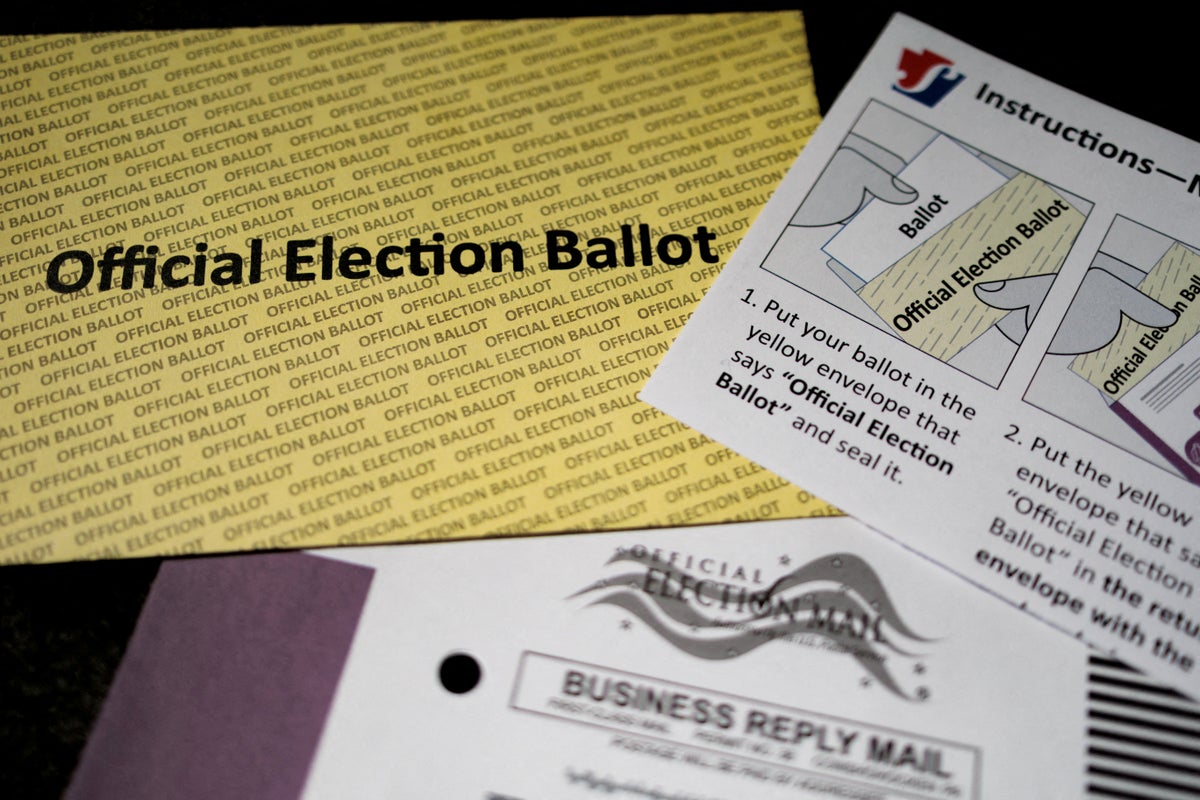
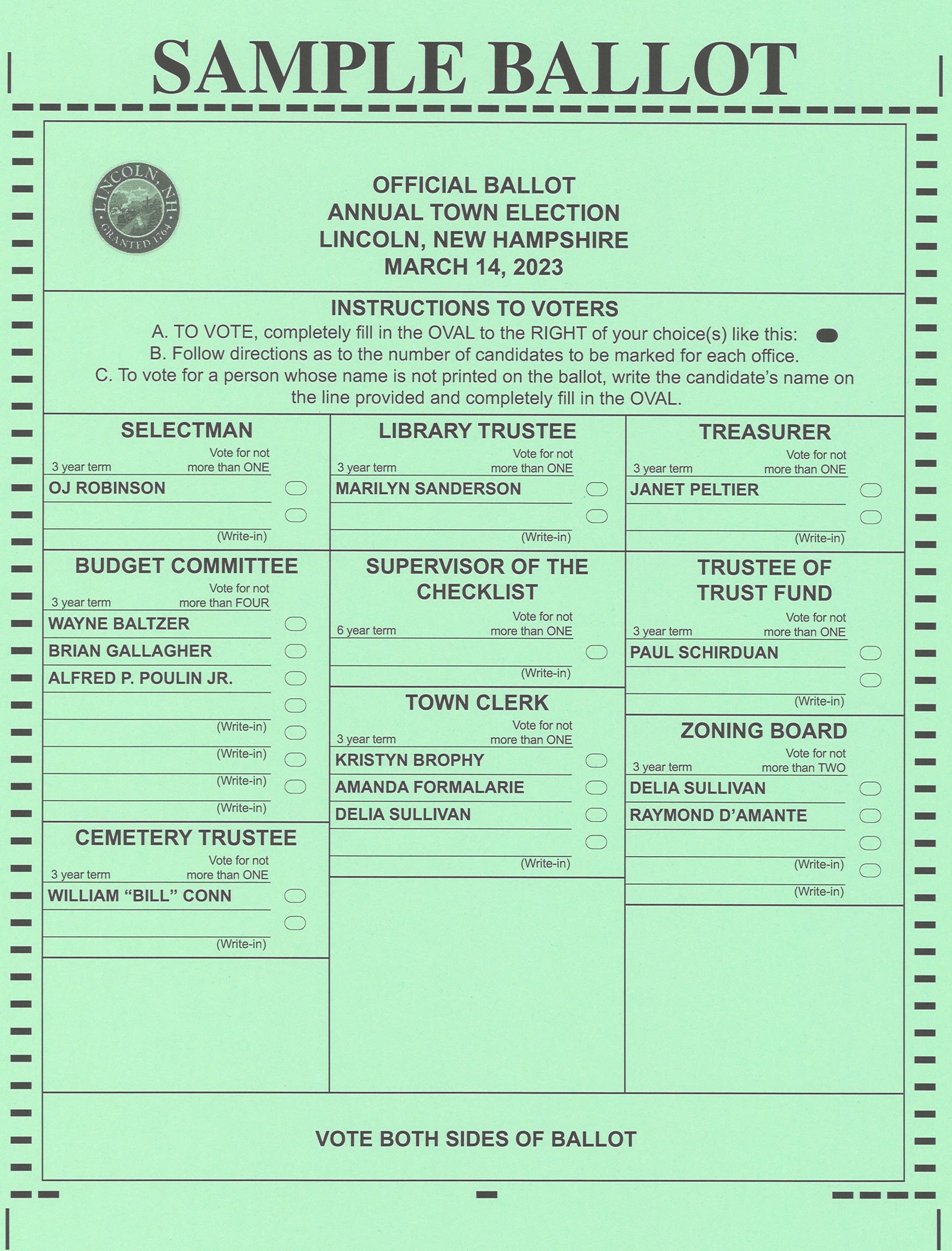
Yet, amidst the noise and the calculated outrage, something remarkable still happens in those modest school gymnasiums and township halls across Michigan every November. People show up. They stand in line in the freezing rain. They wait patiently behind strollers and walkers. They take a small piece of paper, step behind a thin cardboard privacy screen, and make a quiet, intensely personal choice.
They are trying to solve an impossible riddle. They are trying to find a way to honor their own survival while making room for the existence of everyone else sharing the road with them.
The race in Michigan is not a test of whether voters care more about issues or identity. That is a false binary manufactured by observers who are too lazy to look beneath the surface. It is a test of empathy. It is an ongoing, messy, beautiful negotiation over what kind of community we want to build when the factory lights go out and the snow starts to fall.
The two men in the diner eventually finish their coffee. They pay their checks at the register, nod politely to the cashier—a woman juggling two jobs and putting herself through community college at night—and walk out into the cold morning air. They turn in opposite directions, disappearing into the hum of the waking city, carrying their invisible weights, their competing fears, and their shared future, walking blindly toward the ballot box.