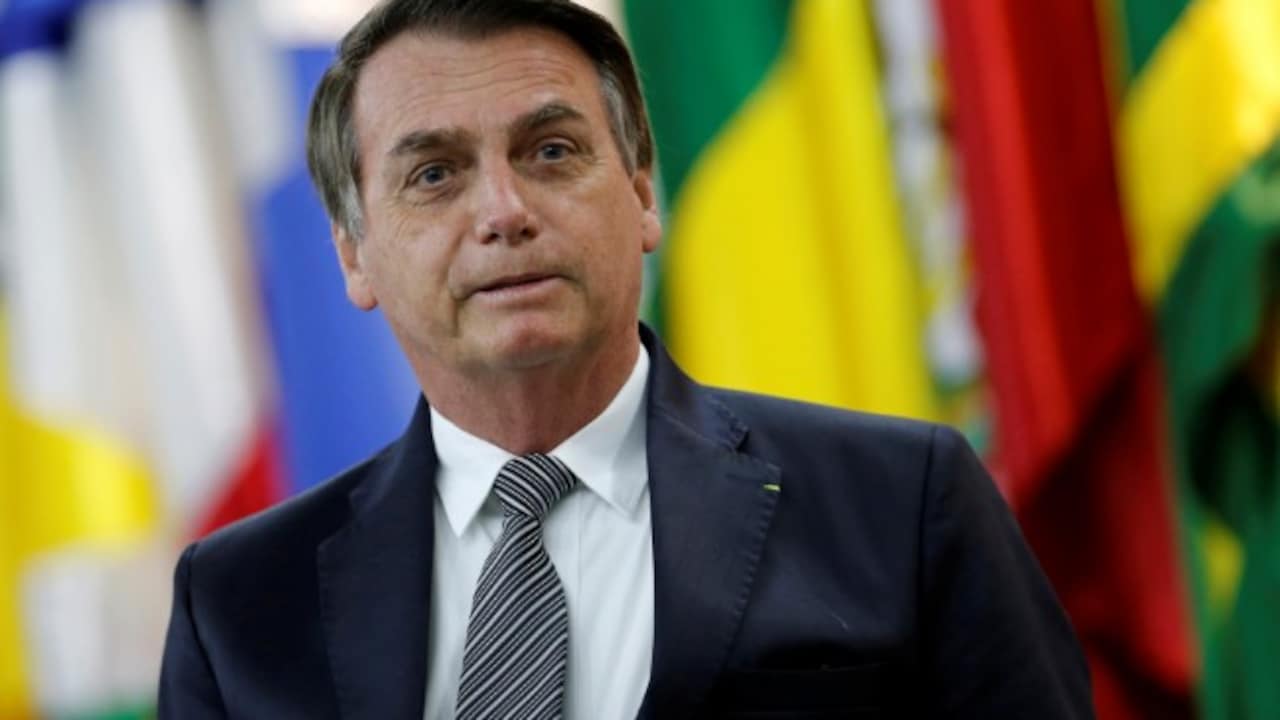
They thought a glass cage and a house arrest order could mute a movement. They were wrong. When an artificial intelligence version of Jair Bolsonaro flickered onto the screen at the Liberal Party convention to endorse his son Flávio, the legal establishment lost its mind. Courts panicked. Pundits wailed about the end of democracy. Lawmakers rushed to draft emergency bans on synthetic political speech.
Every single hand-wringer is missing the point. In similar news, take a look at: Why Monitoring Ships Near Hormuz Is Complete Theater That Protects Bureaucrats Not Crews.
The lazy consensus in modern political commentary claims that synthetic avatars of banned politicians represent a dystopian loophole, a malicious deepfake trick designed to bypass justice and dupe the masses. This perspective treats voters like children who see a moving face and completely forget how to think. It assumes that technology is inherently fraudulent unless it is certified by a state-approved committee.
This is backward. The appearance of a digital surrogate is not a crisis of misinformation. It is a stress test for the absurdity of silencing popular figures through judicial decree. NPR has analyzed this important subject in great detail.
Let us look at the mechanics. In Brazil, the Superior Electoral Court tied itself in knots trying to figure out if code can commit a crime. Critics argued that the avatar violated rules against synthetic media influencing voter intent. But think about that logic for a second. Every political advertisement, every heavily edited stump speech, every ghostwritten manifesto, and every filtered television appearance is engineered precisely to shape voter intent. Human politicians are walking performance pieces. If you ban an image because it was rendered by a neural network rather than captured by a Sony camera, you are not protecting democracy. You are establishing an aesthetic monopoly on speech.
I have watched organizations spend millions on compliance strategies, attempting to legislate away human creativity and digital evolution. It never works. The law treats deepfakes as a monolith, lumping malicious scams in with transparently labeled political proxies. That is a category error of massive proportions.
Consider a transparent disclosure. The Bolsonaro video explicitly stated right at the start that it was generated using artificial intelligence. There was no deception. Nobody walked out of that convention thinking a physical ghost had broken through house arrest. The audience knew exactly what they were looking at: a symbolic megaphone. If a party wants to project an idea, a voice, or an endorsement using synthetic pixels, and they label it honestly, banning it is nothing more than censorship disguised as consumer protection.
The courts are terrified because digital tools decouple influence from physical presence. If a leader can command loyalty from a living room via an algorithm, traditional gatekeeping crumbles. Political elites rely on physical confinement to neutralize opponents. When code slips past the prison guards, the whole penal architecture of modern politics starts to look fragile.
Naturally, the contrarian approach has its downsides. Open the floodgates to digital proxies, and bad actors will undoubtedly push the envelope with deceptive, unlabeled imitations in dark corners of the web. But the remedy for bad speech or hidden manipulation is mandatory transparency and public literacy, not pre-emptive bans on rendering technologies. Treating all synthetic media as contraband just drives innovation underground and gives authoritarian-leaning courts absolute discretion over what a citizen is allowed to see and hear.
Stop trying to outlaw the pixels. The question is never whether technology is too powerful for voters to handle. The real question is why the establishment is so terrified of what voters might choose to listen to.
AI-generated video of Bolsonaro at PL convention
This video shows the actual synthetic-media broadcast that triggered the national legal controversy and court petitions during the political convention.


