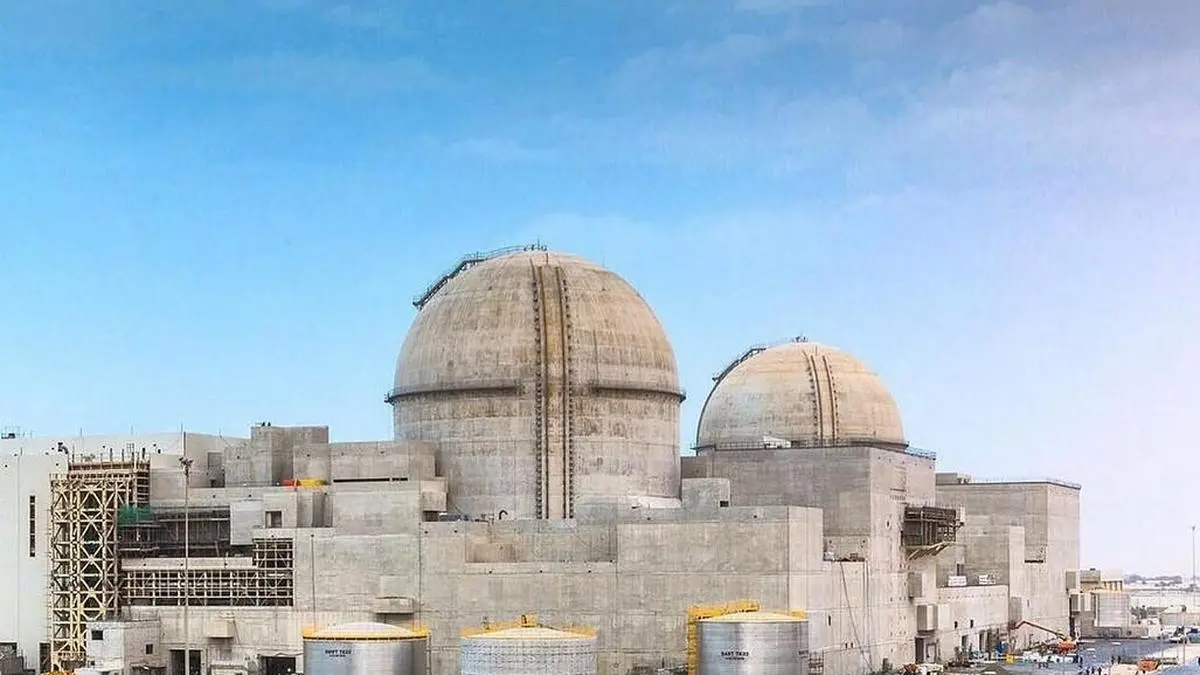
India condemned a drone strike targeting the perimeter of the United Arab Emirates’ Barakah nuclear power plant, signaling a major shift in New Delhi's strategic calculus in the Gulf. The strike, which hit an external electrical generator in Abu Dhabi’s Al Dhafra region, did not breach the inner containment or trigger a radiological leak. However, the targeting of the Arab world’s first commercial atomic facility has forced India to abandon its typical tightrope diplomacy. With over eight million citizens in the region and billions in energy investments at stake, New Delhi can no longer treat the US-Iran war as a distant conflict.
The attack on the $20 billion South Korean-built facility represents a structural break in the geography of modern warfare. For decades, critical civilian infrastructure operated under an unwritten rule of immunity. That rule is dead.
The Asymmetric Threat to Atomic Shields
Western air defenses are optimized for high-altitude, ballistic threats. A low-flying, slow-moving loitering munition circumvents these multi-billion-dollar networks with ease. At Barakah, the drone managed to strike a generator outside the primary containment zone, forcing emergency diesel backup units to activate for Unit 3.
The facility houses four APR-1400 reactors. While the reinforced concrete domes are built to withstand a direct impact from a commercial airliner, the ancillary infrastructure remains highly vulnerable. Cooling systems, external power switchyards, and secondary backup generators sit exposed. You do not need to crack the core to cause a catastrophic operational shutdown; disabling the secondary systems achieves a similar economic and psychological effect.
This is the second time in recent history that nuclear infrastructure has been weaponized, mirroring the vulnerability seen at Ukraine's Zaporizhzhia facility. In the Gulf, the implications are arguably more severe. The Arabian Peninsula relies on these capital-intensive energy projects to power intensive desalination networks. Damaging Barakah threatens both the electricity grid and the municipal water supply of the UAE.
Why New Delhi Broke Its Silence
India’s Ministry of External Affairs issued an unusually blunt statement, calling the strike an unacceptable act and a dangerous escalation. Historically, New Delhi prefers strategic ambiguity in the Middle East to maintain balance between Tehran, Riyadh, and Abu Dhabi.
This swift condemnation reflects deep anxiety over two realities.
- Expatriate Exposure: Over three.five million Indians live and work in the UAE alone, sending back billions in remittances annually. If the conflict shifts from maritime skirmishes to urban and industrial targeting, India faces a logistical nightmare that would dwarf its previous evacuation operations.
- The Energy Blockade: Iran's closure of the Strait of Hormuz has already triggered a severe global energy crisis. India relies on Gulf crude to fuel its domestic growth. The Barakah strike happened just as Abu Dhabi began accelerating an alternate pipeline project through Fujairah to bypass Hormuz entirely. Targeting the UAE’s domestic energy infrastructure threatens India's alternative supply routes before they even become operational.
By explicitly naming the Barakah facility, India is attempting to draw a hard line around civilian infrastructure. It is a diplomatic signal to Tehran that certain targets carry consequences that will alienate neutral trading partners.
The Mirage of Regional Deterrence
The attack exposes the limits of regional missile defense frameworks. The UAE has spent the last several years integrating advanced Western defense networks with Israeli-supplied hardware. Yet, a single, cheap drone managed to start a fire on the perimeter of its most critical asset.
The economic asymmetry of this warfare favors the attacker. A drone costing less than $20,000 requires a counter-measure interceptor that costs upward of $1 million. When attacks are sustained and distributed across multiple vectors, defensive batteries face inventory depletion.
+---------------------------------------+
|  VULNERABILITY PROFILE: APR-1400      |
+---------------------------------------+
| [Reactor Core] -> Reinforced Dome     | -> Secure
| [Switchyard]   -> Exposed Grid Link   | -> Vulnerable
| [Generators]   -> Peripheral Housing  | -> Damaged in Strike
+---------------------------------------+
The United States has enforced a strict port blockade on Iran following stalled ceasefire negotiations. Denied the ability to export oil, Tehran and its proxy networks have shifted to a strategy of total denial, ensuring that if Iranian oil cannot flow, no one else's will either. Barakah was targeted because it represents the crown jewel of the UAE's post-oil economic transition.
The Nuclear Proliferation Rebound
The fallout from this strike extends far beyond the immediate damage to an electrical generator. The UAE constructed Barakah under the strict terms of the US 123 Agreement, voluntarily renouncing domestic uranium enrichment and spent-fuel reprocessing to prove its peaceful intentions.
When a nation signs away its right to enrich uranium in exchange for security guarantees and technology transfers, it expects its civilian facilities to remain safe. The failure to protect Barakah from low-cost asymmetric strikes undermines the value proposition of non-proliferation agreements. Other regional powers observing this vulnerability may conclude that international agreements offer little protection, incentivizing the pursuit of hardened, sovereign deterrent capabilities instead.
Diplomatic tracks between Washington and Tehran are deadlocked, with both sides rejecting interim proposals. As state media networks across the region broadcast increasingly hostile rhetoric, the line between frontlines and civilian safe zones has completely blurred. New Delhi’s sharp rhetorical pivot is not just an expression of solidarity with Abu Dhabi. It is an acknowledgment that the safety zone for global commerce and energy security in the Gulf has vanished.