Two in the morning in Pretoria. The air outside is cooling down after a blistering Highveld afternoon, smelling faintly of woodsmoke and wet asphalt from a passing summer thunderstorm. Inside a cramped, soundproofed bedroom studio, the only light comes from the glow of a dual-monitor setup and the rhythmic amber pulse of a mixing console.
A young producer leans forward. His headphones are clamped tight over his ears, isolating him from the quiet street outside. On his screen, a waveform crawls across a timeline—thick, heavy, and syncopated. A log drum hits. It isn’t the sharp, metallic snap of American trap or the four-on-the-floor gallop of European house. It is a deep, hollow, wooden thud that vibrates right behind the sternum.
He tweaks a filter. He layers in a soulful, melancholic Rhodes chord progression. He hits export.
For years, that exact ritual played out in bedrooms, garages, and township studios across South Africa with a quiet, stubborn faith. The artists making this music—amapiano, gqom, Afro-tech—knew they were sitting on sonic gold. They watched it pack dusty taverns in Soweto and open-air rooftops in Johannesburg. They watched it spill over into London clubs and Parisian basements. Yet, in the grand architecture of global pop culture, there remained a final, towering wall.
The wall of the American mainstream.
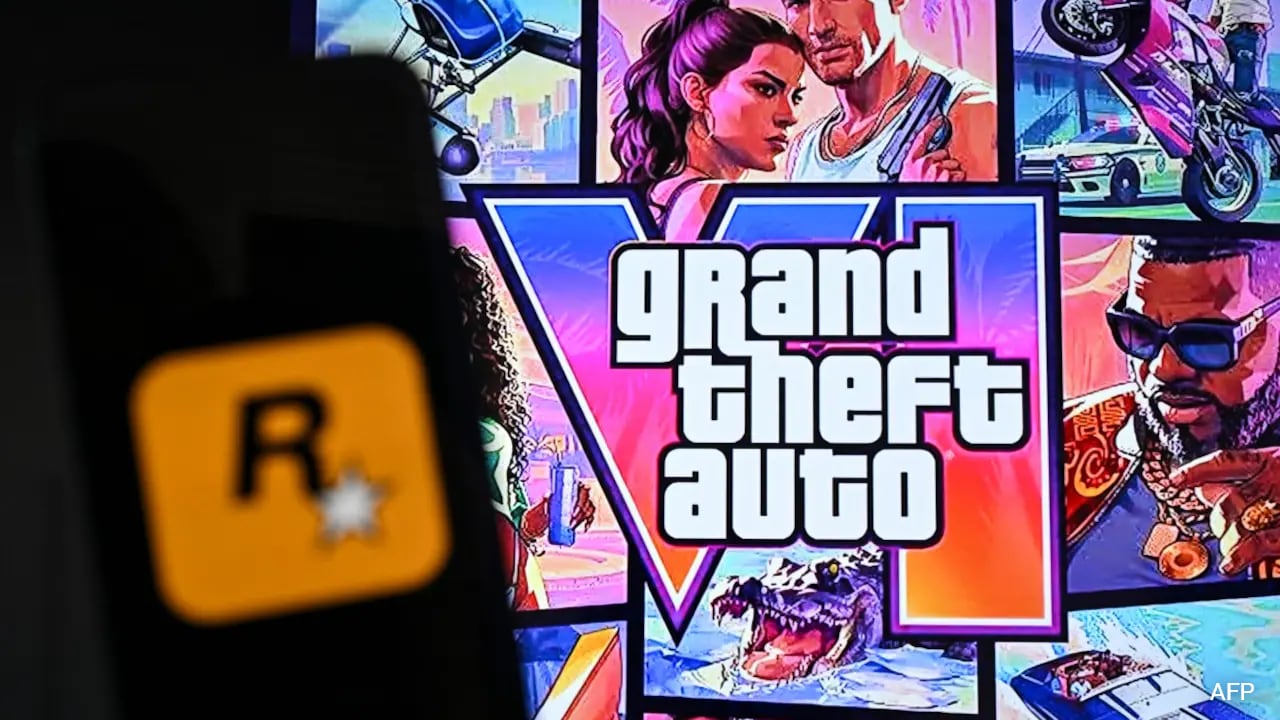
When news broke that a South African DJ had officially secured a spot on the soundtrack of Grand Theft Auto VI, the reaction across the southern tip of the African continent wasn't merely polite applause. It was an eruption. Press releases called it "a dream come true," a neat, sanitized quote fit for a morning news ticker.
But press releases lie by omission. They flatten a seismic cultural shift into a bullet point.
To understand why a track landing on a virtual car radio matters so deeply, you have to understand what Grand Theft Auto actually is. It is not just a video game. Since the turn of the millennium, Rockstar Games’ flagship franchise has functioned as the single most powerful cultural time capsule on earth.
Think back to your own history with the series. Do you remember the exact mission parameters of Vice City in 2002? Maybe. Do you remember the feeling of stealing a white Infernus at sunset, turning onto Ocean Drive, and hearing Laura Branigan’s "Self Control" or Hall & Oates’ "Out of Touch" spill out of the speakers? Viscerally.
Rockstar’s in-game radio stations do something that Spotify algorithms and TikTok trends simply cannot replicate. Algorithms feed you what you already like; they build comfortable echo chambers around your existing taste. A GTA radio station traps you in a moving vehicle with a curated piece of culture and makes it the emotional soundtrack to your adrenaline. When a song plays while you are outrunning a three-star wanted level through neon-drenched streets, that music stops being foreign. It becomes yours.
For decades, that cultural real estate belonged almost exclusively to the West. New York hip-hop, Los Angeles G-funk, British rock, Miami bass. Even when international sounds crept in—like the inclusion of West African Afrobeats or Latin reggaeton in GTA V’s later updates—they often felt like curated side dishes rather than the main course.
The inclusion of a South African DJ in GTA 6 changes the recipe entirely.
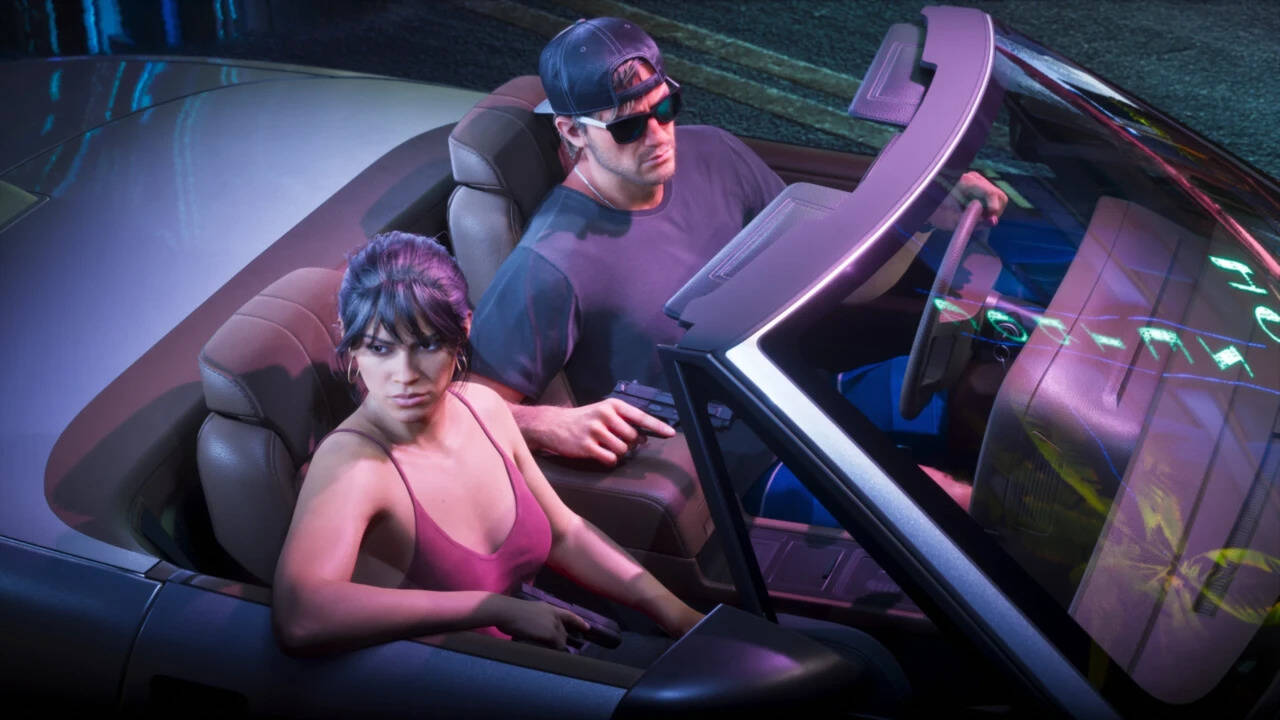
Consider what happens next. Picture a nineteen-year-old kid in Ohio, or a salaryman in Tokyo, or a student in São Paulo. Let’s call him Marcus—a purely hypothetical player, though millions just like him are waiting for the game’s release. Marcus boots up GTA 6. He steps out into the humid, sun-bleached sprawl of Leonida, Rockstar’s fictionalized Florida. He hijacks a convertible, merges onto a coastal highway, and flicks the radio dial.
Suddenly, the speakers aren't pumping out familiar Atlanta 808s. Instead, a hypnotic, shaker-driven rhythm takes over the cabin. A deep, rolling bassline drops, carrying the unmistakable DNA of a Pretoria township. Marcus doesn't know what amapiano is. He couldn't point to Gauteng on a map if his life depended on it. He doesn't care about musicology or geopolitical cultural exports.
He just knows that the beat makes his head nod. He turns the volume up. He drives a little slower just to hear the bridge resolve.
That moment—repeated across tens of millions of living rooms simultaneously—is worth more than a thousand tourism campaigns or international trade summits. It is cultural osmosis at terminal velocity.
Of course, the road to Vice City wasn't paved overnight, nor was it without friction. Inside South Africa’s music industry, the news has sparked a complicated mix of pride and sharp debate. There is a very real anxiety among local purists whenever a grassroots sound gets plucked up by a multi-billion-dollar Western entertainment juggernaut.
When a hyper-local genre goes global, who controls the narrative? And more importantly, who pockets the royalties?
We have seen this movie before. Look at the history of global dance music. In the late 1980s, Black artists in Chicago and Detroit invented house and techno in abandoned warehouses, only for European promoters to repackage the sounds, strip away their origins, and sell them back to the world at festival prices. More recently, as Afrobeats conquered global charts, local producers in Lagos frequently voiced frustration over predatory licensing deals that left the originators with pennies while international distributors reaped millions.
South African artists are acutely aware of this history. Amapiano was born out of hyper-local collaboration—a community-driven sound where producers traded stems over WhatsApp, tested tracks at local car washes, and built an ecosystem entirely independent of major Western record labels.
Bringing that sound into GTA 6 means subjecting it to the ultimate commercial machine. Grand Theft Auto V generated over eight billion dollars in revenue, making it the most profitable single entertainment product in human history. GTA 6 is projected to shatter even those staggering numbers, likely crossing the billion-dollar mark within its opening weekend alone.
The financial stakes are astronomical, yet for many independent musicians, a sync placement in a blockbuster video game isn't about an immediate seven-figure payout. Rockstar is notoriously tight-lipped about its licensing fees, and upfront checks for individual tracks are often modest compared to the game's overall budget.
The real currency here is leverage.
When a South African DJ’s name appears on that official tracklist, their booking fee in Ibiza, London, and New York triples overnight. Suddenly, festival promoters who previously dismissed South African dance music as "too niche" for mainstream stages are scrambling to secure visas and headline slots. Streaming numbers don't just spike; they establish a permanent, higher baseline. The "dream come true" isn't just about hearing your song in a video game; it is about the passport stamps, the publishing leverage, and the undeniable proof of concept that allows the next generation of kids in Johannesburg and Durban to negotiate from a position of strength.
And musically, the fit is uncanny.
Think about the geography and atmosphere of Leonida. Rockstar’s version of Florida is a place of stark, intoxicating contrasts: blindingly bright beaches, pastel Art Deco hotels, oppressive subtropical heat, and a dark, pulsing nightlife that doesn't truly wake up until midnight.
South African electronic music thrives in that exact temperature. Unlike the frantic, anxious energy of drum-and-bass or the aggressive stomp of big-room EDM, South African house and amapiano are built on patience. They are unhurried. They use space, silence, and warm, organic percussion to create a trance-like groove that feels tailor-made for humid nights and long, neon-lit drives.
If you stripped away the geographical labels and played a classic Pretoria deep house track next to a vintage Miami bass cut, you wouldn't hear a clash. You would hear a conversation. Both sounds are rooted in the African diaspora; both were engineered specifically to make bodies move in the heat. Placing a South African DJ on the airwaves of Vice City doesn't feel like a corporate diversity checkbox. It feels like a long-overdue family reunion.
There is a specific kind of vulnerability that comes with watching something you love leave home. For South Africans, their music has always been an armor—a way to process economic hardship, political frustration, and daily struggle into something transcendent and joyful. Sharing that armor with the entire planet carries the risk of dilution. Soon, tourists will mispronounce the genre names. Pop stars will hire producers to mimic the log drums without understanding the soul behind them.
Yet, when you talk to the artists on the ground, hesitation is nowhere to be found. They know that culture cannot be kept under glass. If you lock a sound inside a room to protect it, it suffocates. You have to open the doors, let the wind catch it, and trust that the roots are deep enough to hold.
Back in that quiet studio in Pretoria, the sun is beginning to rise, painting the sky in streaks of violent orange and bruised purple. The producer takes off his headphones, rubs his tired eyes, and looks out the window as the city wakes up. Taxi horns begin to blare in the distance. Somewhere down the street, a radio flickers on.
Soon, that exact same bassline will echo through a digital sunset four thousand miles away, bouncing off virtual palm trees and chrome bumpers, turning a quiet bedroom dream into the heartbeat of a world that finally learned how to listen.