The air inside the National Portrait Gallery usually smells of old paper, floor wax, and the quiet dampness of rain tracked in from Trafalgar Square. It is a space designed for a specific kind of reverence. On the walls, hundreds of years of British history are frozen in oil and canvas—statesmen, poets, and generals staring out with the steady, unblinking confidence of people who knew exactly who they were.
But step into a darkened room off the main corridor, and that stillness vanishes. For nine months, a forty-minute video loop titled Persistence by Turner Prize-winning artist Helen Cammock played to drifting crowds. The narration, delivered in a calm, rhythmic cadence, did something dangerous. It took the heavy, gilded frames of the past and smashed them together.
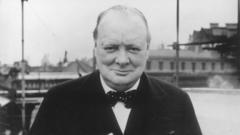
The breaking point arrived in a single sentence. The video, tracing the legacy of Oliver Cromwell’s seventeenth-century conquest of Ireland, noted that he starved people en masse. Then came the pivot: "a little like the wilful starvation of the Indian population by Winston Churchill."
To some, it was a necessary truth, a long-overdue reckoning with the ghosts of the British Empire. To others, it was a foul desecration, a lie funded by the very taxpayers whose freedom that leader had secured.
Within days, the quiet of the gallery was replaced by a roar. A letter signed by more than fifty members of the House of Lords, including Churchill’s own grandson, arrived at the director’s desk. They called the artwork a "barefaced lie" and an "ideologically motivated rant." The gallery, caught between the sacred principle of artistic expression and a political firestorm, stood its ground, noting the film was a personal reflection. Yet the tension in the room changed forever.
We are no longer just looking at art. We are fighting over who gets to own the moral high ground of the twentieth century.
To understand why a few lines in a video essay can cause a modern institution to shudder, you have to look closer at what actually happened in 1943.
The Bengal famine was not a statistical anomaly; it was a horror of skin and bone. Between one and three million human beings starved to death in the northeast of India. Imagine a landscape where the rivers are choked with bodies because there is no one left with the strength to bury them.
For decades, the standard schoolbook narrative attributed the tragedy to a cruel twist of nature—a massive cyclone in 1942 that wiped out the rice crops, followed by fungal infections that ruined the rest. It was tragic, yes, but it was an act of God.
But history is rarely that clean. In 2019, a team of researchers from India and the United States used weather data to simulate soil moisture levels across six major famines in the subcontinent between 1873 and 1943. Their findings were chilling: 1943 was the only famine that did not occur as a result of serious drought.
The scarcity was manufactured.
With Imperial Japan occupying neighboring Burma, the British administration enacted a "denial policy." They confiscated boats and rice stocks across coastal Bengal to prevent them from falling into enemy hands. They diverted local grain to feed British troops and industrial workers in the war effort. The local economy collapsed into hyperinflation. Money became worthless because there was simply no food to buy.
The question that broke the peace at the National Portrait Gallery is not whether the policy failed. It clearly did. The question is one of intent. Did Winston Churchill wilfully starve millions, or was he a wartime leader making brutal, agonizing choices in the darkest hours of a global war against fascism?
Consider the position of the biographer or the descendant. For Lord Andrew Roberts, who spearheaded the protest, the accusation is a betrayal of historical reality. The defense of Churchill rests on a mountain of wartime telegrams showing his pleas to American and Canadian leaders for shipping vessels to send grain to India. He was fighting a total war on multiple fronts; shipping lanes were being decimated by German U-boats, and every decision was a gamble with human lives.
From this perspective, reducing the complexity of wartime logistics to "wilful starvation" is a monstrous distortion. It turns a flawed, exhausted giant into a cartoon villain.
But then look through the eyes of the artist, or the descendants of those who died in Bengal. They see an empire that viewed Indian lives as collateral damage. They remember Churchill’s documented, deeply uncomfortable remarks about race and his open hostility toward Indian independence movements. To them, the refusal to name his responsibility is a different kind of lie—a omission that keeps the national myth clean at the expense of millions of forgotten dead.
This is why the row is so bitter. It is a clash of two entirely different, entirely incompatible grieving processes. One side is mourning the erosion of the national heroes who stood between Western civilization and total darkness. The other is mourning the victims of that same civilization's imperial hubris.
This is the hidden trap of modern culture. We have lost the ability to hold two conflicting truths in our minds at the same time.
It is entirely possible for Winston Churchill to have been the indispensable leader who saved the free world from Adolf Hitler, and a man whose imperial policies contributed to a preventable catastrophe that killed millions of people half a world away. History is not a courtroom where we must either completely acquit or completely condemn.
When we insist on turning historical figures into flawless saints or irredeemable monsters, we stop learning from them. We replace history with theology.
Museums and galleries used to be quiet mausoleums where the past was neatly arranged for our approval. Now, they are the front lines. The National Portrait Gallery’s defense of the artwork—stating that it provides a platform for artists to engage in dialogue with the collection—suggests a shift in how we view these institutions. They are no longer just places to look at the dead. They are places where the dead are dragged back into the light to answer for what they did.
As the loop of Persistence continues to trigger debates across the country, the real stakes become clear. The argument is not really about what happened in Bengal in 1943, nor is it about what Cromwell did to Ireland in the 1640s. It is about us, right now, in the present. It is about our deep, terrifying anxiety that if we look too closely at the foundations of our culture, we might not like what we see.
So we fight over the placards. We write letters to directors. We demand that things be taken down or put up, as if changing the display could somehow rewrite the blood and grease of the world that brought us here.
The gallery remains open. The portraits keep watching. They have survived the bombs of the Blitz and the changing tastes of a century, but their hardest test is whether they can survive our desperate need for them to be simple.