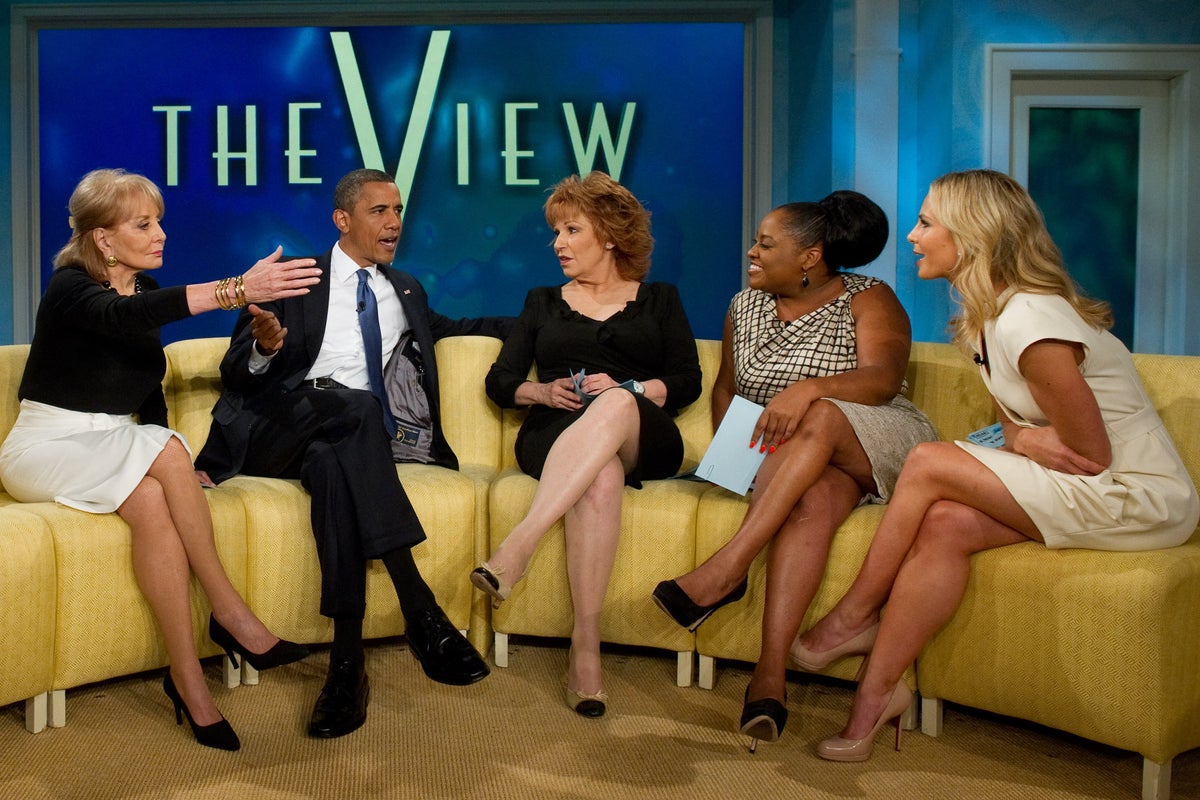
The coffee maker hums. Outside, the morning traffic blurs into a dull roar, but inside millions of American living rooms, the real noise is just beginning. A group of women sit around a curved table, papers shuffled, coffee mugs catching the studio lights. They talk. They argue. They laugh. They talk over one another. For decades, this ritual has been as predictable as the sunrise. But behind the bright lights and the televised banter, a quiet lever was pulled in Washington, triggering a shudder through the very foundation of what can be said out loud in America.
When regulatory agencies step into the cultural arena, it rarely starts with a dramatic raid or a theatrical blackout. It starts with paperwork. It starts with an accusation. Meanwhile, you can explore similar stories here: Inside the Tom Holland Casting Crisis Nobody Is Talking About.
Recently, the Federal Communications Commission found itself at the center of a storm that went far beyond standard bureaucratic oversight. The agency was accused of weaponizing its regulatory powers to target a daytime television staple, The View. The challenge did not come from a rogue producer or a rival network. It came from the highest levels of political influence, raising a chilling question: What happens when the government decides it dislikes the opinions broadcast into your home?
The Invisible Referee
To understand the weight of this moment, we have to look at the referee of the airwaves. The FCC holds immense power over broadcast television. It handles licensing, ensures public interest standards, and polices obscenity. For the average viewer, the FCC is an invisible entity, noticed only when a curse word slips through the bleep filter during a live broadcast. To understand the bigger picture, check out the recent report by Rolling Stone.
But that power possesses a dual nature. It can protect, or it can suppress.
When a regulatory body investigates a program based on its political commentary, the line between governance and censorship blurs. The accusations hurled at the FCC suggested that the agency was no longer acting as a neutral referee. Instead, critics argued it was leaning on the scales, using the threat of regulatory scrutiny to chill speech that challenged the current administration.
This is not about whether you love or hate daytime political debates. It is about the mechanism of control. Broadcast networks rely on FCC licenses to exist. Those licenses are worth billions. They represent survival. When an agency drops a heavy hand onto a network's desk, the message does not need to be explicitly stated to be understood.
The Cost of the Chilling Effect
Consider a hypothetical producer named Sarah. She sits in a control room, watching the monitors. A host is about to go off-script, leaning into a sharp, deeply critical monologue about a powerful political figure. In the past, Sarah’s main concern would be ratings, accuracy, or standard libel laws.
Now, a new variable enters her mind. Will this segment trigger a federal inquiry? Will it put the network’s broadcast license in jeopardy?
Sarah makes a split-second decision. She cues the commercial break early. She tones down the script for the next segment.
This is the chilling effect in action. It is a slow, quiet erosion. It does not require a government official to physically cut the feed. The mere threat of consequences forces the creators to censor themselves. The boundaries of acceptable public discourse shrink, not by a sudden decree, but by a thousand cautious edits.
The battle over The View serves as a stark reminder of this vulnerability. Broadcast television operates under different rules than cable or streaming services. Because broadcast airwaves belong to the public, the government maintains a unique level of oversight. But that unique oversight becomes dangerous when it is used as a political weapon.
The Core of the Contradiction
The defense of free speech is easy when we agree with the speaker. It becomes grueling when we do not. The true test of a society's commitment to open expression lies in its willingness to protect the speech it finds abrasive, chaotic, or flatly wrong.
The political opinions expressed on daytime talk shows are often polarizing. They provoke outrage; they provoke applause. That friction is precisely the point of a free press. When a regulatory body is accused of stepping into that friction to silence a specific viewpoint, it threatens the entire ecosystem of broadcasting.
If the government can signal displeasure at one program, it can signal displeasure at any program. The target changes depending on who holds the keys to the capital. Today's weapon of compliance becomes tomorrow's tool of suppression against the very people who cheered its initial use.
The Quiet Room
The debate will continue to play out in legal briefs, congressional hearings, and heated social media threads. Lawyers will argue over the fine print of statutory authority, and politicians will trade press releases.
But away from the noise, the real impact remains in the quiet rooms where decisions are made. It remains with the writers, the hosts, and the producers who must decide if a viewpoint is worth the administrative headache, the legal fees, and the existential threat to their platform.
The true measure of freedom on our airwaves is not found in the moments of harmony, but in the loud, messy, and sometimes uncomfortable arguments that fill the morning air. Once the referee decides to join the game, the game changes forever. The microphone stays on, but the voice behind it is never quite as brave.