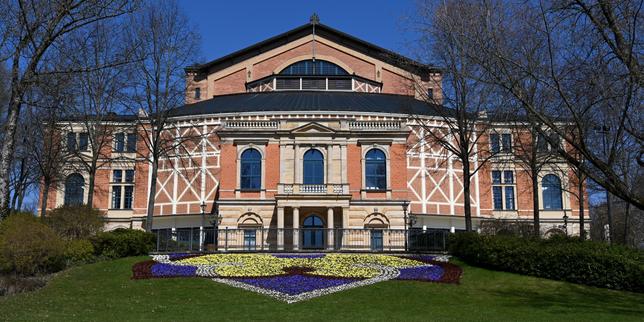
Every summer, the small Bavarian town of Bayreuth transforms into an insular pressure cooker for the global opera elite. The Festspielhaus, a theater specifically designed by Richard Wagner to stage his own massive, mythic music dramas, becomes the epicenter of cultural prestige. Yet beneath the surface of black-tie galas and transcendent orchestral textures lies a recurring ideological war zone. The recent erupting controversies over antisemitism at the Bayreuth Festival are not a sudden modern aberration. They are the predictable result of an institution that has spent decades attempting to separate Wagner’s sublime music from his venomous, well-documented hatred of Jewish people. It is a corporate and cultural balancing act that is rapidly becoming unsustainable.
The core issue driving the current crisis is not that new historical evidence has emerged, but that the festival’s traditional defense mechanisms are failing. For a long time, Bayreuth relied on a strategy of artistic deflection, staging radical, avant-garde productions that explicitly mocked or confronted Germany’s dark past. By turning the stage into a courtroom, directors hoped to exorcise the composer’s demons. But this intellectual shield is cracking. As geopolitical tensions rise and global antisemitism surges, the festival's leadership faces a brutal reality. You cannot easily sanitize a cultural monument built on an ideological foundation that included the literal blueprint for cultural erasure.
The Myth of the Innocent Masterpiece
To understand why Bayreuth is fracturing, one must discard the comforting lie that Wagner’s antisemitism was merely a personal flaw, a separate footnote to his artistic genius. It was the engine of his creativity. In his infamous 1850 essay, Das Judenthum in der Musik (Jewishness in Music), Wagner did not just throw insults. He articulated a specific, dangerous theory that Jewish people were inherently incapable of true, soulful artistic expression, possessing only the capacity to imitate and commercialize.
This was not a casual prejudice shared by his 19th-century peers. It was a foundational obsession. When you look closely at the operas themselves, the traces are undeniable. Take the character of Beckmesser in Die Meistersinger von Nürnberg, a pedantic, rule-bound critic who mimics true poetry but can only produce screeching discordance. Or Mime in the Ring cycle, a scheming, gold-obsessed dwarf lacking in nobility. Wagner may not have put yellow stars on these characters, but his contemporary audiences knew exactly who and what they represented.
The mechanism at play here is subliminal reinforcement. The music is so intoxicating, so structurally brilliant, that it bypasses the listener's intellectual defenses. You are swept up in the grandeur of Parsifal while absorbing a narrative deeply rooted in ideas of racial purity and regeneration. This dual nature makes the Festspielhaus a uniquely volatile space. It is a temple of beauty that double-hats as an ideological minefield.
The Failed Exorcisms of the Avant-Garde
For decades, the festival’s survival strategy has been outsourced to provocative stage directors. This approach, often referred to as Regietheater, essentially gave directors carte blanche to deconstruct the operas. If a work contained nationalist or antisemitic undertones, the director would put the cast in Nazi uniforms or set the action in a dystopian concentration camp to show that Bayreuth was "dealing" with its history.
It worked for a while. It gave the festival intellectual cover. It allowed international audiences to enjoy the music while feeling a sense of moral superiority, safe in the knowledge that the production was critical of its own author.
But this strategy has hit a wall of diminishing returns. Audiences are experiencing provocation fatigue. When every production features stormtroopers, riot gear, and bleak industrial landscapes, the shock value evaporates. More importantly, these shock tactics have begun to look like a cynical corporate public relations exercise. They create an illusion of institutional reckoning while leaving the core structure—and the financial machinery dependent on the Wagner family legacy—completely untouched. The festival wants the edginess of political critique without the actual discomfort of institutional restructuring.
The Shadow of the Family Dynasty
The financial and administrative governance of Bayreuth remains deeply entangled with historical baggage. Unlike most elite cultural institutions governed by independent boards, Bayreuth has historically functioned like an absolute monarchy, passed down through the Wagner bloodline. This line runs directly through Winifred Wagner, the composer's daughter-in-law who ran the festival during the Third Reich and was a close personal friend and devotee of Adolf Hitler.
Hitler did not just visit Bayreuth; he subsidized it. He stayed in the Wagner family home. He viewed the festival as the spiritual laboratory of National Socialism.
When the current leadership attempts to distance the modern festival from modern political extremism, they are hampered by this lineage. The governance model itself is an artifact. While public funding from the German state, the state of Bavaria, and the city of Bayreuth keeps the lights on, the psychological ownership of the event remains tightly bound to the family name. This creates a fundamental conflict of interest. Can an institution truly investigate its own foundational myths when its brand identity is entirely dependent on preserving the mystique of the patriarch?
The Modern Corporate Dilemma
Behind the artistic debates lies a cold financial calculation. Bayreuth is a major economic engine for the region, drawing wealthy patrons from across the globe who book out hotels, restaurants, and luxury services months in advance. These patrons are overwhelmingly older, conservative, and traditionalist. They want to hear the music played with technical perfection; many are actively hostile to the ugly, confrontational staging meant to address the composer’s bigotry.
This creates a structural polarization.
| Stakeholder | Primary Objective | Risk Tolerance |
|---|---|---|
| State Funders | Democratic alignment, historical accountability | Very Low (fear of political scandal) |
| Avant-Garde Directors | Institutional critique, artistic provocation | High (thrive on controversy) |
| Traditionalist Patrons | Aesthetic escapism, musical purism | Low (demand classic staging) |
This polarization leaves the festival management in an impossible position. If they bow to pressure and present sanitized, traditional productions, they risk being accused of whitewashing history and catering to nationalist nostalgia. If they continue to greenlight aggressive deconstructions, they alienate the core donor base and the corporate sponsors who fund the festival's massive operating budget. The middle ground has completely eroded.
The Limits of Cultural Cancelation
There are those who argue that the only logical solution is to shutter the festival entirely, or to place a moratorium on Wagner’s works. This argument is particularly vocal outside of Germany, where the specific cultural weight of Bayreuth is less pronounced. In Israel, an informal ban on public performances of Wagner's music has existed for decades, a testament to the deep trauma associated with his work.
But a complete shutdown of Bayreuth inside Germany is highly unlikely, and arguably counterproductive. Censorship often creates an aura of martyrdom around forbidden art. If you banish Wagner from the public sphere, you do not eliminate the problematic ideologies embedded in his work; you simply drive them underground, where they can be adopted by far-right groups as symbols of suppressed Germanic identity.
The real challenge is much harder than a ban. It requires abandoning the romantic idea of the untouchable genius. It demands that audiences learn to hold two contradictory ideas in their minds simultaneously: that Richard Wagner created some of the most complex, revolutionary music in human history, and that he was an architect of cultural hatred whose ideas helped pave the road to catastrophe.
The Illusion of Separation
The ongoing turmoil at Bayreuth proves that art does not exist in a vacuum. You cannot isolate a musical score from the historical context that birthed it, nor from the uses to which it was subsequently put. For too long, the classical music industry has treated Wagner like an eccentric uncle with bad opinions, rather than a systematic ideologue whose art was designed to proselytize.
The festival cannot outrun its ghost by hiring a new director or issuing a press release condemning extremism. The building itself, the acoustics, the mandatory lack of applause after the first act of Parsifal—everything about the Bayreuth experience was engineered to create a secular religion. Until the festival strips away this pseudo-religious reverence and treats the operas as deeply flawed historical texts rather than sacred scripture, the cycle of scandal will continue. The ghost of Richard Wagner isn't crashing the party at Bayreuth. He built the house, and he still owns the keys.