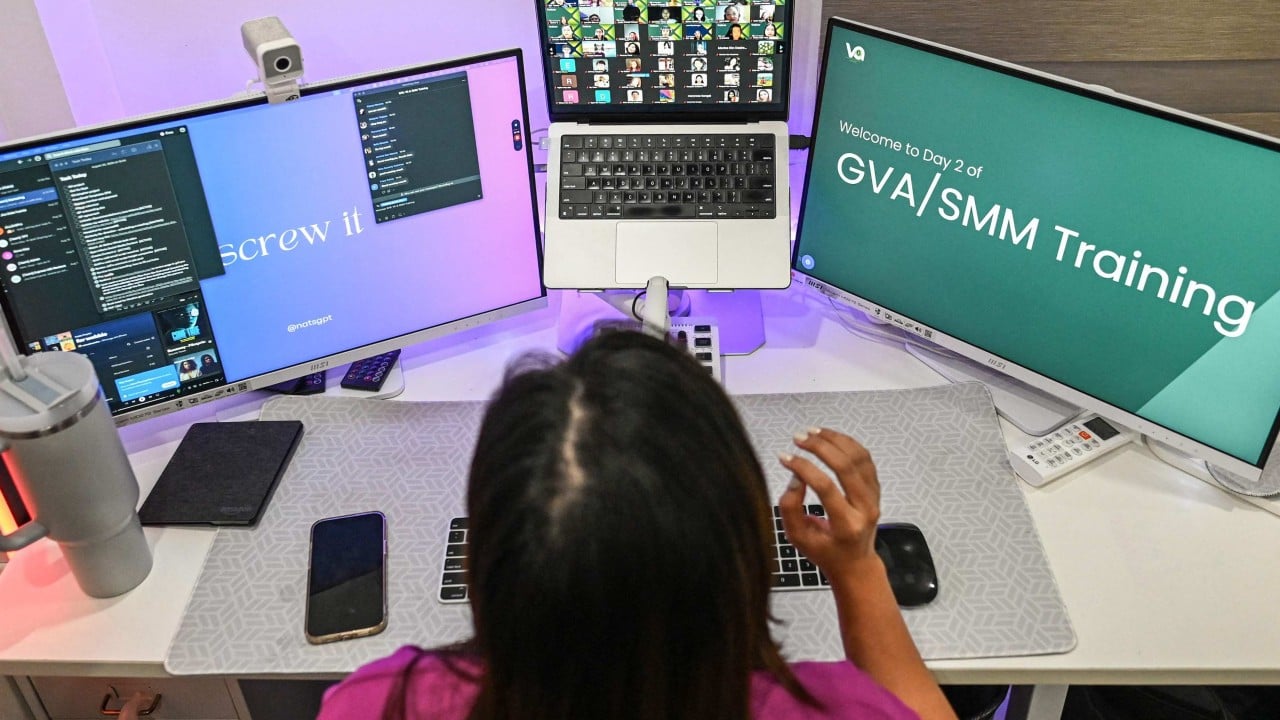
Every economic commentator in Manila loves to pat themselves on the back over the booming remote work economy. The prevailing narrative treats home-based freelancing and offshore administrative support as the ultimate equalizer. Young graduates bypass traditional corporate grinding, bypass the grueling commute down Epifanio de los Santos Avenue, and earn foreign currency while sitting in provincial bedrooms. Headlines celebrate this shift as a triumph over traditional medical careers, declaring that administrative remote work outpaces the prestige and financial stability of wearing a stethoscope.
It is a comfortable narrative. It is also a dangerous delusion. Also making waves in this space: Why APEC Consensus on AI and Digital Financing in Hong Kong Changes Nothing.
I have watched founders outsource high-volume operational tasks to Southeast Asia for over a decade. I have seen the balance sheets, the retention curves, and the ultimate career trajectories of professionals who traded institutional growth for immediate foreign exchange liquidity. The lazy consensus says remote admin work is liberation. The reality is that it is a high-yield digital sweatshop disguised as entrepreneurial freedom, locking talented minds into a zero-sum game of arbitrage where they own neither the asset nor the upside.
Let us dismantle the romanticism. Additional details into this topic are detailed by The Economist.
The Mirage of Foreign Currency Arbitrage
The core appeal rests entirely on currency exchange rates. Earning in dollars while spending in pesos feels like winning a macroeconomic lottery on day one. A fresh graduate pulling in eight hundred dollars a month feels wealthy compared to local entry-level clerical wages.
That calculation ignores the structural decay happening underneath.
Traditional professions like medicine, law, or engineering build compounding equity. A doctor accumulates clinical judgment, diagnostic pattern recognition, and institutional clout that appreciates over decades. A remote assistant handles calendar management, data entry, and basic email triage. These tasks do not compound in value. They scale in volume until the client decides to automate them with basic workflow software or offshore them to a cheaper jurisdiction.
When you sell raw hours for foreign currency without building proprietary intellectual property, you are not running a business. You are a piece of software waiting to be written.
The Myth of Complete Autonomy
Proponents argue that remote support roles offer freedom. You are your own boss. You choose your clients. You work in your pajamas.
This is a profound misunderstanding of modern digital labor markets. When your primary competitive advantage is cost arbitrage relative to Western labor markets, you do not possess autonomy. You possess precarious dependence.
Imagine a scenario where an overseas client abruptly restructures, slashes budgets, or adopts automated scheduling tools. Your income drops to zero overnight. You have no labor union, no local legal recourse that functions across international borders, and no brand equity. You are exposed to the whims of foreign solopreneurs who view your labor as a line item to be optimized away the moment cash flow tightens.
True autonomy requires owning distribution, a proprietary product, or specialized high-friction skills that cannot be replaced by a twenty-dollar-per-hour alternative in another time zone. Administrative support offers none of these. It is digital wage labor stripped of benefits, job security, and long-term career progression.
The Opportunity Cost of Stunted Specialization
The real tragedy of the remote administrative boom is the sheer misallocation of cognitive capital in the Philippines.
The country produces exceptional engineering, design, and analytical talent. Yet, brilliant minds are routinely funneled into inbox management and social media scheduling because the immediate financial payoff outshines local entry-level corporate salaries. This creates a severe brain drain away from hard sciences, heavy industry, product development, and domestic infrastructural innovation.
When a nation's top graduates optimize their career paths for remote personal assistant gigs, they trade high-leverage skill acquisition for short-term cash flow. Ten years into a medical or engineering track, a professional commands irreplaceable technical authority. Ten years into answering support tickets for foreign e-commerce stores, a worker faces burnout, repetitive strain injuries, and a skillset that has depreciated against advancing automation tools.
The math is brutal. You are mortgaging your forty-year earning potential for a slightly better laptop in your twenties.
Breaking the Cycle
If you are currently trapped in the remote support treadmill, the exit strategy requires an immediate pivot from generalist administration to high-friction functional ownership.
Stop competing on price and generalized availability. Generalists are commodities. Specialists are monopolies.
If you understand digital infrastructure, learn how to architect entire CRM migrations rather than just inputting leads. If you understand marketing, learn data attribution modeling and programmatic ad buying rather than just scheduling posts on Canva. Move upstream until your client cannot function without your specific strategic insight, rather than your ability to type fast and stay awake during US Pacific time zones.
The era of easy geographic arbitrage is closing. Artificial intelligence handles low-friction administrative tasks with zero latency and zero sleep requirements.
Stop celebrating the race to the bottom. Build something that outlasts the next software update.