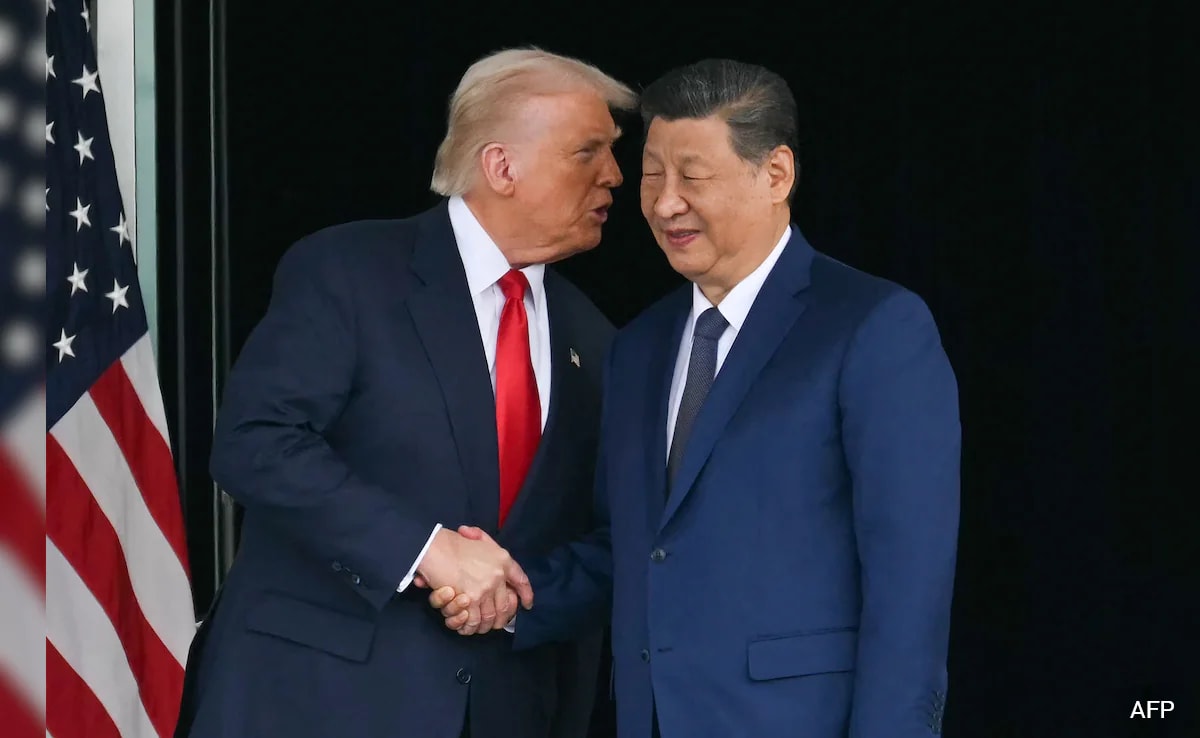
The silence coming from 1600 Pennsylvania Avenue isn't a sign of indifference. It is the sound of an administration paralyzed by a shifting reality on the ground in East Asia. As Chinese regulators move to tighten trade rules and export controls just weeks before a high-stakes summit between Donald Trump and Xi Jinping, the American response has been a study in cautious hesitation. This isn't just about soybeans or steel anymore. China is systematically rewriting the rules of the road for high-tech components and rare earth elements, effectively building a "fortress economy" that can withstand American pressure.
While the media focuses on the theater of the upcoming meeting, the real story is the quiet, methodical hardening of the Chinese regulatory environment. Beijing has spent the last quarter-year expanding its "Unreliable Entity List" and introducing new licensing requirements for dual-use technologies. These moves are designed to create leverage before a single word is exchanged at the negotiating table. The White House, meanwhile, finds itself caught between hawks demanding immediate retaliation and a business community terrified of being locked out of the world’s second-largest market.
The Strategic Enclosure of the Supply Chain
China has realized that it no longer needs to win a broad trade war to maintain its dominance. Instead, it is focusing on surgical strikes against the global supply chain. By introducing new mandates on the tracking of graphite and gallium—materials essential for electric vehicles and semiconductors—Beijing has sent a clear message to Western manufacturers. You can build the factory, but we control the ingredients.
This strategy is a direct response to the American "small yard, high fence" policy. For years, the U.S. has tried to ringfence sensitive technologies. Beijing is now building its own fence, and it’s significantly larger. The recent tightening of trade rules isn’t a defensive crouch; it’s an offensive maneuver aimed at proving that the global economy cannot function without Chinese permission.
The Bureaucracy of Hard Power
The latest updates to China’s Export Control Law aren't just red tape. They represent a fundamental shift in how the state views private enterprise. Under the new rules, any company—domestic or foreign—operating within China can be held liable if their exports are deemed to "harm national security or interests." The definition of "interests" is intentionally vague. This vagueness is a tool. It allows regulators to freeze shipments or audit books at a moment's notice, creating a permanent state of uncertainty for American firms like Apple, Tesla, and Qualcomm.
Washington’s silence suggests a lack of a unified counter-strategy. The Commerce Department is still processing the impact of previous rounds of tariffs, while the State Department is trying to keep diplomatic channels open. This internal friction leaves a vacuum that Beijing is more than happy to fill with its own set of mandates.
Why Washington Can No Longer Bluff
The primary reason the White House is staying quiet is that the old playbook has lost its bite. In 2017, the threat of sweeping tariffs was enough to rattle Chinese markets. Today, the Chinese economy has been weathered by years of trade friction and a global pandemic. They have diversified their trade partners, leaning heavily into the Global South and strengthening ties with Moscow and Riyadh.
If the U.S. doubles down on aggressive rhetoric now, it risks a retaliatory "blackout" of essential minerals.
- Gallium and Germanium: China controls over 80% of the world’s production.
- Graphite: Essential for EV batteries; China handles nearly 90% of the refining process.
- Rare Earth Magnets: Used in everything from F-35 fighter jets to wind turbines.
A sudden export ban from Beijing would grind American high-tech manufacturing to a halt within months. The Biden administration, and the incoming Trump team, are acutely aware that they are walking through a minefield. The silence is a recognition of vulnerability.
The Pre-Summit Psychological Game
Xi Jinping is a student of history and a master of the "long game." By tightening these rules now, he ensures that the first item on the summit agenda isn't Chinese human rights or intellectual property theft. It will be the restoration of predictable trade. He is forcing the U.S. to negotiate for a return to a status quo that he broke on purpose.
It’s a classic squeeze. Beijing creates a crisis—in this case, a regulatory one—and then offers to "solve" it in exchange for concessions on semiconductor or AI investment restrictions. This puts the U.S. on the defensive, scrambling to protect current business interests rather than pushing for new reforms.
The Corporate Exodus That Isn't Happening
Despite the "de-risking" talk heard in boardroom meetings from Manhattan to Silicon Valley, the reality is far messier. Large-scale exit from the Chinese market is a fantasy. For most Fortune 500 companies, China remains both a vital manufacturing hub and a critical consumer base.
Consider the semiconductor industry. While the U.S. government pushes for domestic production through the CHIPS Act, American chipmakers still derive roughly one-third of their revenue from China. These companies are lobbying the White House to stay quiet and avoid any further escalation that would lead to a total lockout. The "quiet" from Washington is partly a result of this intense corporate pressure.
The Failure of Multilateralism
The U.S. has struggled to get its allies on the same page. While the Netherlands and Japan have agreed to some restrictions on chip-making equipment, they are increasingly wary of a total trade war. The European Union, in particular, is hesitant to follow Washington into a full-scale economic decoupling.
Beijing knows this. Their trade rule adjustments are often calibrated to hit American firms harder than European ones, driving a wedge between the transatlantic partners. By the time Trump and Xi sit down, the U.S. may find itself standing alone in its hardline stance, while its allies have already cut their own backroom deals with the Ministry of Commerce in Beijing.
Tracking the Money Instead of the Rhetoric
If you want to know what is actually happening, ignore the press briefings and look at the capital flows. Even as trade rules tighten, Chinese sovereign wealth funds are repositioning. They are moving away from U.S. Treasuries and into physical assets and emerging market currencies.
At the same time, Chinese tech giants are "open-sourcing" their own proprietary standards to bypass Western-controlled patents. This is the real trade war. It’s not about who pays a 20% tax at the border; it’s about who defines the technical architecture of the 21st century.
The White House's current reticence likely stems from a desperate attempt to gather intelligence on how far Beijing is willing to go. Are these new rules a bluff, or are they the first stage of a total economic embargo? No one in Washington seems to have a definitive answer.
The Logistics of a Cold War
Moving a supply chain is not like moving a bank account. It takes years to build the infrastructure, train the labor force, and secure the power grids necessary for high-end manufacturing. Vietnam, India, and Mexico are often cited as alternatives, but they lack the integrated ecosystem that China has spent forty years perfecting.
When Beijing tightens export rules, they aren't just affecting products; they are affecting the "just-in-time" logistics that the modern world is built upon. A three-week delay in a specific chemical catalyst from a factory in Ningbo can shut down an assembly line in Ohio. This is the leverage Xi holds.
The Illusion of the "Grand Deal"
There is a persistent hope in some Washington circles that the upcoming summit will result in a "Grand Deal"—a comprehensive agreement that settles the trade dispute once and for all. This is a dangerous misunderstanding of the current Chinese leadership's goals.
Xi Jinping is not looking for a deal that integrates China further into a U.S.-led order. He is looking to build an alternative order. The tightening of trade rules is a foundational block of that new system. Every new regulation, every "unreliable entity" designation, and every export license requirement is a step toward a world where the U.S. dollar and U.S. law no longer hold sway over global commerce.
The White House is silent because the truth is uncomfortable: the era of American economic hegemony is being dismantled in the fine print of Chinese administrative law.
What This Means for the American Consumer
For the average citizen, this geopolitical maneuvering will eventually show up on the price tag. The cost of "resilience" is high. As companies are forced to navigate two sets of conflicting laws—complying with U.S. sanctions while following Chinese "national interest" rules—the resulting inefficiencies will be passed down to the buyer.
We are moving away from an era of cheap, globalized goods and into an era of expensive, localized "security" products. The trade rules being written today in Beijing are the blueprints for a more expensive and more fractured world.
Washington’s inability to articulate a clear response suggests they are still trying to figure out if they are participating in a trade negotiation or an epochal divorce. If it’s the latter, the quiet we’re hearing isn't the calm before the storm—it’s the sound of the door being locked from the outside.
Stop looking for the headline-grabbing tariff announcement. Watch the license applications for industrial minerals and the "administrative guidance" issued to tech firms in Shenzhen. That is where the war is being won, and right now, the U.S. is losing ground without firing a shot.