Two miles from the flashing lights of the Las Vegas Strip, beneath the asphalt where millions of tourists roll their dice and chase jackpots, an entirely different kind of city thrives in the dark. It is vast, damp, and completely concrete. Beneath the glittering resorts and roaring traffic lies an intricate network of six hundred miles of flood control tunnels. Designed solely to channel sudden desert flash floods away from the multi-billion-dollar tourist corridors, these subterranean chambers have instead become home to a hidden population of unhoused residents.
Journalists often sensationalize this subterranean society as a bizarre underworld, but the reality is far more grinding and mundane. It is a desperate refuge born from an acute housing crisis, local ordinances that criminalize sleeping on the surface streets, and the sheer physical isolation offered by the shadows. To understand how hundreds of people carved out lives inside storm drains, you have to look past the novelty of underground dwellers and examine the systemic failures driving them beneath the city.
The Engineering of Exclusion
The valley does not absorb water. Decades of unbridled real estate development have paved over natural desert washes with asphalt and concrete. When severe monsoons strike the Mojave Desert, millions of gallons of water cascade down from the surrounding mountains, turning dry streets into violent rivers within minutes.
To protect the casino empires and suburban developments, the Clark County Regional Flood Control District engineered a sprawling subterranean labyrinth. These tunnels range from massive box culverts where semi-trucks could comfortably drive to smaller circular pipes that require crouching to navigate. They are stark, utilitarian structures built for one purpose: rapid hydraulic discharge.
Yet, utility breeds opportunity for the desperate. As property values soared and affordable housing evaporated from the Las Vegas valley, these dry concrete channels offered something above-ground shelters often could not: absolute permanence. You cannot be swept away by a routine police sweep if you are tucked away beneath a major intersection where heavy equipment cannot easily reach.
The paradox of the system is stark. The very infrastructure built to protect the glittering tourist economy inadvertently created a subterranean sanctuary for the human casualties of that same economic engine.
Domesticity in the Dark
Life underground requires a staggering amount of logistical ingenuity. Step ten feet past a street-level manhole, and the immediate sensory impression is the sound of rushing air, distant traffic vibrations, and an oppressive, echoing quiet.
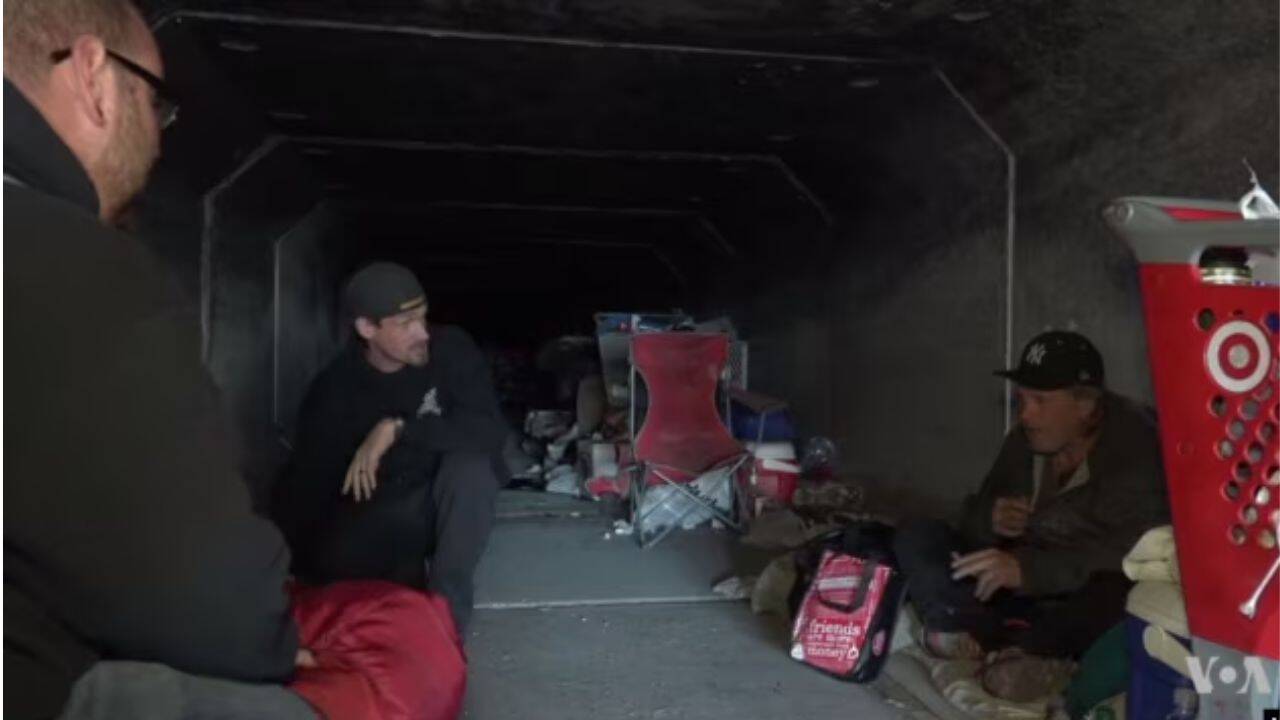
Residents do not simply huddle in the dirt. They build. Over years, individuals and small groups have hauled discarded plywood, mattresses, shopping carts, and furniture down metal ladders. Makeshift living quarters feature makeshift walls, battery-powered lamps, and even rugs salvaged from hotel renovations or alley dumpsters.
Maintaining hygiene and personal health in a damp, concrete tube is an ongoing battle. Mold spores hang heavy in the air. During heavy rain events, water levels can rise from a dry trickle to a roaring torrent in less than ten minutes, giving inhabitants precious little time to grab their belongings and scramble for the vertical ladder exits. Survivors of past floods speak of belongings being swallowed by wall-of-water surges that sweep through the system with terrifying velocity.
Power comes from ingenuity or illicit taps where lines cross near maintenance shafts. Personal security is handled through informal alliances. In an environment devoid of police presence, residents form tight micro-communities to protect their meager possessions from theft.
The Economics of Subterranean Survival
Why stay? The answer involves a complex matrix of criminal records, untreated mental health struggles, severe addiction, and profound distrust of institutional safety nets.
Traditional shelters in Las Vegas enforce strict rules. They demand sobriety, separate couples, limit the duration of stays, and require daytime departures. For individuals with pets, partners, or possessions they refuse to abandon, the shelter system represents a loss of autonomy that feels more punishing than living rough.
The tunnels offer an unregulated existence. No curfews. No mandatory religious services. No intake coordinators demanding personal histories.
Yet, this freedom exacts a brutal physical toll. Long-term exposure to subterranean dampness exacerbates respiratory conditions. Medical emergencies down in the culverts are perilous; emergency services are rarely called until a situation becomes catastrophic, and tracking down a specific address inside a sprawling, unmarked concrete maze can delay life-saving intervention.
The Limits of Enforcement
Local authorities and outreach organizations periodically sweep the tunnels, hauling out tons of accumulated debris, shopping carts, and personal effects. Police officers occasionally descend into the gloom to issue citations or clear out inhabitants, but the enforcement is rarely permanent. The sheer scale of the six-hundred-mile network makes constant monitoring impossible.
When one section is cleared, residents simply move deeper into the lateral branches or wait out the enforcement cycle before returning. The cycle repeats indefinitely because the root cause remains untouched. A municipal government can sweep a culvert, but it cannot sweep away the structural poverty, soaring rental rates, and fragmented social services that forced human beings down the ladder in the first place.
The lights of the Strip continue to beam their electric brilliance into the desert sky, projecting an image of boundless wealth and effortless recreation. But every neon bulb casts a shadow, and the longest shadow in Las Vegas stretches hundreds of miles long, hidden completely out of sight beneath our feet.